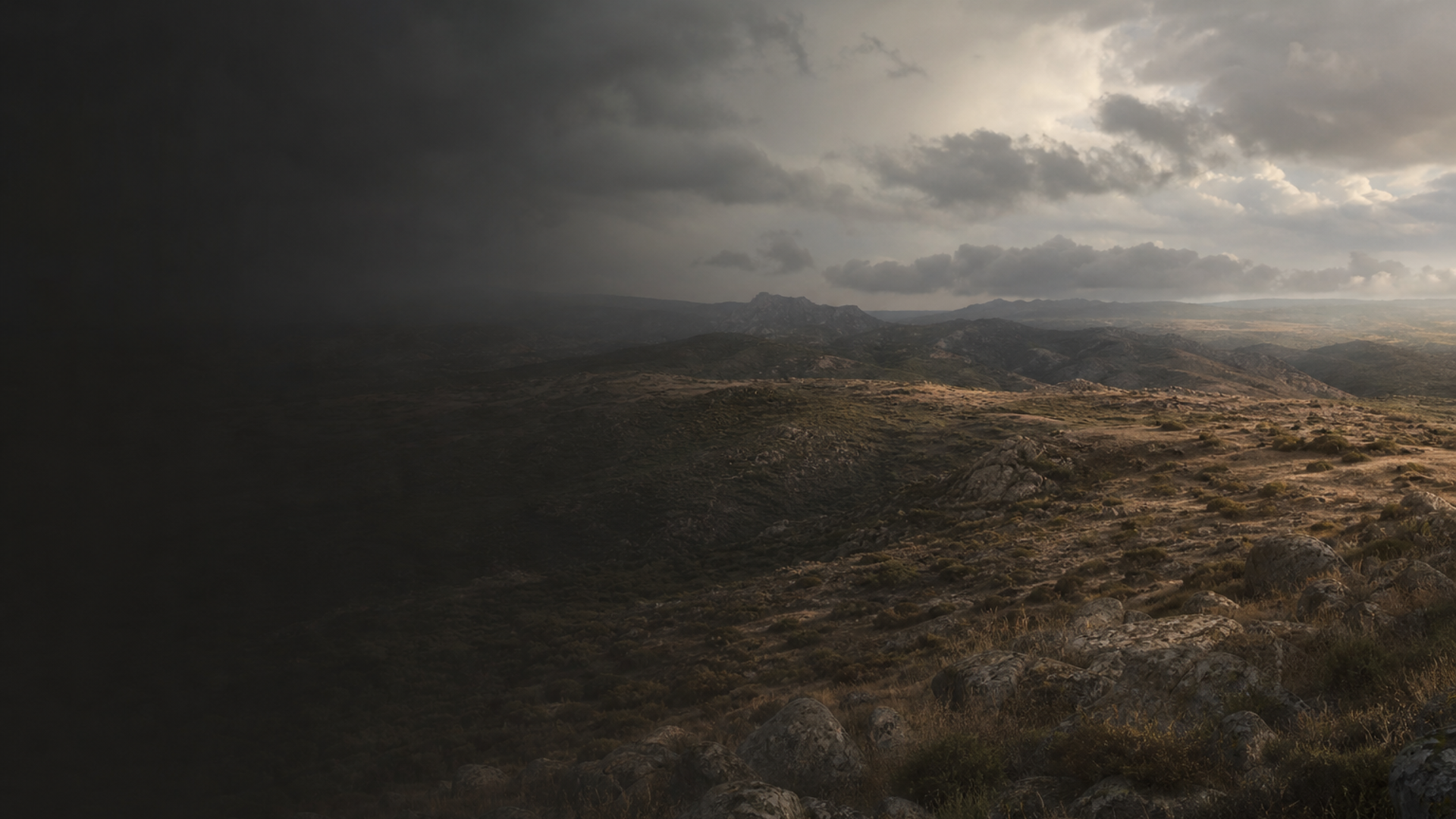
Serra Crabiles, Sardinia — Late Chalcolithic

下载的 PDF 是图像副本。如需可选中文本及更好的辅助技术支持,请使用打印功能。

Serra Crabiles, Sardinia — Late Chalcolithic

揭开一个失落的文明

正在加载考古记录……

正在收集古代记录

跳转到主内容
Serra Crabiles, Sardinia — Late Chalcolithic
文明焦点

Serra Crabiles, Sardinia — Late Chalcolithic

A coastal Sardinian community (2470–2200 BCE) where archaeology and ancient DNA illuminate fragile networks of kinship and contact.

2470 CE - 2200 BCE
Sardinia, Italy (Sennori, Serra Crabiles)
滚动开始
Chapter I

剧情

了解 Serra Crabiles, Sardinia — Late Chalcolithic 文化

Late Chalcolithic Sardinians from Serra Crabiles (Sennori, Sassari) dated 2470–2200 BCE. Eight samples show prevalent Y haplogroup G and mtDNA J, suggesting local maternal continuity with male-line diversity. Limited sample size makes conclusions provisional; archaeology and aDNA together hint at island-specific lifeways.

Time Period

2470–2200 BCE

Region

Sardinia, Italy (Sennori, Serra Crabiles)

Common Y-DNA

G (predominant in this set)

Common mtDNA

J, K (mostly J)

Chapter II

时间线

这种文化历史上的关键时刻

2500 BCE

Occupation and Community Life at Serra Crabiles

Archaeological contexts and radiocarbon dates place active settlement and burial activity at Serra Crabiles around 2470–2200 BCE, reflecting Late Chalcolithic community life on Sardinia.

Chapter III

Origins & Emergence

The Serra Crabiles assemblage sits at the waning edge of the Chalcolithic and the dawn of the Bronze Age on Sardinia (2470–2200 BCE). Archaeological layers from the site at Sennori (Serra Crabiles, t.3) reveal domestic structures, pottery styles, and burial practices that align with Late Chalcolithic Sardinia while also showing local variants. Limited evidence suggests continuity with earlier Neolithic communities on the island, but there are also signs of renewed connections across the Tyrrhenian and western Mediterranean coasts.

Genetic data from eight individuals provide a slender but evocative thread: a predominance of Y-haplogroup G and a strong maternal signal of mtDNA J. These markers are compatible with a scenario of substantial local ancestry combined with episodic male-mediated or shared-lineage interactions. Archaeological ceramics and exchange goods imply maritime networks that may have transmitted genes, ideas, and material culture. However, with only eight samples, interpretations remain provisional — the emerging picture is one of an island community rooted in local traditions while participating in broader, sea-borne webs of contact.

  • Located at Sennori (Serra Crabiles), Sassari province, Sardinia
  • Dated 2470–2200 BCE, Late Chalcolithic context
  • Evidence for local continuity with external maritime contacts
Chapter IV

Daily Life & Society

Archaeological remains from Serra Crabiles evoke a coastal world of stone-built yards, hearth-focused homes, and ceramics tempered for cooking and storage. The material culture suggests mixed subsistence: cereal cultivation, herding, and exploitation of coastal resources such as shellfish and fish. Tools and ornamentation found in the site’s contexts point to specialized craft practices — pottery finishing, stone tool knapping, and bone working — likely organized at household and small-community scales.

Burial evidence, where present, indicates varied funerary behaviors and potential social differentiation, though the sample is small. Grave goods are modest, emphasizing everyday life over ostentatious display. Spatial patterns hint at kin-linked households clustered across the settlement. Archaeobotanical and zooarchaeological indicators (where recovered) suggest seasonal scheduling of activities tied to maritime and pastoral cycles. These lived rhythms, preserved in the soil and bones, are now being read alongside DNA data to trace family ties, mobility, and the transmission of craft and ritual knowledge across generations.

  • Mixed economy: farming, herding, coastal foraging
  • Household craft and modest funerary variation suggest kin-based organization
Chapter V

Genetic Profile

Ancient DNA from eight individuals at Serra Crabiles yields a concise genetic snapshot: four males carrying Y-haplogroup G and mitochondrial haplogroups dominated by J (seven occurrences) with one K. This skew toward maternal J lineages suggests local matrilineal continuity or a maternal reservoir persisting on Sardinia into the Late Chalcolithic. The prevalence of Y-G in this small set may reflect local paternal lineages or male-mediated connections with nearby populations.

Genetic signals must be read cautiously. With fewer than ten samples, any inference about population-wide structure, migration, or sex-biased mobility is preliminary. Nevertheless, the combination of a dominant maternal haplogroup and a concentrated Y-haplogroup hints at social patterns — perhaps stable maternal residency with some male-line clustering. Archaeological indicators of exchange and maritime contact provide a plausible mechanism for introducing new paternal lineages at modest rates while maternal lines remained more regionally entrenched.

Comparative aDNA from later Sardinian and mainland Italian contexts will be essential to situate these individuals within broader demographic shifts across the Chalcolithic–Bronze Age transition. For now, the Serra Crabiles data offer a rare genomic glimpse into a coastal Sardinian community balancing endemic continuity and intermittent external ties.

  • Y-haplogroup G common among analyzed males
  • mtDNA dominated by J (7 of 8), with one K — small sample cautions interpretation
Chapter VI

Legacy & Modern Connections

The genetic and archaeological traces from Serra Crabiles form a fragile bridge to Sardinia’s deep past. Modern populations on the island exhibit genetic continuity in parts, and the persistence of certain maternal lineages into later periods is plausible. Limited sampling prevents firm claims about direct descent, but the site contributes to a growing dataset that links prehistoric islanders to later Bronze Age communities and, ultimately, to the genetic mosaic of contemporary Sardinians.

Culturally, the material patterns at Serra Crabiles underscore long-standing island practices — focused household economies, coastal resource use, and engagement with maritime networks. When combined with expanding aDNA datasets, these threads illuminate how small, coastal communities could shape regional ancestry profiles through continuity, selective contact, and demographic resilience. Further sampling and integrated study will clarify the long arc from these Late Chalcolithic lives to the modern gene pool.

  • Contributes to a longer-term picture of Sardinian genetic continuity
  • Highlights the need for more samples to resolve ancestry and connectivity
AI 电源

AI 助手

就 Serra Crabiles, Sardinia — Late Chalcolithic 文化提问

AI 助手 由DNAGENICS公司制作

解锁此特性
Ask questions about the Serra Crabiles, Sardinia — Late Chalcolithic culture. Our AI assistant can explain genetic findings, historical context, archaeological evidence, and modern connections.
AI 样本分析

Serra Crabiles, Sardinia — Late Chalcolithic 文化是人类历史中值得了解的一章……

遗传分析揭示了与早期种群的联系,同时显示了独特的适应和文化创新的证据。 古代DNA样本提供了对迁徙模式、社会结构以及古代种群之间的生物关系的深刻见解。

这是人工智能分析的预览。 解锁全AI 助手, 以探索关于:

  • 遗传组成和祖先
  • 移徙模式和起源
  • 日常生活和文化习俗
  • 现代遗传遗产

探索更古老的文化

揭开古代世界文明的故事

使用优惠码 可减免 35% • 11月12日 到期




