Shahr‑i Sokhta Bronze Age Echoes

下载的 PDF 是图像副本。如需可选中文本及更好的辅助技术支持,请使用打印功能。

Shahr‑i Sokhta Bronze Age Echoes

揭开一个失落的文明

正在加载考古记录……

正在收集古代记录

跳转到主内容
Shahr‑i Sokhta Bronze Age Echoes
文明焦点

Shahr‑i Sokhta Bronze Age Echoes

A desert metropolis in Seistan where archaeology and ancient DNA begin to meet

3200 CE - 1900 BCE
Seistan (Shahr‑i Sokhta), Iran
滚动开始
Chapter I

剧情

了解 Shahr‑i Sokhta Bronze Age Echoes 文化

Archaeological and genetic evidence from 11 Bronze Age individuals at Shahr‑i Sokhta (3200–1900 BCE) reveals a coastal‑steppe crossroads in southeastern Iran, suggesting local Iranian-related ancestry with southern and Near Eastern inputs—interpretations remain cautious given sample scope.

Time Period

3200–1900 BCE

Region

Seistan (Shahr‑i Sokhta), Iran

Common Y-DNA

J (4), BT (1), L (1) — others unreported

Common mtDNA

R (2), U (2), L (1), M (1), W (1) — others unreported

Chapter II

时间线

这种文化历史上的关键时刻

2500 BCE

Urban florescence at Shahr‑i Sokhta

Archaeological layers indicate a peak of urban activity around 2500 BCE, with extensive craft production and trade links across the region.

Chapter III

Origins & Emergence

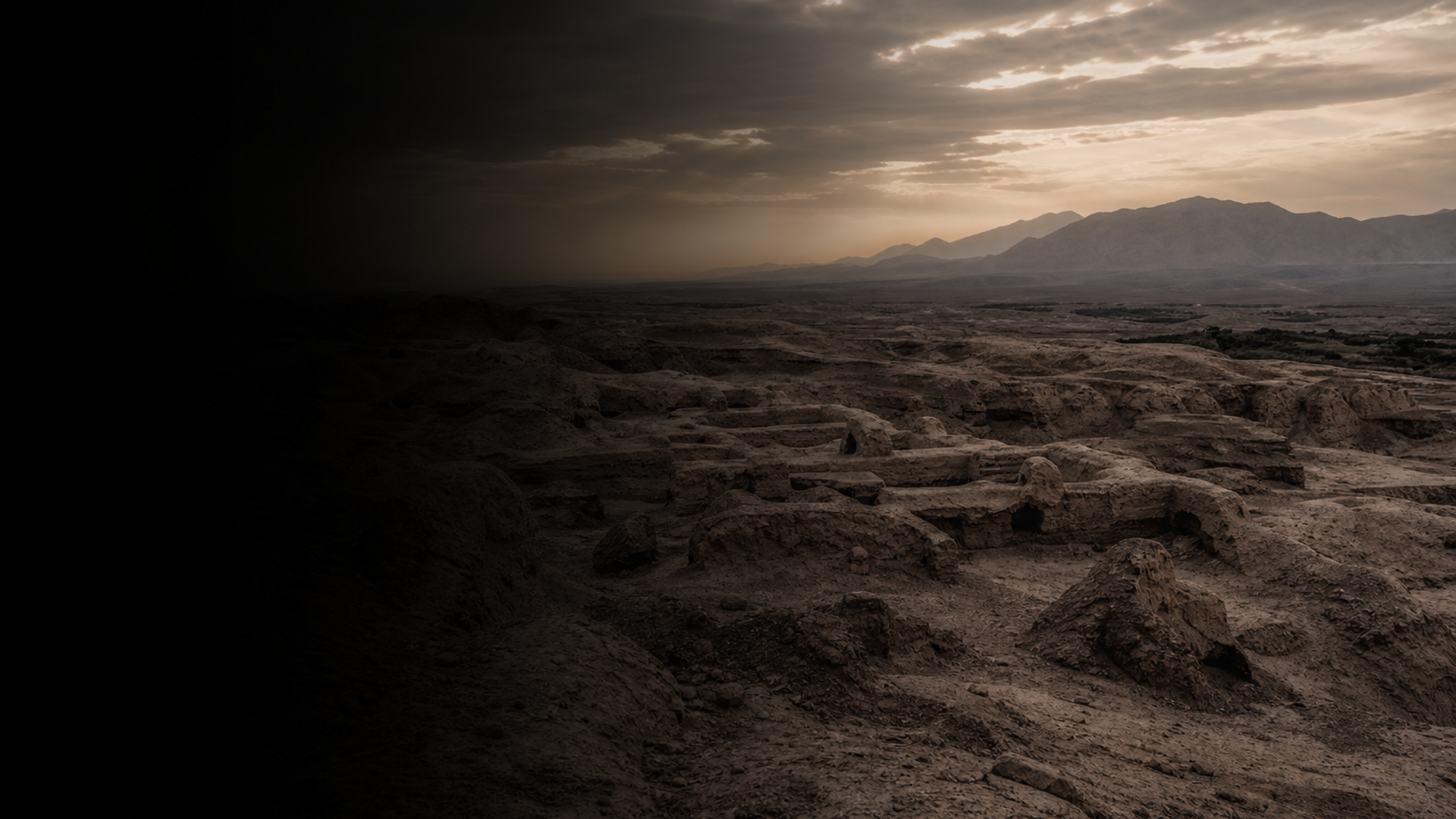
Shahr‑i Sokhta (literally “The Burnt City”) sits in the broad Seistan plain of southeastern Iran and flourished in the Bronze Age between roughly 3200 and 1900 BCE. Archaeological layers reveal a long trajectory from early urbanism to a complex regional center: mudbrick neighborhoods, craft workshops, and an economy tied to seasonal irrigation and long‑distance exchange. The site’s material palette—elaborate ceramics, glazed objects, and lapidary work—speaks to connections both westward into the Iranian plateau and eastward toward the Indus Valley and fourth‑millennium trade corridors.

In cinematic terms, imagine caravans threading a sunlit plain, reeds whispering along the Helmand tributaries, and artisans shaping faience and shell into forms that trace networks of demand and meaning. Archaeological data indicates phases of growth and reorganization across centuries rather than a single moment of foundation.

Genetically, the human remains sampled from Shahr‑i Sokhta (11 individuals) offer a nascent portrait of population dynamics in this frontier zone. Observed Y‑DNA and mtDNA lineages suggest a mosaic of ancestries: signals typical of the Near East alongside markers more frequent farther south in South Asia. Limited sample size and uneven preservation mean conclusions about migration versus local continuity remain provisional, but the combined archaeological and genetic picture points to a connected, cosmopolitan Bronze Age horizon in Seistan.

  • Urban center in Seistan, active c. 3200–1900 BCE
  • Material culture shows east–west exchange (Indus, Iranian plateau)
  • Genetic samples (11 individuals) reveal mixed Near Eastern and southern markers
Chapter IV

Daily Life & Society

Excavations at Shahr‑i Sokhta reveal a lived landscape of workshops, courtyards, and burial grounds. Streets of baked and sun‑dried brick threaded neighborhoods where potters, beadmakers, and metallurgists practiced skills passed across generations. Zooarchaeological and botanical remains indicate agriculture based on irrigated cereals alongside pastoral herding—seasonal rhythms likely structured labor, ritual, and movement.

Burials and grave goods provide intimate glimpses: some tombs contained personal ornaments, shell beads, and tools that suggest status differentiation and craft specialization. The presence of standardized weights and seals in certain contexts hints at organized exchange and administrative practices. Pottery styles and decorative motifs show local traditions that absorbed external aesthetics, consistent with a city that both produced and consumed goods across a wide hinterland.

Archaeological evidence indicates resilience and transformation: phases of construction, repair, and changing funerary rites across centuries. While the physical remains are rich, linking specific social identities to genetic clusters requires caution. Still, the tandem reading of bones and objects allows us to imagine households where biological ancestry, craft, and social roles interlaced in the daily choreography of Bronze Age life.

  • Workshops and households specialized in pottery, beadmaking, and metalworking
  • Burial evidence shows social differentiation and long‑distance exchange
Chapter V

Genetic Profile

DNA recovered from 11 individuals at Shahr‑i Sokhta offers direct biological evidence to complement the archaeological record. Y‑chromosome results show several individuals carrying haplogroup J (4 samples), a lineage common across the Near East, along with single observations of BT and L. On the mitochondrial side, haplogroups include R (2), U (2), L (1), M (1), and W (1). These maternal and paternal markers paint a picture of mixed affinities rather than a single homogeneous population.

Haplogroup J’s presence aligns with deep Near Eastern connections, consistent with archaeological indicators of cultural continuity on the Iranian plateau. The detection of L and M lineages, more frequently observed in South and Southwest Asia, suggests either gene flow from the south or long‑standing connections with populations in the Indus‑adjacent sphere. MtDNA haplogroups R and U are widespread across West Eurasia and may reflect local maternal continuities or admixture episodes.

It is important to emphasize caution: with 11 sampled individuals, statistical power is modest and some haplogroups remain unreported, so patterns should be treated as suggestive. Autosomal analyses (when available) would better resolve proportions of ancestry components (local Iranian‑related, South Asian, and other Eurasian inputs). Nevertheless, the current genetic snapshot dovetails with material evidence to indicate Shahr‑i Sokhta functioned as a biological and cultural crossroads during the Bronze Age.

  • Y‑DNA dominated by J (4/11); single observations of BT and L
  • mtDNA shows a mix of West Eurasian (R, U) and South/Southwest Asian (M, L) lineages
Chapter VI

Legacy & Modern Connections

The legacy of Shahr‑i Sokhta is visible in both material echoes and genetic footprints across southwestern Asia. Archaeological continuities—craft traditions, urban planning elements, and long‑distance exchange networks—resonate in later Bronze Age and Iron Age societies of the Iranian plateau. Genetically, the mixed lineage profile recorded at the site suggests that populations contributing to the gene pool of later communities in southeastern Iran carried a tapestry of ancestries.

Caution is necessary: with a modest sample size and incomplete haplogroup reporting, we cannot draw firm lines from these individuals to any single modern population. Still, the presence of Near Eastern and southern markers aligns with broader regional processes—mobility, trade, and intermarriage—that wove human groups together across vast landscapes. For visitors and descendants, the burnt city remains a cinematic reminder that the cradle of early urban life in Seistan was also a place where genes, goods, and ideas intersected.

  • Material and genetic signals point to long‑term ties across the Iranian plateau and toward South Asia
  • Current conclusions are suggestive; broader sampling could clarify links to later populations
AI 电源

AI 助手

就 Shahr‑i Sokhta Bronze Age Echoes 文化提问

AI 助手 由DNAGENICS公司制作

解锁此特性
Ask questions about the Shahr‑i Sokhta Bronze Age Echoes culture. Our AI assistant can explain genetic findings, historical context, archaeological evidence, and modern connections.
AI 样本分析

Shahr‑i Sokhta Bronze Age Echoes 文化是人类历史中值得了解的一章……

遗传分析揭示了与早期种群的联系,同时显示了独特的适应和文化创新的证据。 古代DNA样本提供了对迁徙模式、社会结构以及古代种群之间的生物关系的深刻见解。

这是人工智能分析的预览。 解锁全AI 助手, 以探索关于:

  • 遗传组成和祖先
  • 移徙模式和起源
  • 日常生活和文化习俗
  • 现代遗传遗产

探索更古老的文化

揭开古代世界文明的故事

使用优惠码 可减免 35% • 11月12日 到期




