Shekshovo‑9: Echoes of Early Medieval Russia

下载的 PDF 是图像副本。如需可选中文本及更好的辅助技术支持,请使用打印功能。

Shekshovo‑9: Echoes of Early Medieval Russia

揭开一个失落的文明

正在加载考古记录……

正在收集古代记录

跳转到主内容
Shekshovo‑9: Echoes of Early Medieval Russia
文明焦点

Shekshovo‑9: Echoes of Early Medieval Russia

Archaeology and aDNA from Ivanovo Oblast hint at distant connections in a local landscape

772 CE - 1027 CE
Shekshovo-9, Ivanovo Oblast, Russia
滚动开始
Chapter I

剧情

了解 Shekshovo‑9: Echoes of Early Medieval Russia 文化

Shekshovo-9 (Ivanovo Oblast) yields four Early Medieval (772–1027 CE) samples. Archaeology and limited aDNA point to local West Eurasian maternal ancestry (mtDNA H) and diverse male lines (Y E, G), but small sample size makes conclusions preliminary.

Time Period

772–1027 CE

Region

Shekshovo-9, Ivanovo Oblast, Russia

Common Y-DNA

E (1), G (1) — very small sample

Common mtDNA

H (1) — very small sample

Chapter II

时间线

这种文化历史上的关键时刻

772 CE

Earliest dated sample from Shekshovo-9

One of the four aDNA samples from Shekshovo-9 dates to 772 CE, anchoring the site in the early medieval period.

Chapter III

Origins & Emergence

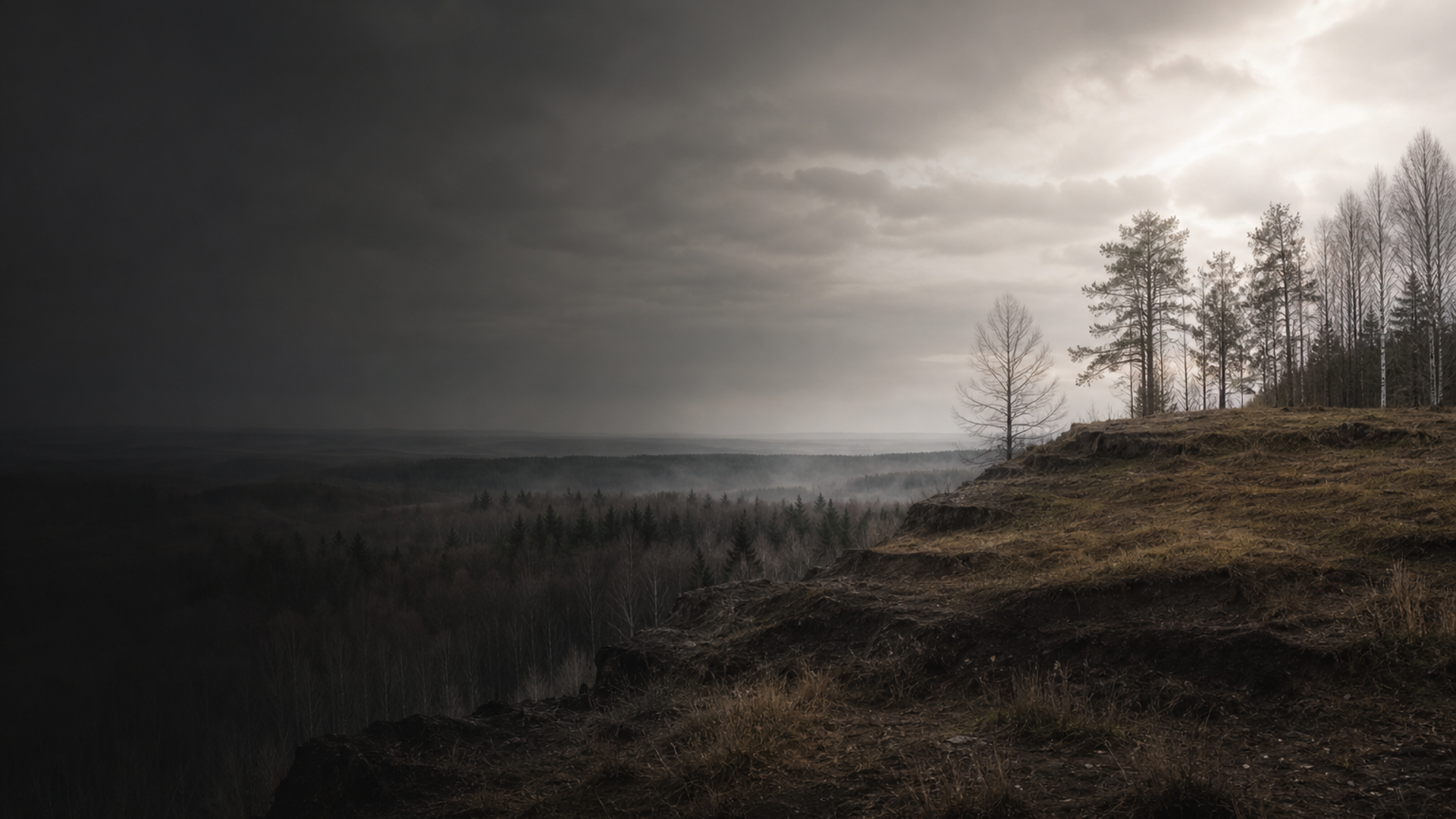
In the trembling mosaic of rivers and birch forest that carpets Ivanovo Oblast, Shekshovo-9 occupies a narrow window into the Early Medieval world (772–1027 CE). Archaeological data indicates human activity in a landscape of small settlements and burial grounds; excavations at Shekshovo-9 have produced skeletal remains now dated to the late 8th through the early 11th centuries CE. These dates place the site in a period of regional transformation as local East Slavic communities interacted with travelers, traders, and migrating groups across the forest-steppe borderlands.

Material traces here are sparse in the published record, so the story is told as much by absence as presence: shallow graves, domestic debris, and the quiet palimpsest of plow and peat. The cinematic image is of men and women living in wooden homesteads, moving seasonally across river valleys, while long-distance links—economic, marital, or martial—left subtler marks.

Archaeological data indicates that the Shekshovo horizon is not monolithic: spatial variation and mixed stratigraphy suggest multiple phases of use and re-use. When paired with aDNA, even a handful of genomes becomes a flashlight in the dark: they reveal threads of ancestry that complement, complicate, and occasionally contradict what artifacts alone can tell us. Limited evidence suggests local continuity with intermittent external connections rather than wholesale population replacement.

  • Dated to 772–1027 CE in the Early Medieval period
  • Located at Shekshovo-9, Gavrilovo-Posadsky District, Ivanovo Oblast
  • Archaeological data indicates mixed use phases and modest material assemblages
Chapter IV

Daily Life & Society

The human scale at Shekshovo-9—as best as the fragments allow—is intimate and grounded. Archaeological data indicates small household units engaged in mixed agro-pastoral practices adapted to a cool, forested environment. Wood-built homes, seasonal smoke, and storage pits would have framed daily life; craft production and exchange networks likely radiated along river corridors.

Burial practices at many Early Medieval East Slavic sites combine practical and symbolic choices. At Shekshovo-9, the funerary record is limited but suggests inhumation in modest graves; grave goods, if present, are not abundant in the available reports, implying social economies that emphasized everyday survival over ostentatious display.

This was a world of layered identities. Kinship and local belonging mattered, but so did mobility: traders, artisans, and seasonal laborers moved along routes that connected the Volga basin, forest-steppe fringes, and northern waterways. The archaeological silence in some areas may hide vibrant networks of exchange in perishable materials—textiles, leather, and organic foodstuffs—that rarely survive.

Taken together, the material and genetic glimpses point to communities rooted in place yet open to person-to-person contact across medieval Eurasia.

  • Household-based economy adapted to forested river valleys
  • Burials appear modest; material culture suggests practical daily focus
Chapter V

Genetic Profile

The aDNA dataset from Shekshovo-9 comprises four samples dated between 772 and 1027 CE. Genetic results are provisional: with only four individuals, statistical power is low and patterns should be seen as tentative signals rather than definitive population portraits.

Observed lineages: one sampled individual carries Y-chromosome haplogroup E, one carries haplogroup G, and one individual carries mitochondrial haplogroup H (the fourth sample has low-resolution or undetermined lineage in available summaries). Haplogroup H is widespread across Europe and common in medieval and modern West Eurasian maternal pools; its presence at Shekshovo-9 fits expectations for an East European maternal ancestry component. By contrast, Y haplogroups E and G are less common in northern and central Russia today and in many ancient northern European series. Haplogroup E, depending on subclade, is often associated with Mediterranean, North African, or Near Eastern connections but also appears sporadically in Europe through historical mobility. Haplogroup G has deep roots in the Caucasus and western Asia and is found at varying frequencies across Eurasia.

Archaeological and historical context suggests these male-line signals could reflect long-distance contacts—trade, marriage, mercenary service, or small-scale migration—rather than a broad population replacement. Given the sample count (n=4), limited evidence suggests heterogeneous male ancestry in a predominantly West Eurasian background, but any demographic inferences must remain cautious until larger, better-sampled datasets are available.

  • Sample count is low (4); conclusions are preliminary
  • mtDNA H is consistent with West Eurasian maternal ancestry; Y E and G hint at male-line diversity
Chapter VI

Legacy & Modern Connections

Shekshovo-9 sits at an intersection of memory and mobility. Its limited aDNA record gestures toward a community whose maternal lineages were broadly West Eurasian while male lines included rarer haplogroups that may testify to connections beyond the immediate landscape. Modern populations in central Russia are the product of many such local histories layered over centuries.

Genetic continuity may exist in broad strokes, but fine details require larger datasets. The most honest legacy of Shekshovo-9 is methodological: it demonstrates how archaeology and aDNA combine to illuminate lives otherwise lost to time. Each genome is a voice; when more voices are recovered, a fuller chorus will reveal migration rhythms, social networks, and the human stories woven into medieval Russia's woodlands and waterways. For now, the Shekshovo-9 samples are a cinematic whisper—compelling, suggestive, and undeniably incomplete.

  • Suggests continuity with regional West Eurasian ancestry but with hints of external links
  • Highlights need for expanded sampling to clarify long-term population dynamics
AI 电源

AI 助手

就 Shekshovo‑9: Echoes of Early Medieval Russia 文化提问

AI 助手 由DNAGENICS公司制作

解锁此特性
Ask questions about the Shekshovo‑9: Echoes of Early Medieval Russia culture. Our AI assistant can explain genetic findings, historical context, archaeological evidence, and modern connections.
AI 样本分析

Shekshovo‑9: Echoes of Early Medieval Russia 文化是人类历史中值得了解的一章……

遗传分析揭示了与早期种群的联系,同时显示了独特的适应和文化创新的证据。 古代DNA样本提供了对迁徙模式、社会结构以及古代种群之间的生物关系的深刻见解。

这是人工智能分析的预览。 解锁全AI 助手, 以探索关于:

  • 遗传组成和祖先
  • 移徙模式和起源
  • 日常生活和文化习俗
  • 现代遗传遗产

探索更古老的文化

揭开古代世界文明的故事

使用优惠码 可减免 35% • 11月12日 到期