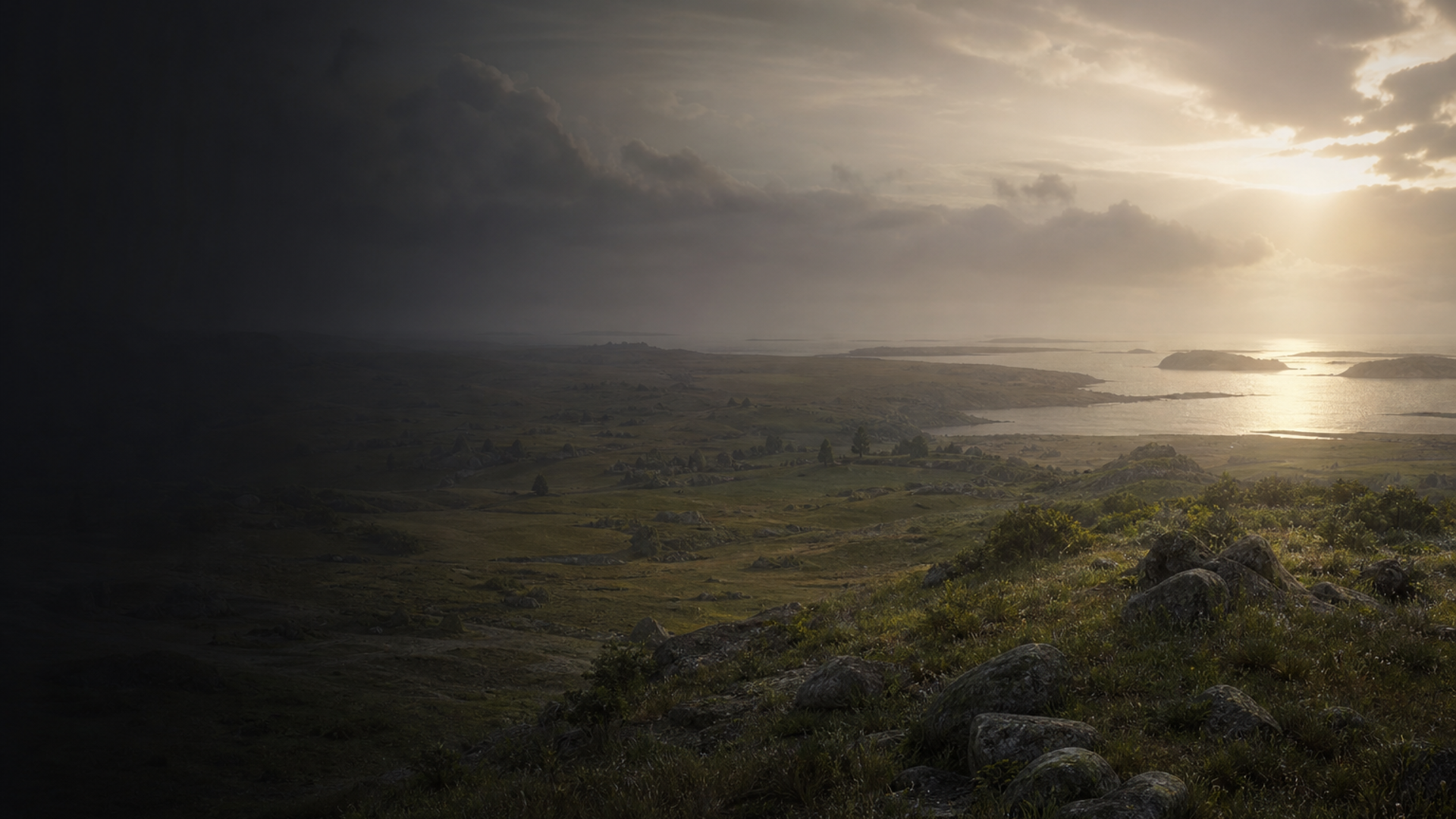
Shifting Shores — Sweden Late Neolithic

下载的 PDF 是图像副本。如需可选中文本及更好的辅助技术支持,请使用打印功能。

Shifting Shores — Sweden Late Neolithic

揭开一个失落的文明

正在加载考古记录……

正在收集古代记录

跳转到主内容
Shifting Shores — Sweden Late Neolithic
文明焦点

Shifting Shores — Sweden Late Neolithic

Coastal communities of southern Sweden (2278–1746 BCE) revealed by bones, pottery, and DNA

2278 CE - 1746 BCE
Skåne & Västra Götaland, Sweden
滚动开始
Chapter I

剧情

了解 Shifting Shores — Sweden Late Neolithic 文化

Archaeological and genetic glimpses from five Late Neolithic Swedish burials (2278–1746 BCE) along Skåne and Västra Götaland coasts. Finds link coastal economies, funerary practice, and mixed ancestries; conclusions are preliminary given the small sample set.

Time Period

2278–1746 BCE

Region

Skåne & Västra Götaland, Sweden

Common Y-DNA

R (2), I (2)

Common mtDNA

K (3), H (1), T2b (1)

Chapter II

时间线

这种文化历史上的关键时刻

2278 BCE

Dated burials begin in the Sweden_LN series

Radiocarbon dates mark the start of the Sweden_LN interval (~2278 BCE), anchoring five coastal burials that bridge Late Neolithic traditions and incoming influences.

Chapter III

Origins & Emergence

The Sweden_LN assemblage sits at the watery edge of northern Europe where lakes, inlets and fertile coastal plains shaped lifeways. Archaeological material from sites such as L Beddinge 56, Fredriksberg, Abekås I, Vattenledningen (Vellinge) and Sillvik (Gothenburg) records Late Neolithic communities adapting earlier farming traditions to rich marine and estuarine environments.

Material culture—pottery styles, polished axes, and burial practices—speaks to continuities with broader Late Neolithic Sweden while also reflecting local innovation. Radiocarbon-calibrated dates for the five samples span 2278–1746 BCE, placing them within a dynamic era when long-distance contacts, exchange of metalwork, and new social practices were intensifying across Scandinavia.

Archaeological data indicates continuity from earlier Neolithic farmers combined with persistent hunter-gatherer coastal strategies. The landscapes these people inhabited were dramatic: reed-fringed bays, rocky skerries, and farmland reclaimed from peat; such environments produced diets and material culture distinct from inland communities. Limited evidence suggests increasing mobility and connections beyond southern Sweden in this period, seen in exotic raw materials and shared funerary motifs.

Bulleted synthesis:

  • Coastal adaptation shaped economy and burial rites.
  • Material culture ties to broader Late Neolithic Sweden and regional exchange.
  • Landscape and resources encouraged mixed subsistence and mobility.
  • Coastal adaptation and mixed subsistence
  • Connections across southern Scandinavia
  • Continuity with Neolithic farming and hunter-gatherer elements
Chapter IV

Daily Life & Society

Life for Late Neolithic coastal people of southern Sweden unfolded between sea and cultivated fields. Archaeobotanical remains from the region indicate cultivation of barley and wheat alongside gathering of wild plants and extensive use of marine resources—fish, sea mammals, and shellfish. The presence of polished stone tools, bone points, and net weights at sites like Abekås I and Vattenledningen suggests combined fishing, small-scale animal husbandry, and cereal cultivation.

Burial contexts—often modest single or multiple interments with few grave goods—suggest communities structured by kinship and practical cooperation rather than monumental hierarchy. Funerary placement near shorelines or in low-lying fields may reflect ancestral ties to specific landscapes. Pottery and personal ornaments found in graves and settlements indicate identity markers tied to craft traditions and regional networks.

Archaeological evidence points to seasonal rhythms: spring and summer onshore activities (farming, tending animals), and autumn-winter emphasis on preserved marine foods. Craft specialization appears modest but important—bone and antler working, textile production, and woodworking complemented household economies.

Bulleted snapshot:

  • Mixed economy: farming, fishing, foraging
  • Modest grave goods; kin-based social organization
  • Mixed economy of field and sea
  • Kin-based communities with modest material inequality
Chapter V

Genetic Profile

The Sweden_LN dataset comprises five ancient genomes from five burial locations (L Beddinge 56; Fredriksberg; Abekås I; Vattenledningen, Vellinge; Sillvik, Gothenburg) dated 2278–1746 BCE. Given the small sample count (n=5), genetic interpretations must be treated as preliminary.

Observed uniparental markers: two Y-chromosomes fall into haplogroup R and two into haplogroup I; mitochondrial lineages are dominated by K (three individuals), with single H and T2b. These patterns echo broader tendencies seen in northern Europe during the Late Neolithic and early Bronze Age: mtDNA haplogroup K and T lineages are often associated with Neolithic farmer ancestry, while Y-haplogroup R lineages can reflect male-mediated influxes linked to Steppe-derived expansions. Haplogroup I is frequently observed in Mesolithic and local hunter-gatherer contexts.

Genome-wide studies of contemporary Late Neolithic Scandinavian populations typically reveal mixtures of three strands: local Mesolithic hunter-gatherers, Anatolian-derived early farmers, and Steppe-derived ancestry arriving earlier in the 3rd millennium BCE. The Sweden_LN uniparental profile—K-rich maternal lines and a mix of R and I paternal lines—fits this mosaic, suggesting continued admixture and sex-biased dynamics (e.g., incoming males, local female continuity) as a plausible scenario. However, with only five individuals, signals of population-level structure, ancestry proportions, and social behavior are tentative and require larger sample sets for confirmation.

Key genetic caveats:

  • Small sample size (n=5) limits statistical power.
  • Uniparental markers are informative but do not capture full ancestry complexity.
  • Small sample set (n=5): interpretations are preliminary
  • Mixed uniparental signals: mtDNA K dominance; Y R and I present
Chapter VI

Legacy & Modern Connections

The genetic and archaeological echoes of Sweden_LN feed into Scandinavia's long story. Maternal lineages such as K and T2b persist in modern European gene pools, while Y-lineages R and I continue to be important components of northern European paternal diversity. Archaeologically, the shifting coastal lifeways of the Late Neolithic set templates for later Bronze Age maritime economies and regional interactions.

Culturally, small coastal communities of this era contributed practices—boat use, seasonal resource scheduling, craft repertoires—that would be adapted and amplified in later centuries. For modern inhabitants, the Sweden_LN record is a fragmentary but vivid reminder that ancestry in southern Sweden is the product of multiple ancient strands woven through migration, exchange, and local survival strategies. Continued sampling and analysis will clarify how representative these five individuals are for broader population histories.

Legacy bullets:

  • Uniparental lineages connect ancient coastal people to modern European diversity
  • Coastal adaptations influenced later Scandinavian economic and social traditions
  • Ancient lineages contribute to modern genetic diversity
  • Coastal lifeways shaped later regional developments
AI 电源

AI 助手

就 Shifting Shores — Sweden Late Neolithic 文化提问

AI 助手 由DNAGENICS公司制作

解锁此特性
Ask questions about the Shifting Shores — Sweden Late Neolithic culture. Our AI assistant can explain genetic findings, historical context, archaeological evidence, and modern connections.
AI 样本分析

Shifting Shores — Sweden Late Neolithic 文化是人类历史中值得了解的一章……

遗传分析揭示了与早期种群的联系,同时显示了独特的适应和文化创新的证据。 古代DNA样本提供了对迁徙模式、社会结构以及古代种群之间的生物关系的深刻见解。

这是人工智能分析的预览。 解锁全AI 助手, 以探索关于:

  • 遗传组成和祖先
  • 移徙模式和起源
  • 日常生活和文化习俗
  • 现代遗传遗产

探索更古老的文化

揭开古代世界文明的故事

使用优惠码 可减免 35% • 11月12日 到期