Shoreline Foragers of Denmark

下载的 PDF 是图像副本。如需可选中文本及更好的辅助技术支持,请使用打印功能。

Shoreline Foragers of Denmark

揭开一个失落的文明

正在加载考古记录……

正在收集古代记录

跳转到主内容
Shoreline Foragers of Denmark
文明焦点

Shoreline Foragers of Denmark

Ertebølle communities between sea and forest, seen through archaeology and DNA

5520 CE - 4241 BCE
Denmark (Jutland, Zealand, Funen)
滚动开始
Chapter I

剧情

了解 Shoreline Foragers of Denmark 文化

Coastal hunter‑gatherers of the Ertebølle tradition (5520–4241 BCE) in Denmark, known from shell middens and burials at Vedbæk, Ertebølle and Jutland sites. Ancient DNA shows strong hunter‑gatherer lineages (mtDNA U, Y haplogroup I), revealing population continuity and limited farmer contact.

Time Period

5520–4241 BCE

Region

Denmark (Jutland, Zealand, Funen)

Common Y-DNA

Mostly I (including I2); some F (based on available males)

Common mtDNA

Predominantly U lineages (including U5a); R detected in a minority

Chapter II

时间线

这种文化历史上的关键时刻

5520 BCE

Early coastal occupations

Earliest radiocarbon dates in the dataset mark the establishment of dense shell midden sites on Jutland and Zealand coastlines.

5200 BCE

Peak midden accumulation

Major midden formation at Ertebølle and Holmegard reflects intensive use of marine resources.

4241 BCE

Terminal sequence and interaction

Latest dated individuals show evidence of increasing contact with Neolithic farming groups.

Chapter III

Origins & Emergence

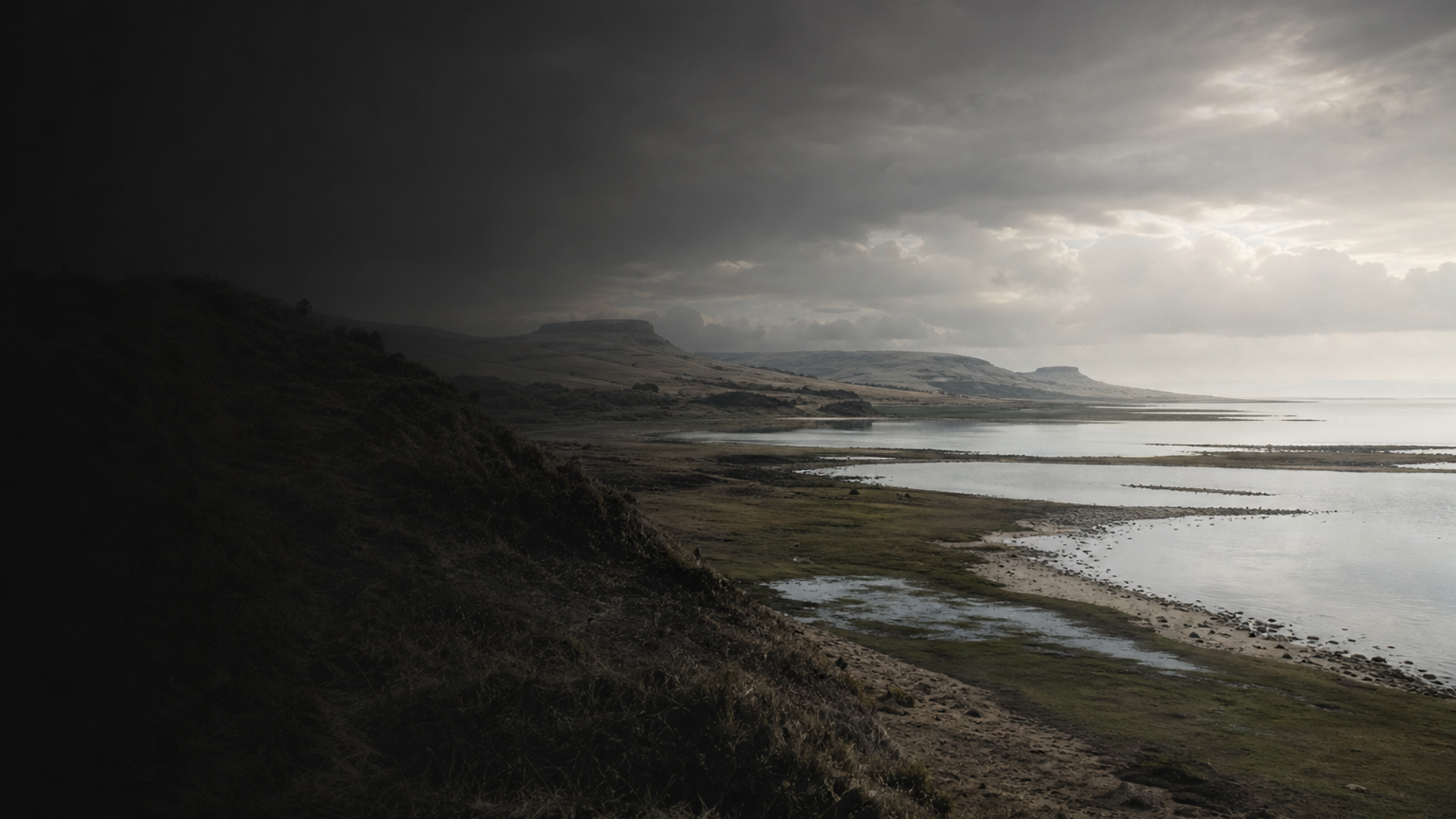
Along the indented coasts of Jutland, Zealand and Funen, a distinctive maritime lifeway crystallized in the mid‑6th millennium BCE. Archaeological sites such as Ertebølle, Holmegard‑Djursland, Vedbæk (Henriksholm‑Bøgebakken), Dragsholm and Fannerup E preserve thick shell middens, hearths, bone tools and dug‑out canoes that speak of communities closely tied to estuaries, lagoons and rich littoral resources.

Archaeological data indicates that these groups inherited much from Late Mesolithic hunter‑gatherer populations of northern Europe but also began to occupy new ecological niches as sea levels and coastlines shifted. Radiocarbon dates in this dataset span 5520–4241 BCE, placing the Denmark_LM_Ertebølle materials in the terminal Mesolithic and the Mesolithic–Neolithic transition. Limited evidence suggests local variation in material culture between Jutland middens and burial practices on Zealand, implying diverse regional expressions rather than a single monolithic society.

Cinematic detail: gatherings of smoked fish drying on racks, bone harpoons glinting at dawn, and children playing among the shells of millennia. Yet scientifically, the mosaic of sites records adaptation more than abrupt replacement — a pattern later reinforced by genetic data.

  • Sites: Ertebølle, Holmegard‑Djursland, Vedbæk, Dragsholm, Fannerup E
  • Dates: 5520–4241 BCE (radiocarbon range in this dataset)
  • Represents terminal Mesolithic / Mesolithic–Neolithic transition in Denmark
Chapter IV

Daily Life & Society

Daily life for Ertebølle communities revolved around the shifting interface of land and sea. Shell middens testify to diets rich in shellfish, fish (cod, flatfish), seal and deer; butchered bones, hearths and grinding stones show seasonal rounds that blended fishing, hunting and limited plant processing. Settlements such as Norsminde and Langø Skaldynge reveal repeated occupation layers — places revisited across generations — while Vedbæk burials reveal ritual care for the dead, with grave goods including ochre, bone points and sometimes amber.

Socially, the archaeological record suggests small kin‑based groups with mobility constrained by rich coastal resources. Material culture — finely worked flint blades, bone harpoons, lacquered paddles — indicates specialist craft knowledge transmitted across households. Middens are not only refuse: they are cultural archives documenting foodways, craft debris, and episodic feasting.

Archaeological evidence indicates contact with neighboring traditions: pressure‑flaked lithics and exotic raw materials hint at exchange networks reaching into inland Denmark and southern Scandinavia. However, the evidence for large‑scale demographic change is limited in these sites; instead, the picture is of resilient coastal lifeways facing incoming Neolithic pressures.

  • Economy: marine resources, hunting, seasonal plant use
  • Material culture: bone harpoons, flint tools, shell middens as community archives
Chapter V

Genetic Profile

The Denmark_LM_Ertebølle sample set (n=22) offers a balanced archaeological snapshot paired with ancient DNA. Mitochondrial DNA is overwhelmingly dominated by haplogroup U lineages (18 of 22 samples, including at least one U5a), a signature characteristic of European Mesolithic hunter‑gatherers and consistent with a long history of local maternal continuity. A smaller number of R haplogroups (3 samples) indicate additional maternal diversity but remain a minority.

Y‑chromosome assignments are fewer (reflecting the number of male individuals typed) and show a prevalence of haplogroup I (10 instances reported across datasets, with at least one I2) and a rare F (1). This Y pattern aligns with patterns seen in Western and Scandinavian Mesolithic males, where I‑derived lineages were common. Taken together, the uniparental markers point to a population largely composed of indigenous hunter‑gatherer ancestry.

Genome‑wide data (where available) typically place Ertebølle individuals close to Western Hunter‑Gatherer (WHG) clusters, with limited admixture from incoming Anatolian‑derived farmer ancestry in some later individuals — archaeological and genetic signs that contact and gene flow increased toward the end of the sequence. Because the sample count is moderate (22) and male Y calls are fewer, conclusions about demographic dynamics should be considered provisional and regionally specific rather than broadly generalized.

  • mtDNA: Predominantly U (18), with R in the minority; includes U5a
  • Y‑DNA: Mostly haplogroup I (including I2), few F; reflects hunter‑gatherer paternal ancestry
Chapter VI

Legacy & Modern Connections

The Ertebølle communities of Denmark left a layered legacy: archaeologically in enduring shell middens and coastal settlements, and genetically in maternal lineages that echo across northern Europe. The dominance of mtDNA U and Y haplogroup I among these samples ties them to the broader story of post‑glacial European hunter‑gatherers whose genetic footprint persisted even after Neolithic farmers spread into the region.

For modern populations, some uniparental lineages characteristic of Mesolithic northern Europe survive at low frequencies, but centuries of migration and admixture — including Neolithic farmers and later Bronze Age movements — reshaped the genetic landscape. Archaeology and aDNA together emphasize continuity at local scales amid long‑term change: Ertebølle people were not simply replaced overnight but contributed to the genetic and cultural tapestry of later Danish societies. Given regional variability and the moderate sample size, ongoing sampling will refine how these coastal lifeways fed into the genetic history of northern Europe.

  • Contributes to continuity of Mesolithic maternal lineages in northern Europe
  • Highlights local resilience and later admixture during the Neolithic transition
AI 电源

AI 助手

就 Shoreline Foragers of Denmark 文化提问

AI 助手 由DNAGENICS公司制作

解锁此特性
Ask questions about the Shoreline Foragers of Denmark culture. Our AI assistant can explain genetic findings, historical context, archaeological evidence, and modern connections.
AI 样本分析

Shoreline Foragers of Denmark 文化是人类历史中值得了解的一章……

遗传分析揭示了与早期种群的联系,同时显示了独特的适应和文化创新的证据。 古代DNA样本提供了对迁徙模式、社会结构以及古代种群之间的生物关系的深刻见解。

这是人工智能分析的预览。 解锁全AI 助手, 以探索关于:

  • 遗传组成和祖先
  • 移徙模式和起源
  • 日常生活和文化习俗
  • 现代遗传遗产

探索更古老的文化

揭开古代世界文明的故事

使用优惠码 可减免 35% • 11月12日 到期





