Sidon: Middle Bronze Age Lebanon

下载的 PDF 是图像副本。如需可选中文本及更好的辅助技术支持,请使用打印功能。

Sidon: Middle Bronze Age Lebanon

揭开一个失落的文明

正在加载考古记录……

正在收集古代记录

跳转到主内容
Sidon: Middle Bronze Age Lebanon
文明焦点

Sidon: Middle Bronze Age Lebanon

Human lives and genomes from Sidon’s College Site, 1950–1600 BCE

1950 CE - 1600 BCE
Sidon, Lebanon (College Site)
滚动开始
Chapter I

剧情

了解 Sidon: Middle Bronze Age Lebanon 文化

Archaeogenetic snapshot from five Middle Bronze Age individuals excavated at Sidon (College Site), Lebanon (1950–1600 BCE). Limited samples suggest Near Eastern Y haplogroup J and diverse maternal lineages, offering preliminary links between local communities and wider Levantine networks.

Time Period

1950–1600 BCE

Region

Sidon, Lebanon (College Site)

Common Y-DNA

J (observed in 2/5 samples)

Common mtDNA

R, HV, K, N, H (each observed)

Chapter II

时间线

这种文化历史上的关键时刻

1950 BCE

Middle Bronze Age occupation at Sidon (College Site)

Archaeological layers and burials at Sidon's College Site date to c. 1950 BCE, reflecting coastal urbanism and long-distance trade in the Levant.

Chapter III

Origins & Emergence

The Middle Bronze Age horizon at Sidon (c. 1950–1600 BCE) unfolds in layers of stone, ash and traded pottery, marking a period of urban consolidation along the Levantine coast. Archaeological data indicates expanded sedentarism, fortified settlements, and intensified maritime exchange with Cyprus, Anatolia and Egypt. At the College Site in Sidon, burial contexts and associated material culture place these five individuals within that dynamic coastal network.

Genetically, the small sample set offers a tentative window into origins: two male individuals carry Y-chromosome haplogroup J, a lineage widespread in the Near East and often linked to long-standing Levantine populations. Maternal lineages are diverse — R, HV, K, N and H — reflecting a tapestry of maternal ancestry rather than a single founder group. Limited evidence suggests continuity with earlier Levantine populations but also hints at connections mediated by trade and mobility.

Because only five genomes are available, conclusions about population movements, founder events or demographic shifts remain provisional. Archaeological context — settlement patterns, crafts, and imported goods — provides essential cultural scaffolding for interpreting these genetic signals, but larger datasets are required to resolve finer patterns of migration or admixture.

  • Sidon (College Site) dates to c. 1950–1600 BCE, Middle Bronze Age Lebanon
  • Material culture shows coastal urban networks and maritime trade
  • Genetic signals are consistent with broader Near Eastern lineages but remain preliminary
Chapter IV

Daily Life & Society

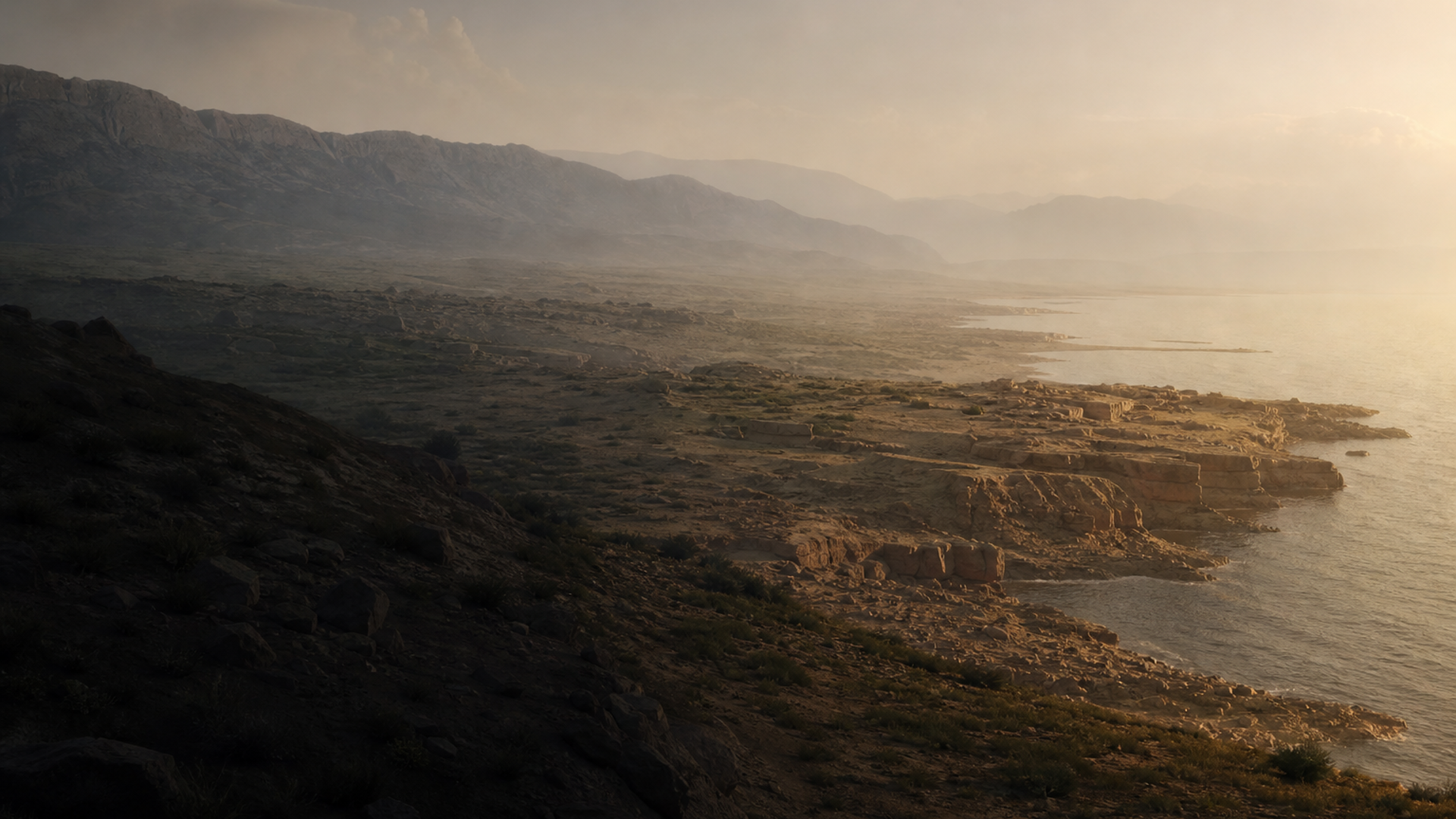
Imagine the harbor at Sidon waking at dawn: boats cutting a low sunlit path, merchants sorting amphorae, artisans hammering bronze and shaping faience. Archaeological remains from the Middle Bronze Age capture fragments of that lived world — domestic floors, hearths, pottery assemblages, and burial pits — which together outline economy, craft specializations and social ties.

Excavations at coastal sites like Sidon reveal a mixed economy of agriculture inland and marine exploitation along the shore, bolstered by long-distance trade. Imported ceramics and prestige goods indicate participation in interregional exchange networks; locally produced objects speak to skilled craft traditions. Funerary evidence at the College Site shows variability in burial treatments, suggesting social differentiation or complex family structures.

Osteological and genetic analyses complement these material traces. While bone chemistry can reveal diet and mobility, DNA begins to illuminate kinship patterns and maternal/paternal lineages within cemeteries. In the Sidon sample, the diversity of mtDNA haplogroups suggests a community with multiple maternal origins or connections, while repeated Y-haplogroup J may point to patrilineal continuity in some households. However, with only five genomes, interpretations of social organization must remain cautious.

  • Coastal economy with agriculture, craft production and maritime trade
  • Burial variability hints at social complexity; DNA offers glimpses of kinship
Chapter V

Genetic Profile

The genomic snapshot from five individuals at Sidon’s College Site provides a small but evocative dataset linking archaeology to ancestry. Two of the five male samples carry Y-chromosome haplogroup J — a clade common across the Near East in both ancient and modern populations. This presence aligns with expectations for Levantine male lineages during the Bronze Age, but with only two J carriers the pattern could reflect local continuity in some households rather than population-wide dominance.

Mitochondrial diversity is notable: one each of R, HV, K, N and H were observed. These mtDNA lineages have broad geographic distributions, with many subclades frequent in the Near East and Europe. Such maternal variety is consistent with coastal hubs acting as crossroads, where women may have moved through marriage, trade, or migration, contributing to heterogeneous maternal ancestry within a relatively compact community.

Archaeogenetic interpretation must emphasize uncertainty: sample count is five (<10), so statistical power is low and protective against over-generalization. Nevertheless, these genomes integrate with regional datasets that show continuity of Levantine ancestry across the Bronze Age, punctuated by episodes of contact and gene flow. Future sampling from Sidon and neighboring sites will be essential to test whether observed patterns reflect local household structure, broader demographic processes, or episodic admixture events.

  • Y-DNA: haplogroup J observed in 2 of 5 samples — suggestive of Near Eastern paternal lines
  • mtDNA: diverse maternal lineages (R, HV, K, N, H) indicating heterogeneous maternal ancestry
Chapter VI

Legacy & Modern Connections

The genetic echoes from Sidon’s Middle Bronze Age reverberate into the present: many Y and mtDNA lineages identified in ancient Levantine burials persist in modern populations across Lebanon and the eastern Mediterranean. Archaeological continuity in settlement locations and material culture, paired with genetic continuity in some lineages, suggests threads of ancestry that link ancient coastal communities to their descendants.

Yet the picture is complex. Centuries of trade, migration, conquest and cultural exchange have layered additional genetic inputs onto this foundation. The five Sidon genomes offer a tantalizing, cinematic glimpse into one moment of that deep history — illuminating connections, but not closing questions. Expanded sampling and integrated analyses, combining archaeology, isotope chemistry and broader genomic datasets, will refine our understanding of how ancient coastal lifeways shaped the genetic map of the region.

  • Some ancient lineages appear to persist in the modern Levant, hinting at long-term continuity
  • Centuries of contact mean modern genetic landscapes are the product of many layered events
AI 电源

AI 助手

就 Sidon: Middle Bronze Age Lebanon 文化提问

AI 助手 由DNAGENICS公司制作

解锁此特性
Ask questions about the Sidon: Middle Bronze Age Lebanon culture. Our AI assistant can explain genetic findings, historical context, archaeological evidence, and modern connections.

AI 样本分析

Sidon: Middle Bronze Age Lebanon 文化是人类历史中值得了解的一章……

遗传分析揭示了与早期种群的联系,同时显示了独特的适应和文化创新的证据。 古代DNA样本提供了对迁徙模式、社会结构以及古代种群之间的生物关系的深刻见解。

这是人工智能分析的预览。 解锁全AI 助手, 以探索关于:

  • 遗传组成和祖先
  • 移徙模式和起源
  • 日常生活和文化习俗
  • 现代遗传遗产

探索更古老的文化

揭开古代世界文明的故事

使用优惠码 可减免 35% • 11月12日 到期