Srubnaya–Alakul at Nepluyevka

下载的 PDF 是图像副本。如需可选中文本及更好的辅助技术支持,请使用打印功能。

Srubnaya–Alakul at Nepluyevka

揭开一个失落的文明

正在加载考古记录……

正在收集古代记录

跳转到主内容
Srubnaya–Alakul at Nepluyevka
文明焦点

Srubnaya–Alakul at Nepluyevka

Bronze Age barrow society in the southern Urals, revealed by graves and genomes

1950 CE - 1622 BCE
Nepluyevsky Barrow Necropolis, Chelyabinsk Oblast, Russia
滚动开始
Chapter I

剧情

了解 Srubnaya–Alakul at Nepluyevka 文化

Buried between 1950–1622 BCE at Nepluyevsky Barrow Necropolis (Chelyabinsk Oblast), the Srubnaya–Alakul assemblage combines timber-grave funerary rites with a mixed genetic signature—Y haplogroup Q dominant and diverse maternal lineages—hinting at steppe lifeways and northern Eurasian connections.

Time Period

1950–1622 BCE

Region

Nepluyevsky Barrow Necropolis, Chelyabinsk Oblast, Russia

Common Y-DNA

Q (16), R (2)

Common mtDNA

U (13), H (8), T (5), K (2), H2b (2)

Chapter II

时间线

这种文化历史上的关键时刻

1900 BCE

Use of Nepluyevsky Barrow Necropolis

Construction and use of timber-grave barrows at Nepluyevka, reflecting Srubnaya–Alakul funerary traditions and active regional connections.

Chapter III

Origins & Emergence

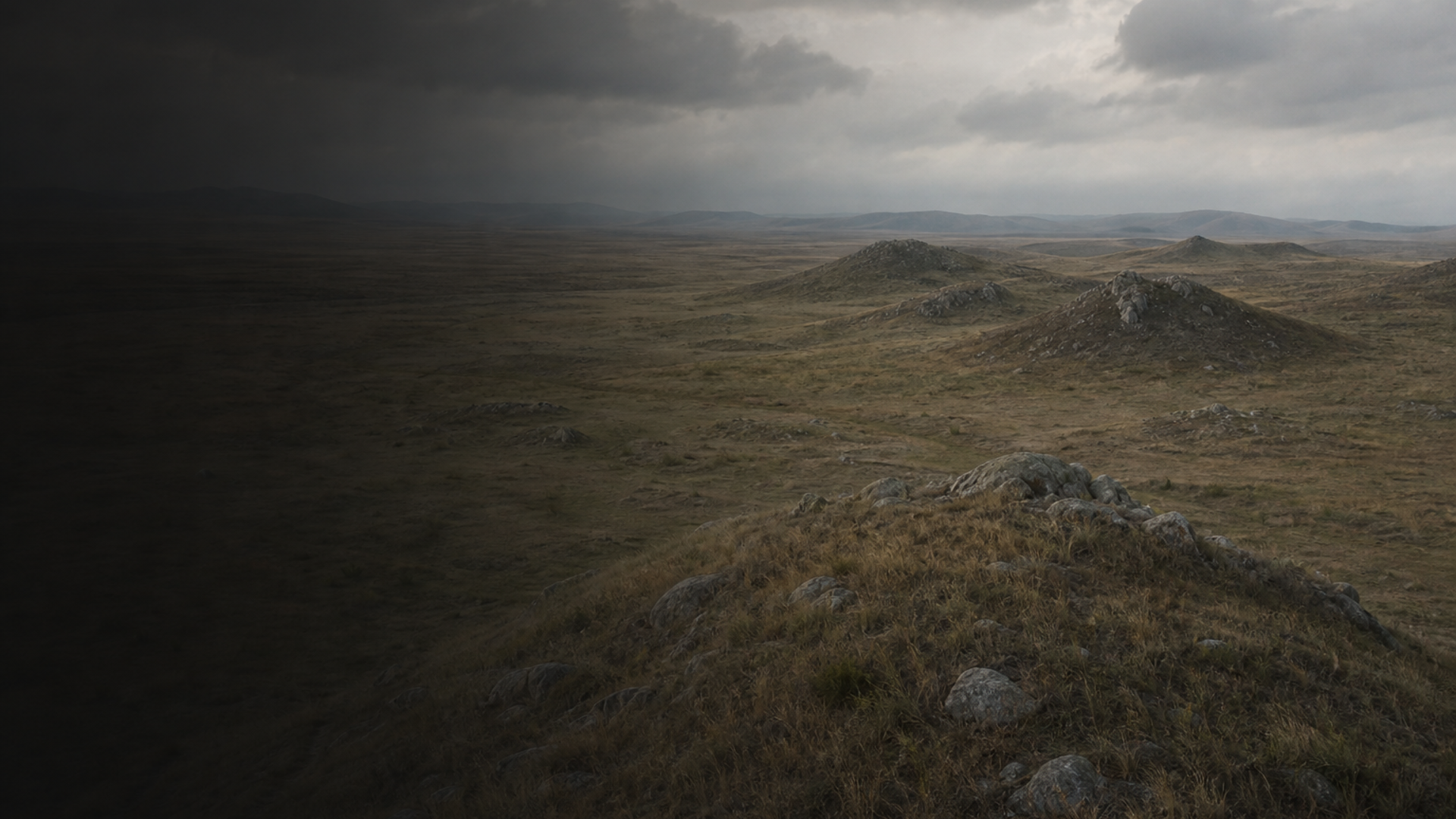
On a windswept flank of the southern Urals, the Nepluyevsky Barrow Necropolis preserves a cinematic snapshot of Bronze Age movement and remaking. Archaeological data indicates these burials belong to the Srubnaya–Alakul horizon, a hybrid cultural expression that archaeologists tie to timber-built graves and specific pottery and metalwork styles across the steppe. Radiocarbon-dated contexts at Nepluyevka cluster between 1950 and 1622 BCE, placing these individuals in the middle to late Bronze Age when mobile pastoral lifeways intensified interregional contact.

Material culture suggests continuity with the Srubnaya and Alakul traditions: rectangular timber structures, grave goods emphasizing animal husbandry, and crafted bronze items. The presence of Alakul-style ceramics in some graves points toward cultural exchange or convergence rather than a simple population replacement. Limited evidence from a single necropolis cautions against overgeneralizing: while the barrows capture a localized community, broader regional networks across the southern Urals and western Siberia undoubtedly shaped their emergence.

The archaeological picture is one of mobility and connection—corridors of people, goods, and ideas sweeping across open landscapes. Where osteology, grave architecture, and artifact typology meet, we see a people negotiating identity at the margins of steppe and upland forest.

  • Nepluyevsky Barrow Necropolis dated 1950–1622 BCE
  • Timber-grave practices link Srubnaya and Alakul traditions
  • Material culture indicates interregional exchange across the southern Urals
Chapter IV

Daily Life & Society

The lives implied by the Nepluyevka burials are pragmatic and elemental: herds moving across seasonal pastures, crafted bronzes glinting in low-light interiors, and communal rites centered on barrow construction. Archaeological remains—animal bone assemblages, portable metal tools, and wear patterns on teeth and bones—point to a mixed economy of pastoralism, supplemented by hunting and small-scale cultivation.

Grave goods emphasize mounted mobility and animal husbandry: harness fragments, bone spatulae, and simple personal ornaments suggest social roles tied to stock management and long-distance exchange. Variation in grave richness implies social differentiation; some barrows contain modest ensembles while others include multiple crafted objects, hinting at households with greater access to prestige goods.

Civic and ritual life likely revolved around barrow landscapes. The process of building timber graves and raising earthen mounds was a social act that memorialized lineage and territory. Archaeological indicators of communal labor—stone packing, deliberate spatial organization of barrows—suggest people invested labor and memory into these places, creating visible claims on the landscape across generations.

  • Economy centered on pastoralism with hunting and cultivation
  • Grave goods reflect mobility, animal husbandry, and social differentiation
Chapter V

Genetic Profile

Genomic sampling from 32 individuals at Nepluyevsky provides a meaningful though regionally focused window into Srubnaya–Alakul ancestry. The most striking result is the high frequency of Y-chromosome haplogroup Q (16 of 32 males sampled), with a smaller presence of haplogroup R (2 individuals). This male-line signal indicates a substantial representation of lineages that, in broader Eurasia, show deep northern and eastern affiliations; however, haplogroup labels alone do not equate to a single ethnic origin and must be interpreted in the context of autosomal ancestry and archaeology.

Mitochondrial diversity is pronounced: U lineages (13) are the most common matrilineal marker, followed by H (8), T (5), K (2), and H2b (2). The maternal profile—strong representation of U and H types—aligns with widespread Eurasian steppe and forest-steppe maternal pools. Autosomal patterns (where available) suggest a mixed ancestry profile consistent with steppe pastoralist backgrounds combined with local northern Eurasian inputs. Limited geographic sampling (one necropolis) means these patterns are robust for Nepluyevka but should be treated cautiously when extrapolating to the entire Srubnaya–Alakul horizon.

Together, the genetic data paint a picture of a population shaped by mobility and admixture: male-line continuity in certain lineages, diverse maternal inputs, and autosomal signals of steppe-related ancestry blended with northern Eurasian contributions.

  • Y-DNA dominated by Q (16/32) with minority R (2)
  • mtDNA dominated by U and H, indicating mixed steppe and northern Eurasian maternal ancestry
Chapter VI

Legacy & Modern Connections

The Nepluyevka dead speak across millennia: timber graves and genomes together trace movements that contributed to the tapestry of later Eurasian populations. Archaeological continuity of burial forms and the mixed genetic signatures link Srubnaya–Alakul communities to broader Bronze Age dynamics that fed into later cultures across the steppe.

Modern genetic variation in the southern Urals retains echoes of these ancient dialogues—lineages found at Nepluyevka persist at low frequencies in regional populations, yet demographic events over the last three millennia have reshaped those signals. Caution is essential: while the high frequency of Y-haplogroup Q at this necropolis is notable, it does not imply a simple or direct ancestry to any single modern group. Instead, the site exemplifies how mobility, marriage networks, and cultural exchange wove together the genetic and material strands that became part of Eurasia's deep past.

  • Contributes to understanding of Bronze Age population dynamics in the southern Urals
  • Genetic signals persist but have been reshaped by thousands of years of later migrations
AI 电源

AI 助手

就 Srubnaya–Alakul at Nepluyevka 文化提问

AI 助手 由DNAGENICS公司制作

解锁此特性
Ask questions about the Srubnaya–Alakul at Nepluyevka culture. Our AI assistant can explain genetic findings, historical context, archaeological evidence, and modern connections.

AI 样本分析

Srubnaya–Alakul at Nepluyevka 文化是人类历史中值得了解的一章……

遗传分析揭示了与早期种群的联系,同时显示了独特的适应和文化创新的证据。 古代DNA样本提供了对迁徙模式、社会结构以及古代种群之间的生物关系的深刻见解。

这是人工智能分析的预览。 解锁全AI 助手, 以探索关于:

  • 遗传组成和祖先
  • 移徙模式和起源
  • 日常生活和文化习俗
  • 现代遗传遗产

探索更古老的文化

揭开古代世界文明的故事

使用优惠码 可减免 35% • 11月12日 到期