Teishebaini: Urartian Echoes

下载的 PDF 是图像副本。如需可选中文本及更好的辅助技术支持,请使用打印功能。

Teishebaini: Urartian Echoes

揭开一个失落的文明

正在加载考古记录……

正在收集古代记录

跳转到主内容
Teishebaini: Urartian Echoes
文明焦点

Teishebaini: Urartian Echoes

Karmir Blur's necropolis reveals lives at the edge of the Urartian world through archaeology and ancient mtDNA.

902 CE - 417 BCE
Armenia — Karmir Blur (Teishebaini necropolis)
滚动开始
Chapter I

剧情

了解 Teishebaini: Urartian Echoes 文化

Archaeological remains from the Karmir Blur (Teishebaini) necropolis in Armenia (902–417 BCE) combined with nine ancient samples reveal preliminary maternal lineages (J1b, T, I, U, K). Limited data hint at local Caucasus-Near Eastern continuity amid Urartu's Iron Age cultural landscape.

Time Period

902–417 BCE (Iron Age)

Region

Armenia — Karmir Blur (Teishebaini necropolis)

Common Y-DNA

Not reported / limited data

Common mtDNA

J1b (2), T (1), I (1), U (1), K (1) — preliminary

Chapter II

时间线

这种文化历史上的关键时刻

900 BCE

Rise of early Urartian polities

Emerging fortified centers consolidate power in the Armenian Highlands, laying foundations for the Urartian state (brief overview).

750 BCE

Height of Urartian expansion

Urbanization, fortification and administrative complexity increase across the region, visible in architecture and craft specialization.

600 BCE

Teishebaini occupation and necropolis use

Karmir Blur (Teishebaini) serves as a fortified citadel with a necropolis used for elite and community burials (archaeological contexts).

540 BCE

Political transformation

Regional powers shift with the rise of imperial neighbors; Urartian political structures undergo major change.

Chapter III

Origins & Emergence

Under the red mound known as Karmir Blur — the citadel of Teishebaini — the archaeology speaks in stone and silence. The site sits in the Ararat plain of modern Armenia and was part of the geopolitical world traditionally called the Urartian Empire, an Iron Age polity flourishing across the Armenian Highlands from roughly the 9th to the 6th centuries BCE. Excavations at Teishebaini have revealed fortified walls, administrative architecture, craft workshops and a necropolis containing richly furnished burials and human remains. These material traces indicate a tightly organized state apparatus with craft specialization and long-distance exchange.

Archaeological data indicates continuous occupation phases at the citadel and surrounding settlements during the late 1st millennium BCE, with distinct ceramic, metalwork and architectural styles that archaeologists attribute to the Urartian cultural horizon. The necropolis contexts provide direct windows into mortuary practice: inhumations accompanied by household objects, weapons, and imported goods suggest social differentiation and connections across the Near East and Caucasus.

Limited evidence suggests that the population of Teishebaini was a mosaic of local highland communities and incoming influences. The interplay of local traditions and imperial institutions is visible in burial rites and craft assemblages. While material culture places Teishebaini firmly within Urartian political networks, the genetic data from a small sample set (n=9) must be read as preliminary — suggestive of maternal lineages common in the Caucasus and Near East rather than definitive proof of population replacement or large-scale migration.

  • Karmir Blur (Teishebaini) is an Urartian fortress-citadel in the Ararat plain.
  • Material culture shows craft specialization, fortification, and long-distance exchange.
  • Archaeology suggests a local-highland population integrated into Urartian institutions.
Chapter IV

Daily Life & Society

The city within the red hill was a place of industry, ritual and stratified households. Archaeological excavations have exposed workshops for bronze and stone carving, storage rooms that imply administrative control over grain and goods, and domestic rooms with hearths and household ceramics. Funerary assemblages from the necropolis — personal adornments, pottery, and occasional weapons — speak to identity markers and social differentiation.

Agriculture and pastoralism grounded daily life in the surrounding valleys and uplands. Terraced fields, irrigation traces in the broader region, and animal bones from excavations indicate a mixed economy of crops and herding. Imported luxury items and distinctive metalwork reflect participation in regional trade networks running toward the Anatolian plateau, the Iranian plateau, and the wider Near East.

Religious and administrative life likely intertwined: temples and inscriptions elsewhere in Urartu suggest royal cults and state-sponsored ritual, and similar architectural features at Teishebaini point to ceremonial spaces. However, many specifics of daily belief and household ritual remain uncertain because surviving records are uneven and many excavated contexts are fragmentary. Osteological analysis of necropolis individuals can reveal age, sex, and markers of diet or injury, but for Teishebaini the sample size for such analyses remains limited.

  • Workshops, storage, and domestic spaces indicate craft production and administrative control.
  • Mixed farming and pastoralism formed the economic backbone, with long-distance trade links.
Chapter V

Genetic Profile

Nine ancient individuals from the Teishebaini necropolis provide a small but valuable genetic snapshot dated between 902 and 417 BCE. Mitochondrial haplogroups observed include J1b (2 samples), T (1), I (1), U (1) and K (1); the remaining samples either lacked clear mtDNA resolution or represent haplogroups not listed here. No robust Y-DNA pattern is reported for this set, so paternal-line inferences remain unresolved.

These maternal lineages are widely distributed across the Near East, the Caucasus and parts of Europe today and in other ancient contexts. For example, haplogroups J and T are commonly associated with Near Eastern and Anatolian populations; U, I and K are frequent in European and Caucasus contexts. Archaeological data indicate long-standing regional interaction, and the mtDNA diversity at Teishebaini is consistent with a population that incorporated both local highland maternal lineages and broader Near Eastern connections.

Given the low sample count (n=9), conclusions must be cautious. Limited evidence suggests continuity between Iron Age highland maternal lineages and later populations in the region, but this signal is preliminary. Ancient autosomal DNA and larger sample sets would be required to assess admixture levels, population structure, and continuity with modern Armenians or neighboring groups. When combined with archaeology — burial context, artifact origins and isotopic mobility studies — ancient DNA provides a powerful, if currently partial, narrative of life at the edge of the Urartian state.

  • mtDNA haplogroups include J1b, T, I, U, K — suggesting Near Eastern/Caucasus maternal links.
  • Sample count is small (n=9); results are preliminary and do not resolve paternal lineages.
Chapter VI

Legacy & Modern Connections

The stones of Karmir Blur still cast a long shadow over the Ararat plain. Archaeology and genetics together hint at a tapestry of continuity and connection: local highland communities participated in Urartian state life while maintaining maternal lineages that are familiar across the Caucasus and Near East. Modern Armenians and neighboring populations carry complex genetic legacies shaped by millennia of movement, mixture and local persistence.
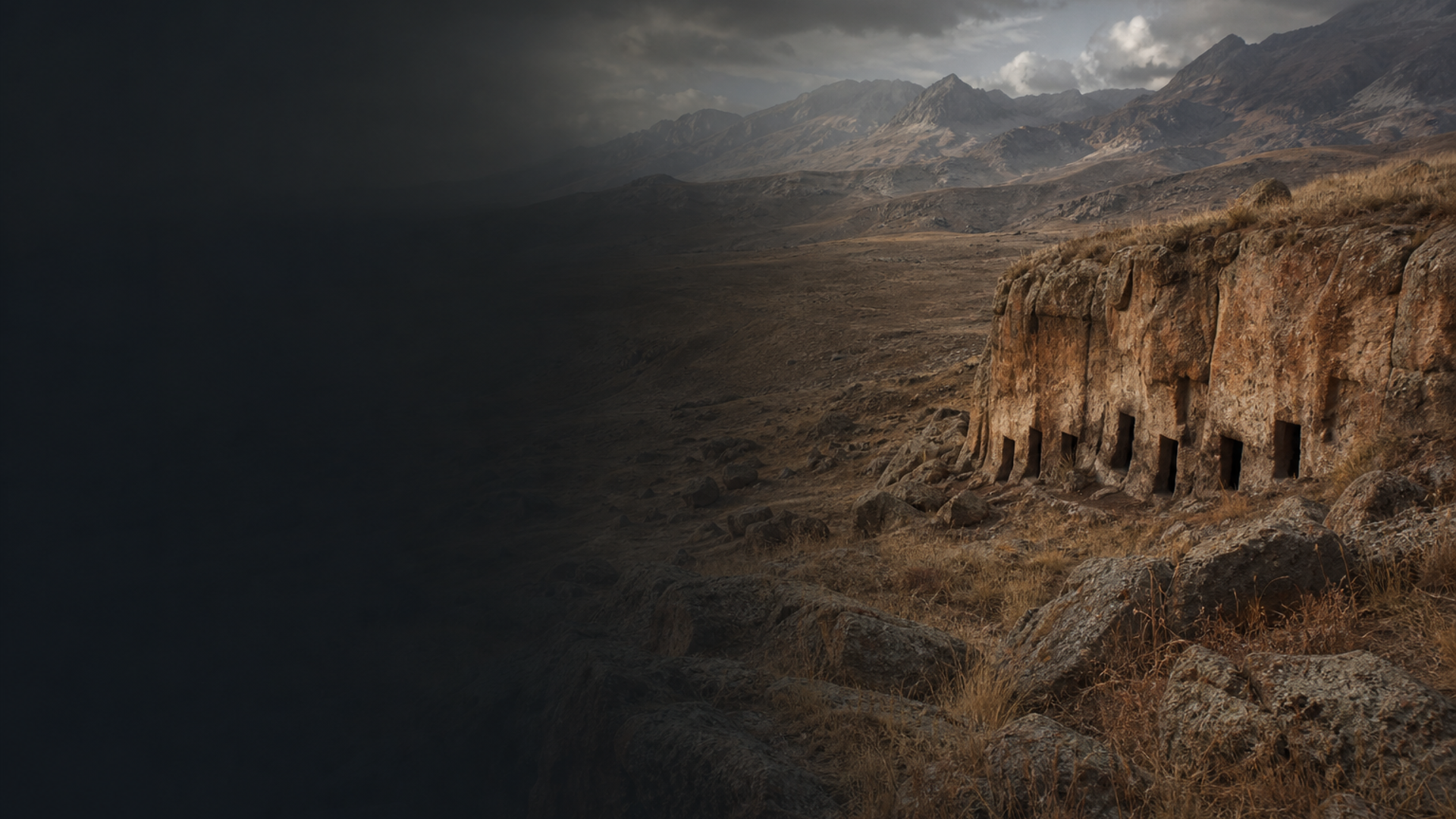
Because the genetic sample from Teishebaini is small and focused on mitochondrial DNA, any claims about direct ancestry to modern groups must be modest and provisional. Nevertheless, these ancient genomes contribute to a growing dataset that, when expanded, will clarify how Iron Age polities like Urartu affected population structure. The cinematic image of a red hill guarding a necropolis remains apt: Teishebaini is both an archaeological monument and a genetic waypoint on journeys that shaped the peoples of the highlands.

  • Teishebaini's archaeological and genetic signals suggest regional continuity with nuances of external contact.
  • Small sample sizes require cautious interpretation about links to modern populations.
AI 电源

AI 助手

就 Teishebaini: Urartian Echoes 文化提问

AI 助手 由DNAGENICS公司制作

解锁此特性
Ask questions about the Teishebaini: Urartian Echoes culture. Our AI assistant can explain genetic findings, historical context, archaeological evidence, and modern connections.
AI 样本分析

Teishebaini: Urartian Echoes 文化是人类历史中值得了解的一章……

遗传分析揭示了与早期种群的联系,同时显示了独特的适应和文化创新的证据。 古代DNA样本提供了对迁徙模式、社会结构以及古代种群之间的生物关系的深刻见解。

这是人工智能分析的预览。 解锁全AI 助手, 以探索关于:

  • 遗传组成和祖先
  • 移徙模式和起源
  • 日常生活和文化习俗
  • 现代遗传遗产

探索更古老的文化

揭开古代世界文明的故事

使用优惠码 可减免 35% • 11月12日 到期




