Tepe Hissar: Echoes from Bronze‑Age Iran

下载的 PDF 是图像副本。如需可选中文本及更好的辅助技术支持,请使用打印功能。

Tepe Hissar: Echoes from Bronze‑Age Iran

揭开一个失落的文明

正在加载考古记录……

正在收集古代记录

跳转到主内容
Tepe Hissar: Echoes from Bronze‑Age Iran
文明焦点

Tepe Hissar: Echoes from Bronze‑Age Iran

Twelve ancient genomes from Tepe Hissar reveal Near Eastern lineages and local continuity.

3705 CE - 1985 BCE
Tepe Hissar, Iran (Iranian Plateau)
滚动开始
Chapter I

剧情

了解 Tepe Hissar: Echoes from Bronze‑Age Iran 文化

Ancient DNA from 12 individuals at Tepe Hissar (3705–1985 BCE) illuminates a Bronze-Age Iranian community with Near Eastern paternal and maternal lineages. Archaeology and genetics together suggest local continuity with regional contacts, but conclusions remain cautious.

Time Period

3705–1985 BCE

Region

Tepe Hissar, Iran (Iranian Plateau)

Common Y-DNA

J (2), T (2), L (1)

Common mtDNA

W3b (3), T (1), U7a (1), W (1), U (1)

Chapter II

时间线

这种文化历史上的关键时刻

2500 BCE

Height of Tepe Hissar occupation

Tepe Hissar flourishes with dense occupation, metallurgy, and regional exchange networks visible in material culture and stratigraphy.

Chapter III

Origins & Emergence

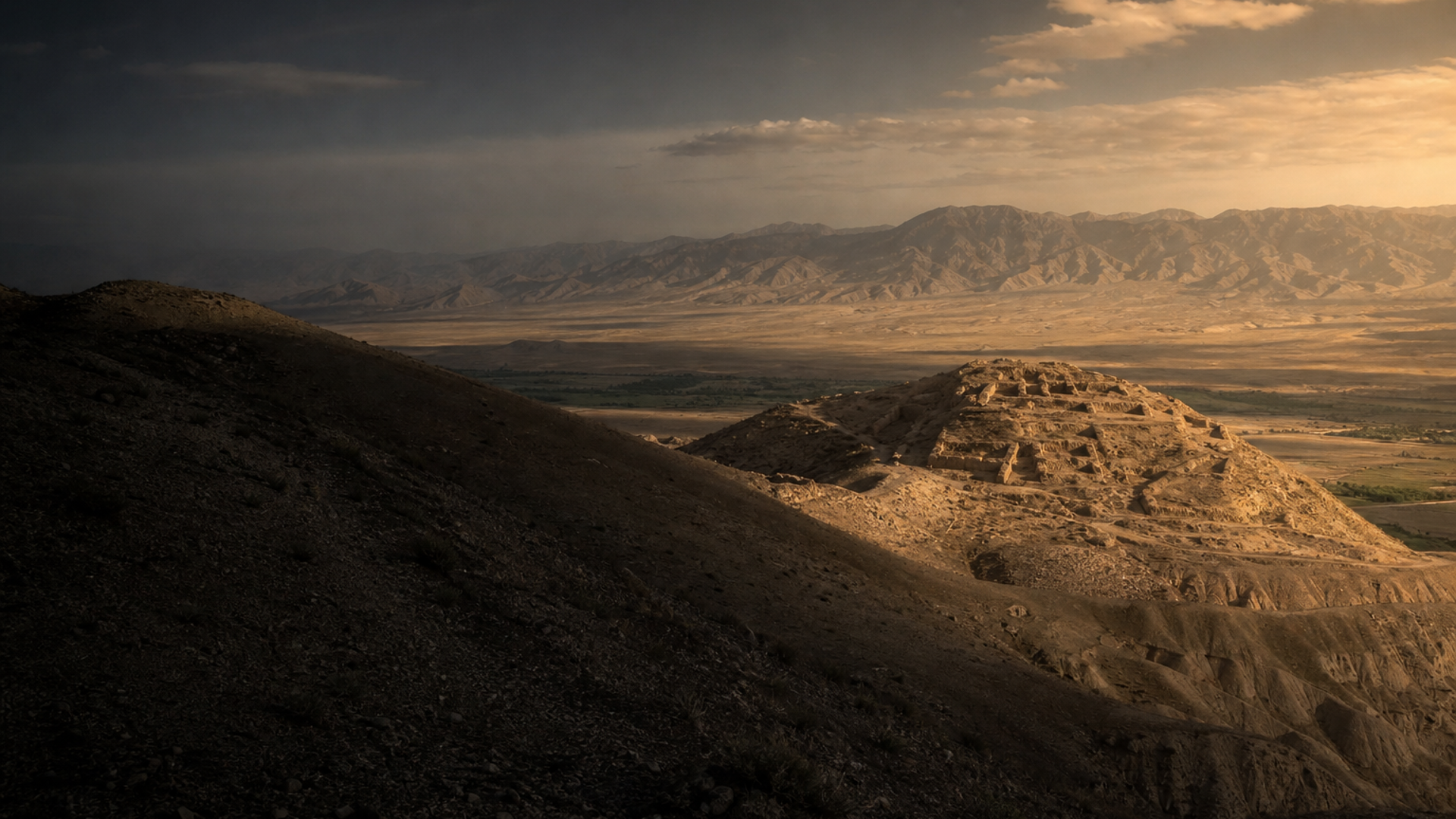
Tepe Hissar sits like a layered memory on the edge of the Iranian Plateau: a long-occupied tell near modern-day Damghan whose mounded streets preserve millennia of human decision. Archaeological sequences at Tepe Hissar, excavated across multiple seasons, record occupation phases spanning Chalcolithic horizons into the Bronze Age. Radiocarbon contexts associated with the sampled individuals place them between ca. 3705 and 1985 BCE, a period marked by increasing social complexity, metallurgy, and far-reaching exchange.

Material culture — pottery styles, architectural remains, and metallurgical debris — places Tepe Hissar within networks linking the Central Iranian Plateau to the south Caspian and Turan regions. Limited evidence suggests local continuity from Chalcolithic Tepe Hissar into later Bronze Age strata, while archaeological indicators also point to interactions with neighboring cultural spheres. The site's long duration makes it a valuable window into how communities on the Iranian Plateau adapted to technological change and shifting exchange networks.

Archaeological data indicates that Tepe Hissar was not an isolated hamlet but part of a broader tapestry of settlements that shared motifs, technologies, and likely people. However, the archaeological record alone cannot fully resolve questions of population movement; here ancient DNA offers a complementary thread to weave human stories from bones and sherds.

  • Long occupation at Tepe Hissar connects Chalcolithic and Bronze Age phases
  • Material culture indicates regional exchange across the Iranian Plateau
  • Radiocarbon-dated contexts anchor samples to 3705–1985 BCE
Chapter IV

Daily Life & Society

From the shards of painted pottery to the singe of smelted copper, the daily life at Tepe Hissar emerges in textured fragments. Houses built of mudbrick, storage pits, and hearths imply settled domestic routines: food processing, craft production, and household metallurgy. Small-scale workshops and metal finds suggest a community engaged in the production and circulation of copper objects during the early Bronze Age.

Burial practices at the site, including grave goods and body positions, hint at differentiated social roles and age-specific rites. Animal remains reveal a mixed economy of herding and local cultivation. The archaeological portrait is cinematic — smoke rising from kilns, the clink of hammer on copper — yet it is built from discrete fragments of evidence. Limited and uneven preservation means some aspects of daily life remain shadowed: craft specialization, the organization of labor, and the full scope of long-distance exchange are still being clarified.

Integrating genetic data with these material signals helps to ask new questions about household composition, mobility, and kinship: were families largely local, or did Tepe Hissar draw people from farther afield? Ancient DNA contributes a personal voice to the archaeological chorus.

  • Mudbrick houses, hearths, and workshops indicate settled domestic and craft life
  • Burials and animal remains point to social differentiation and mixed economy
Chapter V

Genetic Profile

Twelve ancient genomes from Tepe Hissar provide a preliminary but revealing genetic portrait of a Bronze-Age Iranian community. Uniparental markers detected among the samples include Y-chromosome haplogroups J (2 individuals), T (2), and L (1), and mitochondrial lineages dominated by W3b (3), with single instances of T, U7a, W, and U. These haplogroups are broadly consistent with Near Eastern and west Eurasian maternal and paternal lineages known from the Iranian Plateau and adjacent regions.

Haplogroup J and T are commonly observed in the Near East and can reflect long-standing paternal lineages on the plateau. The presence of haplogroup L, less frequent in western Iran but more common in South Asia, may indicate low-frequency connections or gene flow along south-north corridors, but with only a single L sample its significance is tentative. On the maternal side, W3b and U7a are lineages with deep West Eurasian and Near Eastern distributions, while W and T reflect broader west Eurasian maternal ancestry.

Genomic analyses (autosomal data) indicate a continuity with regional gene pools typical of the Iranian Plateau and the Near East during the 4th–2nd millennia BCE, with no strong, universal signal of abrupt replacement in this sample set. However, because the dataset is modest (12 individuals sampled from a single site and interval), conclusions about wider population dynamics are provisional. Archaeogenetics here is a tool for hypothesis: the patterns at Tepe Hissar suggest persistent local ancestry with episodic contacts rather than wholesale demographic turnovers, but broader regional sampling is required to test models of migration and admixture.

  • Y-DNA: J (2), T (2), L (1) — suggests Near Eastern paternal lineages with low-frequency links
  • mtDNA: W3b dominates (3 samples); maternal lineages reflect West Eurasian/Near Eastern ancestry
Chapter VI

Legacy & Modern Connections

The echoes of Tepe Hissar ripple into the present as threads in the genetic and cultural tapestry of Iran. Archaeological continuity at the site complements genetic signals of long-term presence of West Eurasian and Near Eastern lineages on the plateau. Some haplogroups observed among the ancient individuals persist today across Iran and neighboring regions, hinting at deep-rooted connections between Bronze-Age communities and modern populations.

Yet the bridge from past to present requires caution. Populations continue to move, mix, and transform through millennia. The 12 genomes from Tepe Hissar are a valuable snapshot but not a complete census. They invite further sampling across time and space to reveal how local lineages survived, shifted, or blended into later demographic events. When combined with material culture, ancient DNA from Tepe Hissar enriches our sense of continuity and change: a chorus of human lives that shaped — and were shaped by — the landscapes of ancient Iran.

  • Genetic lineages observed have echoes in modern Iranian and Near Eastern populations
  • Findings are a starting point: broader sampling is needed to map long-term demographic change
AI 电源

AI 助手

就 Tepe Hissar: Echoes from Bronze‑Age Iran 文化提问

AI 助手 由DNAGENICS公司制作

解锁此特性
Ask questions about the Tepe Hissar: Echoes from Bronze‑Age Iran culture. Our AI assistant can explain genetic findings, historical context, archaeological evidence, and modern connections.

AI 样本分析

Tepe Hissar: Echoes from Bronze‑Age Iran 文化是人类历史中值得了解的一章……

遗传分析揭示了与早期种群的联系,同时显示了独特的适应和文化创新的证据。 古代DNA样本提供了对迁徙模式、社会结构以及古代种群之间的生物关系的深刻见解。

这是人工智能分析的预览。 解锁全AI 助手, 以探索关于:

  • 遗传组成和祖先
  • 移徙模式和起源
  • 日常生活和文化习俗
  • 现代遗传遗产

探索更古老的文化

揭开古代世界文明的故事

使用优惠码 可减免 35% • 11月12日 到期