Thule Echoes on Southampton Island

下载的 PDF 是图像副本。如需可选中文本及更好的辅助技术支持,请使用打印功能。

Thule Echoes on Southampton Island

揭开一个失落的文明

正在加载考古记录……

正在收集古代记录

跳转到主内容
Thule Echoes on Southampton Island
文明焦点

Thule Echoes on Southampton Island

Archaeology and a lone ancient genome illuminate an Arctic seafaring people

1100 CE - 1600 CE
Southampton Island, Nunavut, Canada
滚动开始
Chapter I

剧情

了解 Thule Echoes on Southampton Island 文化

Archaeological evidence from Southampton Island (1100–1600 CE) links material culture of the Thule expansion with a single ancient Y-DNA Q sample. Limited DNA data are preliminary but align with an archaeological picture of mobile whalers ancestral to Inuit populations across the eastern Arctic.

Time Period

1100–1600 CE

Region

Southampton Island, Nunavut, Canada

Common Y-DNA

Q (observed in 1 sample)

Common mtDNA

Undetermined (no reported mtDNA)

Chapter II

时间线

这种文化历史上的关键时刻

1100 CE

Thule expansion into eastern Arctic

Archaeological evidence marks the spread of Thule-associated technologies and settlements into areas including Southampton Island, enabling large-mammal hunting and broader Arctic colonization.

Chapter III

Origins & Emergence

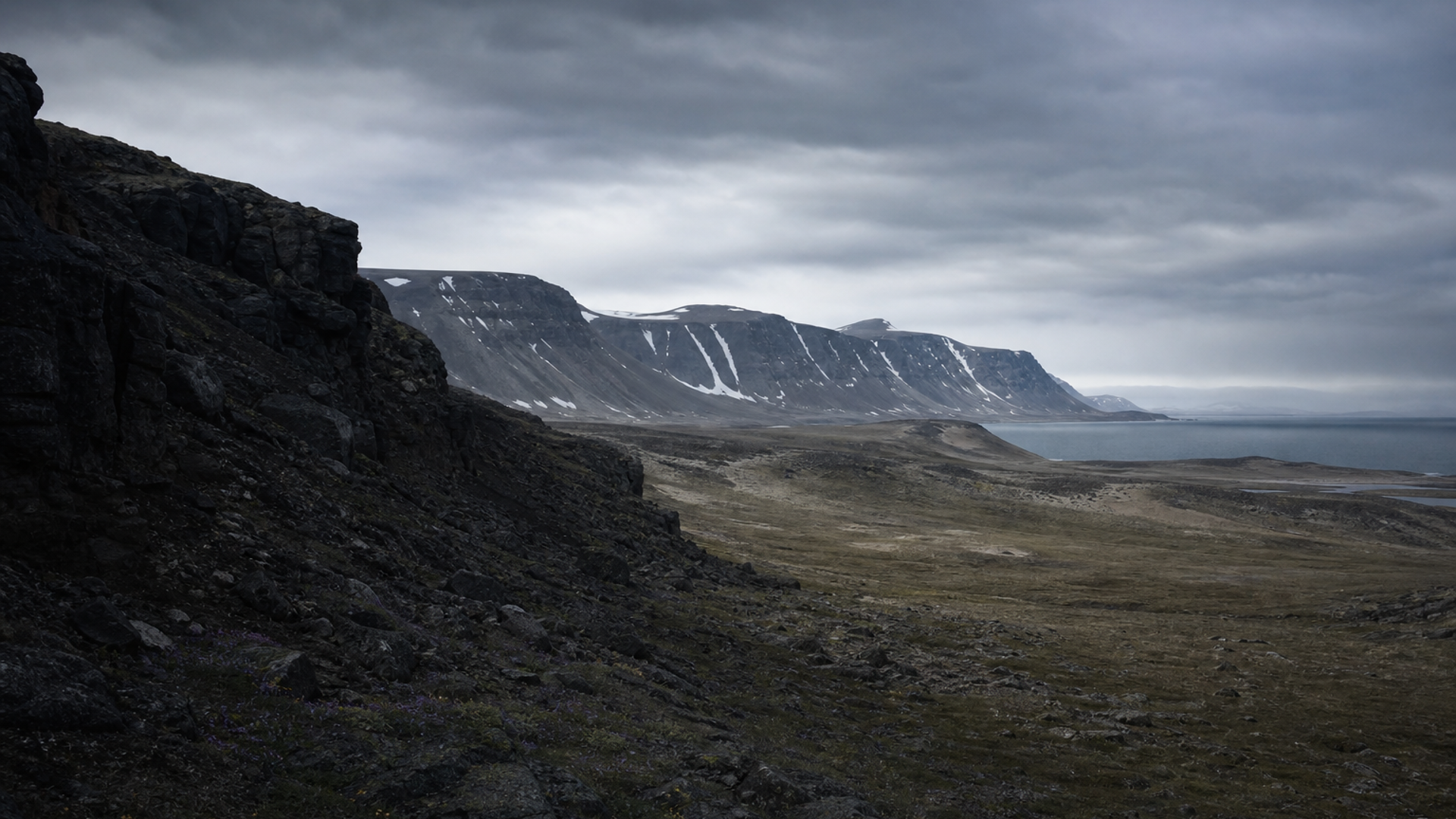
The Thule cultural horizon represents a dramatic northward and eastward movement of people, technology and seafaring economies across the Arctic beginning around the first millennium CE. Archaeological data indicates that by roughly 1100 CE Thule-associated groups were present across the Canadian Arctic and Greenland, bringing specialized whaling technology, large skin boats (umiaks), and large winter houses often built with whale bone and sod. Southampton Island, located at the north entrance to Hudson Bay in present-day Nunavut, preserves coastal Thule occupations in the Foxe Basin region; stratified middens and tool assemblages on the island show adaptation to rich marine resources and seasonal mobility.

Material markers that archaeologists use to identify Thule presence include toggling harpoon heads, bipointed foreshafts, large whale-bone or sod-houses, and a toolkit optimized for large-mammal hunting. These innovations appear to have supported rapid demographic expansion into marginal Arctic environments. Archaeological sequences also show interaction with, and eventual replacement of, earlier Paleo-Eskimo traditions such as the Dorset culture in many areas, though the timing and degree of replacement varied locally. Limited evidence suggests that environmental opportunities—sea-ice conditions and access to bowhead and beluga populations—helped shape the pace and routes of Thule dispersal across the eastern Arctic.

  • Thule expansion into eastern Arctic c. 1100 CE
  • Material signatures: harpoon tech, umiaks, whale-bone houses
  • Southampton Island occupations reflect marine-focused adaptation
Chapter IV

Daily Life & Society

Life for Thule communities combined intimate knowledge of sea ice and marine mammals with social systems that supported long-distance mobility. Archaeological faunal assemblages from coastal sites on Southampton Island show heavy reliance on seals, walrus and large cetaceans when available; seasonal hunting cycles, stored oils and communal butchery would have enabled winter survival and social feasting. Umiaks and dog teams extended hunting ranges and facilitated transport of heavy resources—whale meat, baleen, and bone—back to winter villages.

Settlement plans inferred from house depressions and midden deposits suggest households organized around shared storage and processing areas. Toolkits recovered archaeologically include bone and antler harpoon elements, finely made blades, and woodworking implements consistent with building boats and sleds. Social life likely featured cooperative hunting crews and knowledge transmission by age-grade and kin networks; iconography and ornamentation, though scarce, point to emerging social differentiation tied to hunting expertise and access to whale resources. Archaeological evidence indicates a rhythm of seasonal mobility—spring and summer coastal hunting and inland caching—punctuated by communal events tied to harvest cycles.

Ethnohistoric and ethnographic parallels with Inuit lifeways help interpret material traces, but archaeologists emphasize regional variability: not every Thule site shows intensive whaling, and local ecologies yielded flexible subsistence strategies.

  • Economy focused on seals, walrus, and seasonal whale hunting
  • Community organization supported cooperative large-mammal hunts
Chapter V

Genetic Profile

Genetic information from Southampton Island associated with a Thule-era context is extremely limited: only one securely dated sample is available for analysis. That single individual carries a Y-chromosome lineage assigned to haplogroup Q, a major paternal lineage widespread among Indigenous peoples of the Americas. While this observation is consistent with continental patterns, a single data point cannot reveal the full genetic diversity or demographic dynamics of Thule populations on Southampton Island or across the eastern Arctic.

More broadly, ancient DNA research on Neo-Eskimo and Thule-associated remains elsewhere in the Arctic has generally indicated continuity between Thule-derived groups and many contemporary Inuit populations, particularly in autosomal and uniparental markers. Archaeological and genetic narratives together suggest a movement of people carrying material innovations across the North Atlantic and Canadian Arctic; however, the extent of admixture with local Paleo-Eskimo groups (for example Dorset descendants), the temporal nuances of replacement versus assimilation, and fine-scale population structure vary by region.

Given the sample count here (n = 1), any population-level inference would be preliminary. Future sampling—performed in collaboration with Indigenous communities and using ethical ancient DNA practices—could clarify paternal and maternal lineage frequencies, reveal maternal haplogroups currently unreported for this site, and help resolve questions about migration routes and interaction with neighboring groups.

  • Y-DNA haplogroup Q observed in the single sampled male
  • Sample count (n=1) means conclusions are preliminary and tentative
Chapter VI

Legacy & Modern Connections

The archaeological traces of the Thule are not relics of a vanished past but threads in living cultural lineages across the Arctic. Material practices—boatbuilding, sewing, tool forms—and seasonal subsistence strategies echo in contemporary Inuit knowledge and identity across Nunavut and beyond. Genetic studies that include Thule-associated remains help contextualize biological ancestry, but they are only one component of heritage; linguistic continuity (Inuit languages), oral histories, and ongoing cultural practice are essential to understanding long-term connections.
Because the current genetic sample from Southampton Island is so limited, modern communities and scientists must collaborate to ensure research addresses questions of local significance, respects cultural protocols, and returns benefits. When archaeologists and geneticists work with elders and knowledge-keepers, the result is a richer, ethically grounded reconstruction of how Thule lifeways persisted, transformed and contributed to the ancestry of contemporary Arctic peoples. In sum, Thule archaeology together with careful ancient DNA research illuminates a story of seafaring ingenuity, regional adaptation, and enduring cultural resilience.

  • Cultural continuity: Thule practices resonate in modern Inuit lifeways
  • Ethical, collaborative aDNA research needed to expand genetic insights
AI 电源

AI 助手

就 Thule Echoes on Southampton Island 文化提问

AI 助手 由DNAGENICS公司制作

解锁此特性
Ask questions about the Thule Echoes on Southampton Island culture. Our AI assistant can explain genetic findings, historical context, archaeological evidence, and modern connections.
AI 样本分析

Thule Echoes on Southampton Island 文化是人类历史中值得了解的一章……

遗传分析揭示了与早期种群的联系,同时显示了独特的适应和文化创新的证据。 古代DNA样本提供了对迁徙模式、社会结构以及古代种群之间的生物关系的深刻见解。

这是人工智能分析的预览。 解锁全AI 助手, 以探索关于:

  • 遗传组成和祖先
  • 移徙模式和起源
  • 日常生活和文化习俗
  • 现代遗传遗产

探索更古老的文化

揭开古代世界文明的故事

使用优惠码 可减免 35% • 11月12日 到期




