Timber-Grave Steppe: Srubnaya of Samara

下载的 PDF 是图像副本。如需可选中文本及更好的辅助技术支持,请使用打印功能。

Timber-Grave Steppe: Srubnaya of Samara

揭开一个失落的文明

正在加载考古记录……

正在收集古代记录

跳转到主内容
Timber-Grave Steppe: Srubnaya of Samara
文明焦点

Timber-Grave Steppe: Srubnaya of Samara

Bronze Age communities (2050–1200 BCE) of the Samara steppes, seen through archaeology and DNA

2050 CE - 1200 BCE
Samara Oblast, Volga River Valley, Russia
滚动开始
Chapter I

剧情

了解 Timber-Grave Steppe: Srubnaya of Samara 文化

Archaeological and genetic evidence from 15 samples across Samara Oblast (Rozhdestveno I, Novosel'ki, Barinovka I, Spiridonovka II/IV, Uvarovka I) paints the Srubnaya as mobile Bronze Age pastoralists. Predominant Y-DNA R and diverse maternal lineages reflect steppe ancestry with local admixture.

Time Period

2050–1200 BCE

Region

Samara Oblast, Volga River Valley, Russia

Common Y-DNA

R (predominant; 7/15)

Common mtDNA

U (5), H3g (2), T (2), I (1), J (1)

Chapter II

时间线

这种文化历史上的关键时刻

2050 BCE

Emergence of the Srubnaya horizon

Archaeological patterns of timber-grave burials and pastoral economies become pronounced in the Samara steppe, marking the regional Srubnaya identity.

Chapter III

Origins & Emergence

The Srubnaya horizon—often called the "timber-grave" phenomenon—emerges across the Pontic–Caspian and Volga steppe landscapes during the Middle to Late Bronze Age. In the Samara River valley (sites such as Rozhdestveno I, Barinovka I and Spiridonovka II/IV), archaeological data indicates a transition from scattered pastoral camps to more recurrent seasonal occupations between approximately 2050 and 1200 BCE. Timber-framed burial constructions, sometimes built from stacked planks or small wooden chambers, give the culture its name; these funerary structures are frequently found in small cemeteries and may mark lineage or clan claims to steppe pastures.

Material culture—bronze tools and weapons, portable ceramics with geometric decoration, and the remains of domestic animals—points to a mixed economy dominated by cattle, sheep and horse herding with limited crop cultivation in riverine niches. Environmental reconstructions of the Samara steppes suggest a mosaic of grassland and forest-steppe that favored mobile pastoralism. Archaeological evidence indicates contacts with neighboring steppe groups (earlier Yamnaya-derived traditions and later Andronovo spheres), reflected in shared mortuary practices and similar metalwork styles.

Limited evidence suggests regional variation in burial rites and settlement patterns; some local sites show stronger continuity with earlier Eneolithic traditions. Overall, the Srubnaya emergence is best seen as a locally rooted steppe development that synthesizes inherited pastoral lifeways with Bronze Age technological and social innovations.

  • Named for timber-framed burial structures visible at Samara sites
  • Economy centered on mobile pastoralism: cattle, sheep, horse
  • Cultural links to earlier Yamnaya traditions and neighboring Bronze Age groups
Chapter IV

Daily Life & Society

Life on the Samara steppes would have been shaped by season, herd movements and the flow of the Volga and Samara rivers. Archaeological deposits from Novosel'ki, Uvarovka I and other local sites reveal ephemeral dwellings, corrals and hearths consistent with seasonal encampments. Bone assemblages and faunal remains emphasize the pastoral economy: cattle and sheep provide meat, milk and secondary products, while horses are present both as transport and as an increasingly central resource for mobility.

Material culture recovered from graves and settlements—bronze weapons, awls, needles, and portable ceramics—suggests small household craft and metalworking traditions. Grave goods tend to be modest; occasional larger bronzes indicate social differentiation but not extremes of inequality seen in some contemporaneous regions. Timber-grave burial architecture itself can encode social memory: the construction and maintenance of wooden chambers would have required coordinated labor and possibly signaled lineage claims to territory.

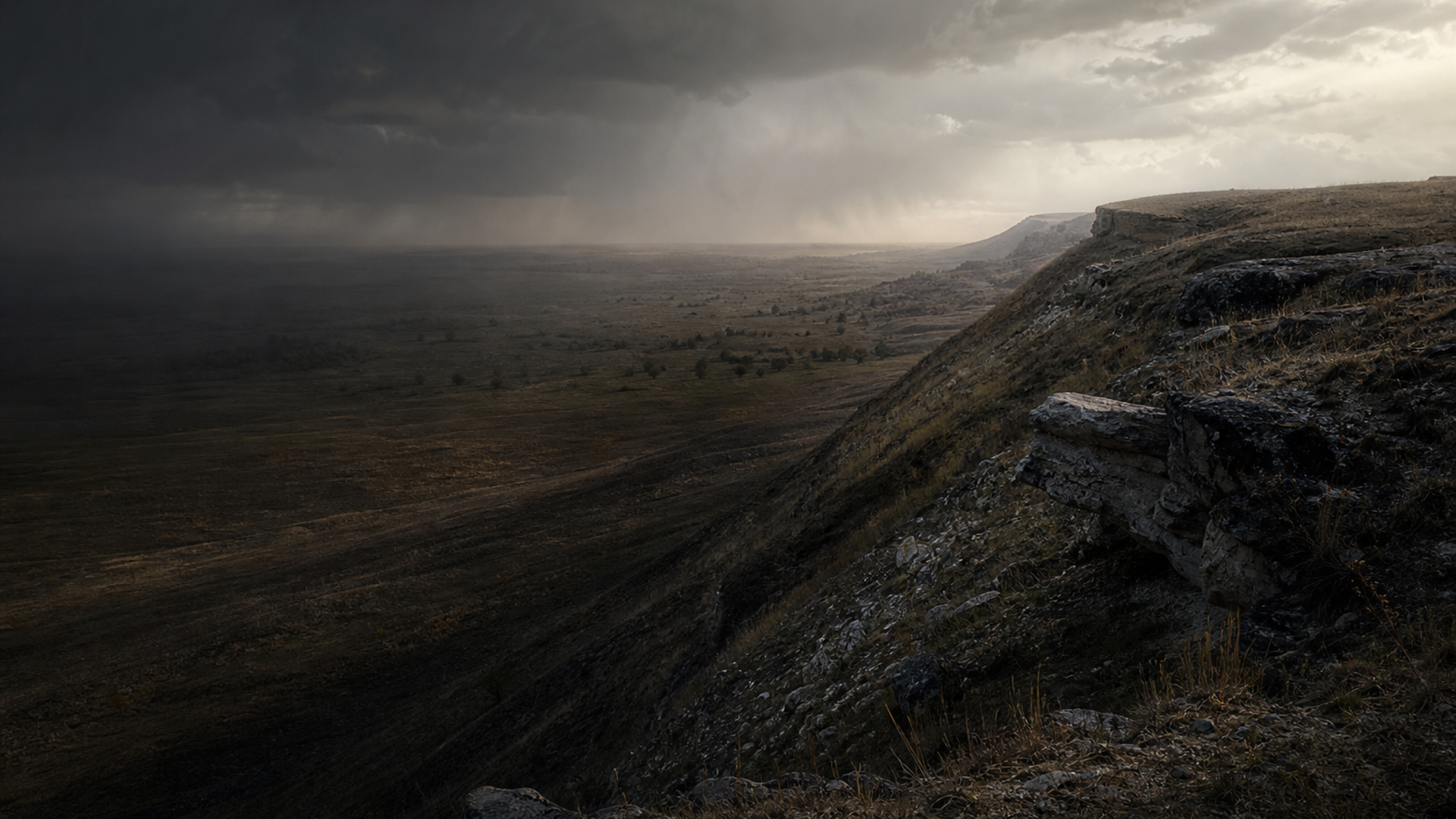
Gendered practices can be glimpsed in burial assemblages (differences in grave goods), but caution is warranted: preservation bias and sampling gaps limit broad generalizations. Archaeological data indicates that networks of exchange—of metal, horses, and perhaps people—linked these communities to the wider Bronze Age steppe world. The landscape itself, cinematic and wide, framed a life of movement where kinship, herding expertise and ritual care for the dead were central.

  • Seasonal mobile camps with corrals and hearths along rivers
  • Household craft and modest social differentiation reflected in grave goods
Chapter V

Genetic Profile

Fifteen Srubnaya-period individuals sampled from Samara Oblast sites (Rozhdestveno I, Barinovka I, Spiridonovka II/IV, Uvarovka I, Novosel'ki) yield a consistent genetic portrait of a Bronze Age steppe population. Y-chromosome lineages are dominated by haplogroup R (7/15), indicating a strong paternal continuity with earlier steppe groups. Maternal lineages are more diverse: U (5), H3g (2), T (2), I (1) and J (1), reflecting a mixture of deep Eurasian steppe maternal ancestry and contributions that may trace to more westerly or southern farmer-derived lineages.

The overall autosomal signal aligns with Steppe Bronze Age ancestry—characterized by high proportions of the so-called "steppe" component derived from earlier Yamnaya-related populations—while also showing varying degrees of admixture with local forest-steppe and farmer-associated groups. This mosaic is consistent with archaeological indications of mobility and interaction. The predominance of Y-R alongside diverse mtDNA may point toward patrilineal social structures or male-mediated gene flow, but such social inferences remain tentative without larger, context-rich samples.

Because the dataset is moderate (15 individuals), patterns appear robust but preliminary: they support continuity of steppe genetic heritage into the Srubnaya horizon, while also demonstrating regional admixture processes that would shape later Bronze and Iron Age populations across Eastern Europe.

  • Predominant Y haplogroup R suggests paternal continuity with prior steppe groups
  • Diverse mtDNA (U, H3g, T, I, J) indicates mixed maternal ancestry and local admixture
Chapter VI

Legacy & Modern Connections

The Srubnaya horizon leaves a layered legacy on the Eurasian steppes. Genetically, the persistence of Y-lineages classified as R and the presence of steppe autosomal ancestry indicate that Srubnaya communities contributed to the gene pool of later Bronze and Iron Age populations across Eastern Europe and the forest-steppe. Archaeologically, timber-grave funerary concepts and pastoral lifeways resonate in later cultural expressions across the steppe belt.

Linguistic conclusions remain speculative: archaeological and genetic continuity with earlier steppe groups has been invoked in broader models of Indo-European dispersal, but direct links between Srubnaya communities and specific language families cannot be proven from genetics alone. For modern populations, some maternal and paternal lineages found in these Bronze Age samples persist at varying frequencies in Eastern European and Eurasian groups, reflecting long-term demographic continuity and repeated episodes of migration and admixture.

Overall, Srubnaya communities are cinematic in the archaeological record—timber frames against endless grasslands—and scientifically valuable as a window into how mobile pastoral societies shaped—and were shaped by—the genetics, economy and social landscapes of the Bronze Age steppe.

  • Contributed steppe ancestry and Y-lineages to later Eastern European populations
  • Timber-grave mortuary tradition influenced subsequent steppe cultural practices
AI 电源

AI 助手

就 Timber-Grave Steppe: Srubnaya of Samara 文化提问

AI 助手 由DNAGENICS公司制作

解锁此特性
Ask questions about the Timber-Grave Steppe: Srubnaya of Samara culture. Our AI assistant can explain genetic findings, historical context, archaeological evidence, and modern connections.
AI 样本分析

Timber-Grave Steppe: Srubnaya of Samara 文化是人类历史中值得了解的一章……

遗传分析揭示了与早期种群的联系,同时显示了独特的适应和文化创新的证据。 古代DNA样本提供了对迁徙模式、社会结构以及古代种群之间的生物关系的深刻见解。

这是人工智能分析的预览。 解锁全AI 助手, 以探索关于:

  • 遗传组成和祖先
  • 移徙模式和起源
  • 日常生活和文化习俗
  • 现代遗传遗产

探索更古老的文化

揭开古代世界文明的故事

使用优惠码 可减免 35% • 11月12日 到期