Tollense: Voices from a Bronze Age Valley

下载的 PDF 是图像副本。如需可选中文本及更好的辅助技术支持,请使用打印功能。

跳转到主内容
文明焦点

Tollense: Voices from a Bronze Age Valley

A battlefield and community in Mecklenburg-Vorpommern revealed by bones and genomes

4500 CE - 12001300 BCE
Tollense Valley, Mecklenburg-Vorpommern, Germany

剧情

Archaeological and genetic evidence from the Tollense Valley (Mecklenburg-Vorpommern, Germany) illuminates Bronze Age conflict and population mixture c. 1300 BCE. Nineteen samples link local lineages (I) with steppe-associated markers (R), offering a vivid but still provisional portrait of people at a prehistoric battlefield.

Time Period

c. 4500–1200 BCE (Bronze Age focus c. 1300 BCE)

Region

Tollense Valley, Mecklenburg-Vorpommern, Germany

Common Y-DNA

I (8), R (6), R1 (1), I2 (1) — from recovered male samples

Common mtDNA

U (4), T2b (4), J1c (2), I (1), T (1) — from sequenced individuals

时间线

1250 BCE

Tollense Battlefield Conflict

Concentrated trauma and weapon finds in the Tollense riverbed indicate a major Bronze Age clash c. 1300–1200 BCE, leaving dozens of individuals deposited in a wetland channel.

Origins & Emergence

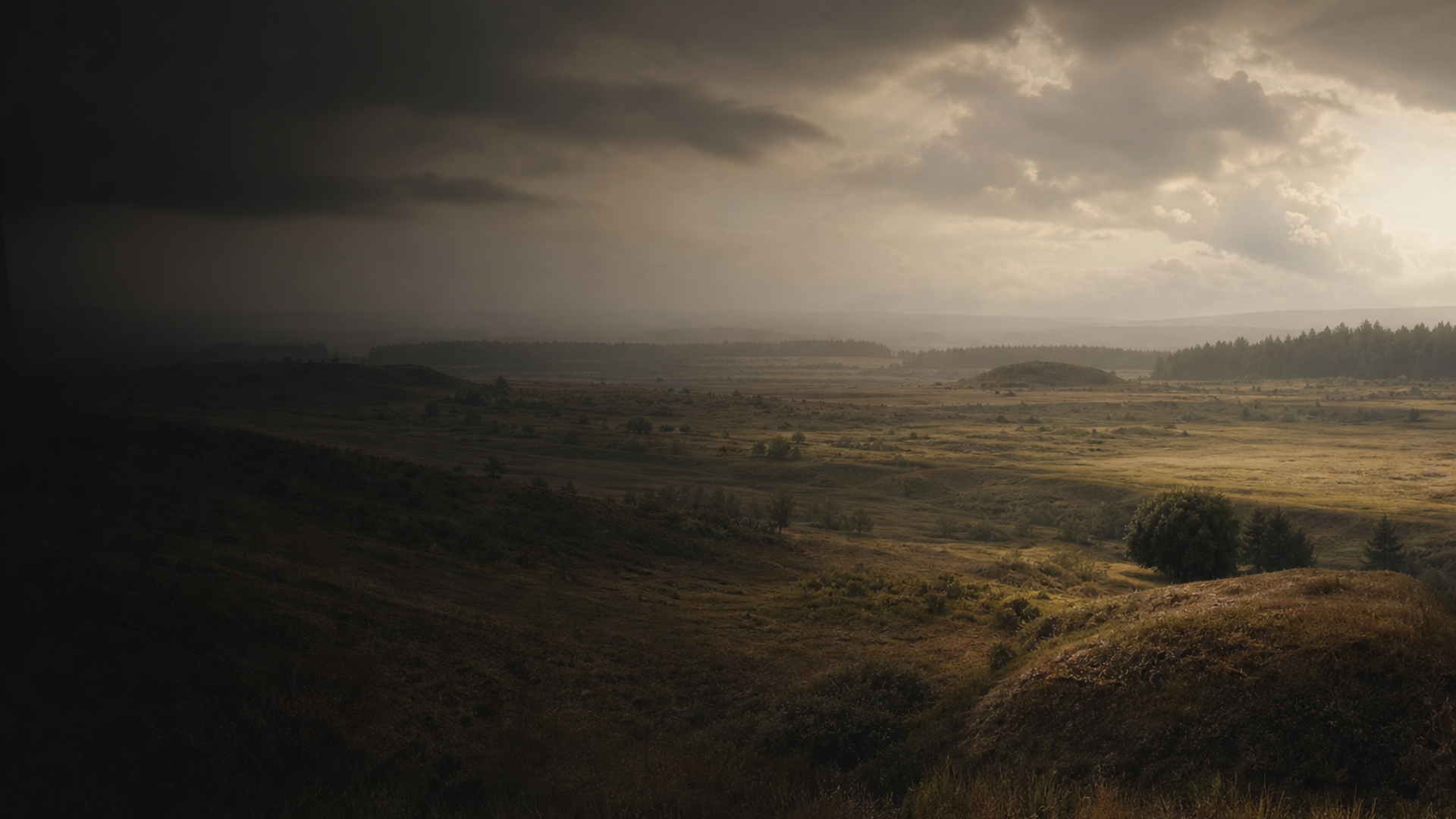
The Tollense Valley has a long archaeological biography. Sediments and finds indicate human presence from the Neolithic into the Late Bronze Age (input samples span c. 4500–1200 BCE), but the dramatic focal event is the Bronze Age conflict in the river corridor dated to roughly 1300–1200 BCE at the Tollense battlefield near the modern village of Altentreptow in Mecklenburg-Vorpommern. Archaeological data indicates repeated seasonal use of the valley and a landscape of wetlands and meandering channels that funneled people into narrow crossings.

Excavations at the Tollense site uncovered broken weaponry, trauma on skeletal remains, and concentrated deposits of human bone in fluvial deposits. These finds suggest not a brief skirmish but organized, large-scale violence — a phenomenon exceptional for northern Central Europe in the Middle to Late Bronze Age. Limited evidence suggests combatants came from diverse backgrounds, indicated by varied grave and trauma patterns and, importantly, by the genetic diversity preserved in surviving DNA.

Archaeological context implies the valley functioned as a transport and meeting route where social networks, resource pressures, or long-distance alliances could produce conflict. While the material culture shows ties to northern and central Bronze Age assemblages, the combination of osteological trauma and genomic signals offers a new, multidimensional view of how people arrived, fought, and were deposited along the Tollense river.

  • Long-term use of Tollense Valley from Neolithic through Bronze Age
  • Battlefield dated to c. 1300–1200 BCE with trauma and weapons
  • Site functioned as a strategic crossing and meeting place

Daily Life & Society

The human story at Tollense emerges from fragments: battered skulls, clothing pieces preserved in wet contexts, and the faint shadow of everyday objects washed into the river. Archaeological data indicates communities in the surrounding landscape practiced mixed farming, animal husbandry, and metalworking typical of Bronze Age northern Europe. The valley's riverside environment created both opportunity and hazard, concentrating travel and trade along narrow causeways that could amplify conflicts.

Skeletal remains show evidence of repetitive activity, healed fractures, and diet consistent with terrestrial resources; stable isotope work at nearby contemporaneous sites suggests diets based predominantly on C3 cereals and domestic animals, with regional variation. The battlefield deposit is exceptional in its concentration of non-local trauma patterns and weapon injuries, implying groups mobilized beyond immediate settlements. Limited organic preservation has yielded wooden club fragments, bronze arrowheads, and personal items that hint at rank and affiliation, but many social details remain elusive.

Archaeology paints a scene of a contested landscape: seasonal movement, long-distance contacts, and social hierarchies that could marshal dozens to hundreds into conflict. While cinematic images of massed warriors are compelling, the evidence points to complex social organization where kinship, alliance, and resource competition intersected with mobility routes through the Tollense corridor.

  • Mixed farming, animal husbandry, and metalwork in surrounding communities
  • Battlefield context suggests mobilization beyond local settlements

Genetic Profile

Genomic data from 19 samples recovered in the Tollense Valley provide a rare bridge between osteology and ancestry. While the sample size is moderate, it permits preliminary patterns to emerge. Y-chromosome haplogroups recorded include I (8), R (6), R1 (1), and I2 (1). These markers indicate a mixture of lineage types: haplogroup I and its subclades are often associated with long-standing European lineages that trace back to Mesolithic and Neolithic populations in northern and central Europe, whereas haplogroup R and R1 reflect wider male-lineage connections that, in the Bronze Age, are frequently linked to steppe-related expansions and increased mobility across Eurasia.

Mitochondrial DNA (maternal lineages) shows diversity: U (4), T2b (4), J1c (2), I (1), and T (1). Haplogroup U is recurrent in European prehistory and often appears in populations with deep local roots; T2b and J1c are widespread in Neolithic and later European contexts, consistent with admixture between local farmers and incoming groups. These mitochondrial patterns suggest women at the site derived from varied maternal ancestries, pointing to complex social dynamics of marriage, alliance, or capture during episodes of mobility and conflict.

Archaeological and genetic evidence together indicate the battlefield was not a genetically homogeneous assembly. Rather, the Tollense assemblage reflects a mosaic of local and non-local lineages, consistent with Bronze Age networks of movement. Given the modest number of genomes (n=19), however, conclusions remain provisional and should be refined as more samples and comparative data from surrounding regions become available.

  • Y-DNA shows mixture of local (I) and steppe-associated (R) male lineages
  • mtDNA diversity (U, T2b, J1c) indicates mixed maternal ancestries

Legacy & Modern Connections

The Tollense Valley site reshapes our picture of Bronze Age northern Europe: it shows that large-scale violence and wide social networks existed farther north than previously assumed. Genetic links tying local haplogroups with broader steppe-related markers suggest that populations engaged in long-distance contact and movement, echoing wider processes of cultural and genetic change during the Late Bronze Age.
For modern populations, Tollense offers a cautionary and illuminating parallel. Some Y and mtDNA haplogroups found at the site persist in present-day Europeans, demonstrating continuity in certain lineages across millennia. Yet the mixture observed at Tollense also reminds us that ancestry is layered and dynamic; regional genetic landscapes were shaped by repeated episodes of mobility, alliance, and conflict. Because the dataset is limited to 19 genomes, it provides a powerful snapshot but not a complete census — a vivid chapter in a long and changing human story rather than a final word.

  • Demonstrates continuity of some lineages into modern European gene pools
  • Highlights Bronze Age mobility, contact, and complex ancestry patterns

AI 助手

AI 助手 由DNAGENICS公司制作

解锁此特性
Ask questions about the Tollense: Voices from a Bronze Age Valley culture. Our AI assistant can explain genetic findings, historical context, archaeological evidence, and modern connections.
AI 样本分析

Tollense: Voices from a Bronze Age Valley 文化是人类历史中值得了解的一章……

遗传分析揭示了与早期种群的联系,同时显示了独特的适应和文化创新的证据。 古代DNA样本提供了对迁徙模式、社会结构以及古代种群之间的生物关系的深刻见解。

这是人工智能分析的预览。 解锁全AI 助手, 以探索关于:

  • 遗传组成和祖先
  • 移徙模式和起源
  • 日常生活和文化习俗
  • 现代遗传遗产
使用优惠码 可减免 30% • 11月14日 到期




