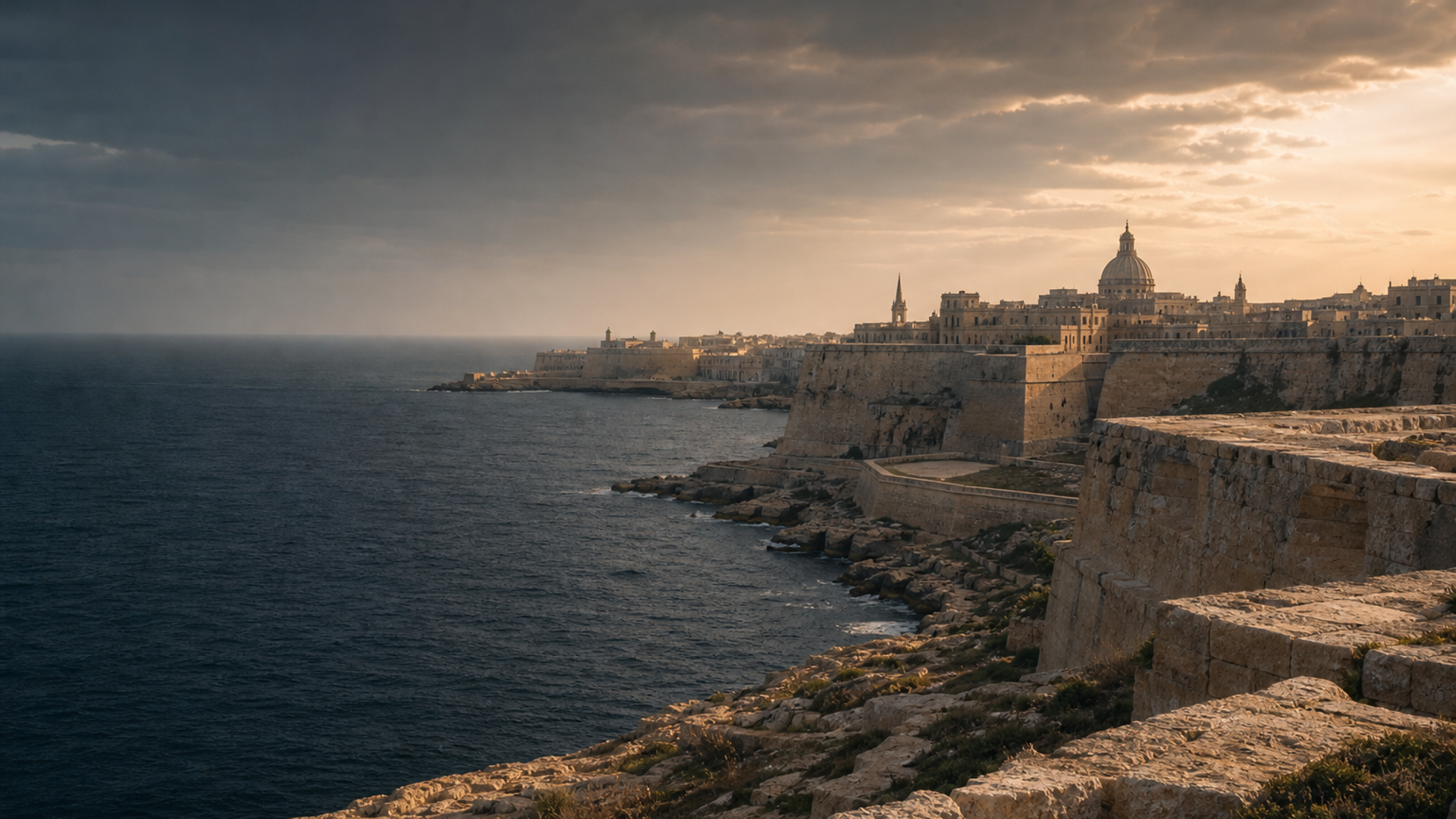
Valletta: A Modern Maltese Snapshot

下载的 PDF 是图像副本。如需可选中文本及更好的辅助技术支持,请使用打印功能。

跳转到主内容
文明焦点

Valletta: A Modern Maltese Snapshot

A cinematic, evidence-grounded glimpse at La Valetta (Valletta) and eight DNA samples from 2000 CE

2000 CE
Malta (La Valetta / Valletta)

剧情

A concise archaeological and genetic portrait of Modern Malta centered on La Valetta (Valletta) in 2000 CE. Limited sample size (n=8) constrains firm conclusions; archaeological context and regional genetics suggest Mediterranean admixture and layered historical influences.

Time Period

2000 CE (modern snapshot)

Region

Malta (La Valetta / Valletta)

Common Y-DNA

Insufficient data (n=8)

Common mtDNA

Insufficient data (n=8)

时间线

2000 CE

Modern genetic snapshot collected in La Valetta

Eight genetic samples tied to La Valetta (Valletta) were recorded in 2000 CE; small sample size limits definitive conclusions.

Origins & Emergence

Beneath the honey-coloured stone and grid of streets in La Valetta (Valletta) lies the deep palimpsest of Maltese history. This modern snapshot—anchored to the year 2000 CE—sits at the terminus of millennia of human activity on islands that have been waystations in Mediterranean trade and conquest. Archaeological layers across Malta, from Neolithic temple complexes such as Ħal Saflieni Hypogeum and Ġgantija to later Punic, Roman, medieval and early modern strata, create a context in which a contemporary urban population is the latest, densely packed chapter.

Archaeological evidence for the modern era is often urban: building foundations, municipal cemeteries, archival maps, and salvage excavations that reveal 16th–20th century construction phases in the Grand Harbour and surrounding districts. For the genetic snapshot reported here, the provenance is La Valetta in 2000 CE with eight samples recorded. Limited documentation about sampling context means that biological and archaeological provenance is partial; as a result, conclusions about emergence or localized continuity remain guarded.

In cinematic terms, think of the modern city as a layered stratigraphy of lives: each street or tomb may hold echoes of Phoenician sailors, medieval farmers, early modern knights, and twentieth-century immigrants. Archaeological data indicates continuity of occupation, but genetic continuity can only be evaluated cautiously when sample counts are small.

  • La Valetta (Valletta) as urban focal point for 2000 CE samples
  • Modern layers sit above rich prehistoric and historic archaeology
  • Provenance for genetic samples is limited; interpretations are cautious

Daily Life & Society

Modern Maltese daily life in La Valetta blends Mediterranean rhythms, maritime commerce, and layered cultural memory. By 2000 CE the city functions as a political, cultural and economic centre: ornate baroque facades face narrow streets; markets and harbours connect islanders to Sicily, North Africa and the broader Mediterranean. Archaeological survey and urban excavation in Valletta commonly recover household ceramics, building timbers, cemetery deposits and industrial residues that speak to diet, trade and craft in recent centuries.

Material traces of daily life—ceramic sherds from imported wares, roof tiles, and urban stratigraphy—corroborate historical records of trade links and population movement. Ethnographic and archival evidence from the 19th and 20th centuries documents linguistic shifts (Maltese and English), economic change under British rule, and twentieth-century migration patterns; these social changes are the backdrop against which the eight genetic samples were collected.

Archaeological data indicates that modern Maltese society in La Valetta is highly cosmopolitan at the material level, but translating that complexity into genetic signals requires broader samples. Limited genetic sampling can hint at recent mobility—marriage networks, labor migration—but cannot yet resolve the fine-grained social structure of daily life reflected in the built environment.

  • La Valetta exhibits dense urban archaeology from early modern to contemporary periods
  • Material culture and archives show strong Mediterranean trade and mobility

Genetic Profile

The genetic picture for this Modern Malta dataset is necessarily tentative. Eight samples from La Valetta, dated to 2000 CE, form the entire dataset for this culture identifier. When sample counts are below ten, population-level inferences are preliminary: random sampling effects, recent admixture, and limited provenance metadata can skew apparent affinities.

Archaeology and broader regional genetics offer a scaffold: Malta's population history includes influences from the central Mediterranean, North Africa, and the Near East across millennia, and regional genetic studies outside this dataset typically show a mixture of Southern European and Mediterranean components. However, for the eight La Valetta samples there are no consistently reported Y-DNA or mtDNA haplogroups in the provided metadata, so specific paternal or maternal lineages cannot be reliably summarized here. Instead, the responsible interpretation is to treat these samples as a small, localized snapshot that may reflect recent urban admixture rather than island-wide ancestry patterns.

Future work should expand sample numbers, improve archaeological provenance (exact burial or archival source), and integrate autosomal analyses that compare these individuals to reference panels from Sicily, southern Italy, North Africa, and the Levant. Only then can we move from cinematic suggestions of Mediterranean blending to statistically robust portraits of modern Maltese genetic structure.

  • Sample count small (n=8) — conclusions are preliminary
  • No consistent Y/mtDNA haplogroups reported in metadata; broader regional genetics suggest Mediterranean admixture

Legacy & Modern Connections

The legacy of Modern Malta is both visible in stone and audible in genomes. Valletta's streets narrate centuries of arrivals and departures; archaeological contexts preserve the material traces of those movements, while genetic data promises to map the human side of that story. With only eight samples from 2000 CE, however, the genetic tale is still a whisper in a cathedral: evocative but incomplete.

For the public and for researchers, this dataset underscores two lessons. First, urban and modern-period archaeology remains vital for understanding recent population change. Second, genetic claims about identity, continuity, or migration must be calibrated to sample size and provenance. As additional samples from municipal archives, cemeteries, and biobanks are responsibly integrated, the faint outlines seen here will either sharpen into clear patterns of continuity and admixture or reveal surprising microhistories of mobility within the Maltese archipelago.

  • Urban archaeology and genetics together can illuminate recent mobility and identity
  • Expanded, well-documented sampling is needed to turn preliminary findings into robust conclusions

AI 助手

AI 助手 由DNAGENICS公司制作

解锁此特性
Ask questions about the Valletta: A Modern Maltese Snapshot culture. Our AI assistant can explain genetic findings, historical context, archaeological evidence, and modern connections.

AI 样本分析

Valletta: A Modern Maltese Snapshot 文化是人类历史中值得了解的一章……

遗传分析揭示了与早期种群的联系,同时显示了独特的适应和文化创新的证据。 古代DNA样本提供了对迁徙模式、社会结构以及古代种群之间的生物关系的深刻见解。

这是人工智能分析的预览。 解锁全AI 助手, 以探索关于:

  • 遗传组成和祖先
  • 移徙模式和起源
  • 日常生活和文化习俗
  • 现代遗传遗产
使用优惠码 可减免 30% • 11月14日 到期