Verteba Echoes: Middle-Late Trypillia

下载的 PDF 是图像副本。如需可选中文本及更好的辅助技术支持,请使用打印功能。

Verteba Echoes: Middle-Late Trypillia

揭开一个失落的文明

正在加载考古记录……

正在收集古代记录

跳转到主内容
Verteba Echoes: Middle-Late Trypillia
文明焦点

Verteba Echoes: Middle-Late Trypillia

17 individuals (3800–3500 BCE) from Verteba Cave reveal maternal ties to Neolithic farming communities

3800 CE - 3500 BCE
Ternopil oblast, Ukraine (Verteba Cave)
滚动开始
Chapter I

剧情

了解 Verteba Echoes: Middle-Late Trypillia 文化

Human remains from Verteba Cave (Ternopil oblast, Ukraine) dated 3800–3500 BCE (Middle–Late Trypillia) yield 17 samples. Maternally, haplogroups K, J, H and T predominate, consistent with Neolithic farmer lineages. Archaeology and aDNA together illuminate cave ritual, mobility, and incomplete paternal data.

Time Period

3800–3500 BCE

Region

Ternopil oblast, Ukraine (Verteba Cave)

Common Y-DNA

Undetermined (limited or absent data)

Common mtDNA

K, J, H, T (K most frequent in this series)

Chapter II

时间线

这种文化历史上的关键时刻

3650 BCE

Active use of Verteba Cave for interment

Archaeological and radiocarbon data indicate intensive, episodic deposition of human remains at Verteba Cave during the Middle–Late Trypillia period.

Chapter III

Origins & Emergence

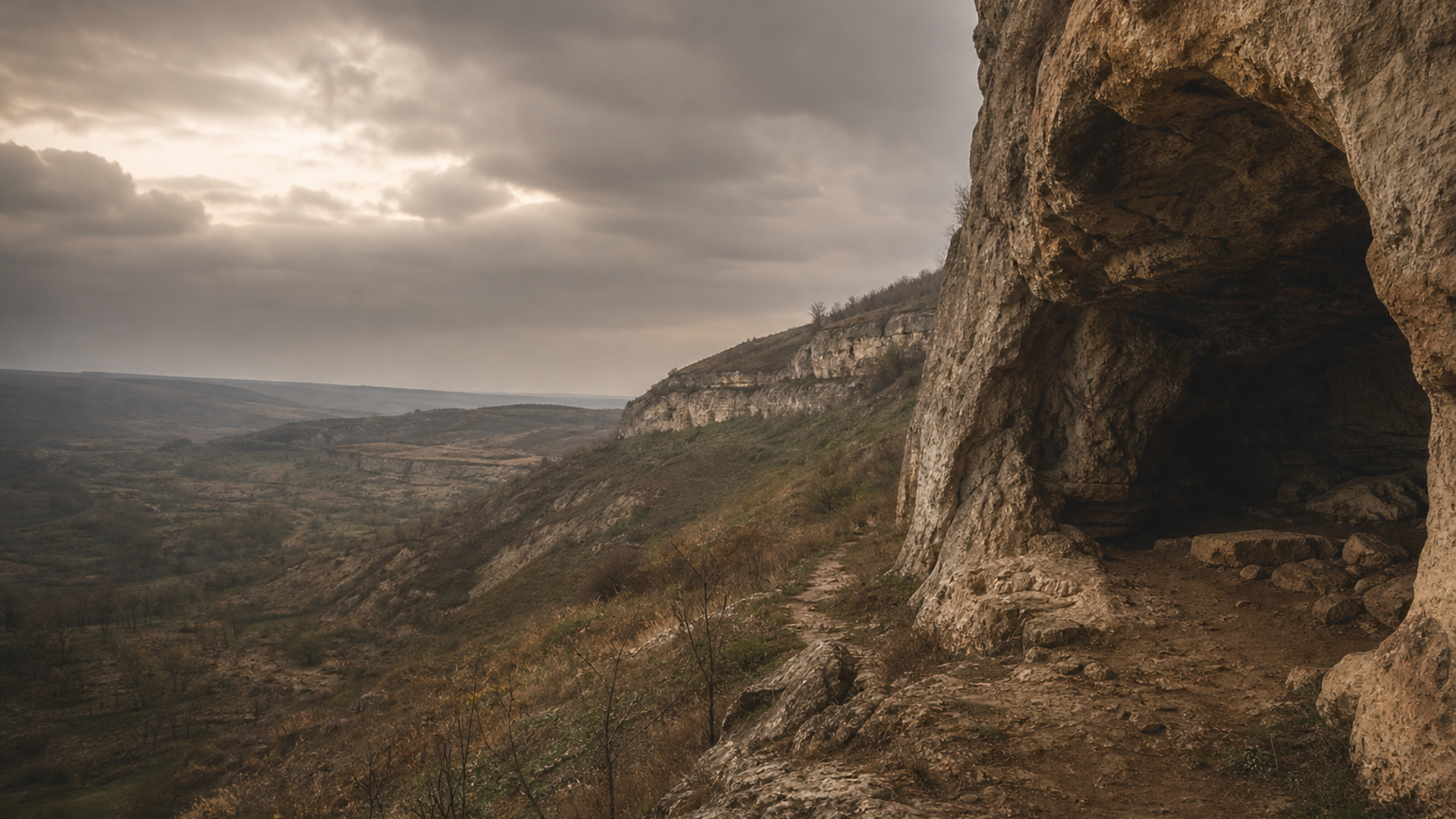
Verteba Cave sits like an obsidian throat in the loess landscape of western Ukraine. Archaeological layers and radiocarbon dates place the human deposits reported here firmly in the Middle to Late Trypillia span (roughly 3800–3500 BCE). The Trypillia phenomenon — known for densely occupied settlements, elaborated ceramics and ritual architecture across modern Ukraine and Moldova — intersected with cave use at Verteba for complex funerary and possibly commemorative practices.

Excavations at Verteba Cave (notably at Sites 7, 17 and 20) reveal repeated human depositions rather than a single catastrophic event, suggesting episodic use over generations. Material culture recovered in association — pottery sherds of Trypillia styles, occasional worked bone, and flaked stone — ties these individuals to the regional farmer communities that dominated the forest-steppe mosaic after the Neolithic expansion.

Archaeological data indicates continuity with Neolithic farming lifeways but also hints at increasing regional interaction in the fourth millennium BCE. Limited evidence suggests that cave burial and commemoration at Verteba were selective and ritualized rather than a standard household practice. The assemblage of 17 sampled individuals therefore captures a particular social expression within the broader Trypillia world, offering a focused window into community identity and landscape memory.

  • Occupational context: Verteba Cave, Sites 7, 17, 20 (Ternopil oblast)
  • Dating: 3800–3500 BCE, Middle–Late Trypillia horizon
  • Use of cave appears episodic and ritualized, not everyday habitation
Chapter IV

Daily Life & Society

Beneath the cinematic sweep of Trypillia long-houses and heat-hazed fields, daily life was anchored in mixed farming, craft specialization and communal rituals. Osteological traces from Verteba individuals indicate activities typical of Neolithic farming communities: robust bone chemistry consistent with terrestrial diets, healed fractures and dental wear that reflect hard, practical lives. The cave context — often dark, enclosed and symbolically charged — hints that some members were chosen for special mortuary treatment rather than representing a cross-section of the whole population.

Material finds at the cave fringes and on-site sherds mirror Trypillia ceramic styles, including painted and incised motifs that articulate group identity. In life these communities practiced household-level production of pottery and textiles, and exchange networks brought exotic raw materials and stylistic influences into the forest-steppe corridor. Social organization likely emphasized extended kin groups with communal rituals: the selective deposition of remains in Verteba may reflect lineage-based memorials, seasonally timed ceremonies, or crisis events.

Archaeological interpretation must remain cautious: skeletal and contextual evidence can suggest roles and stresses but cannot reconstruct belief systems in detail. When paired with genetic data, however, these traces become more than bones and sherds — they become threads linking ancestry, mobility and social practice.

  • Evidence of farming-related stress and robusticity in skeletal remains
  • Cave interments likely selective, reflecting ritual or lineage practices
Chapter V

Genetic Profile

Seventeen individuals from Verteba Cave provide a modest but meaningful ancient DNA snapshot from within the Middle–Late Trypillia frame. Observed mitochondrial haplogroups in this series include K (4), J (3), H (2), T (1) and H+ (1); several other samples yielded diverse or lower-coverage maternal lineages. This concentration of K and J maternal lineages aligns with patterns seen across Neolithic and Chalcolithic farmer-associated groups in continental Europe, where maternal haplogroups of this type are common.

Importantly, paternal (Y-chromosome) information is not reported here or is insufficient for firm conclusions; therefore statements about male-mediated gene flow or patrilineal organization must remain tentative. Genome-wide data would be required to quantify admixture proportions (for example, proportions of Anatolian farmer, European hunter-gatherer, and later steppe-related ancestry). Comparative aDNA studies of Trypillia-related sites often find a strong Neolithic farmer signature with varying inputs from local hunter-gatherers; steppe-related ancestry typically rises in frequency after the mid-fourth millennium BCE in some regions.

Because the sample size is 17 — moderate for aDNA but not large — conclusions about population-wide structure should be cautious. Nevertheless, the maternal profile from Verteba supports archaeological interpretations of Trypillia communities inheriting much of their maternal ancestry from earlier Neolithic farmer expansions while participating in dynamic regional networks.

  • mtDNA dominated by farmer-associated haplogroups (K, J, H, T)
  • Y-DNA data insufficient; genome-wide analyses needed for admixture estimates
Chapter VI

Legacy & Modern Connections

Verteba Cave preserves a concentrated human story at the edge of the Trypillia world. The genetic signals carried by these individuals connect them to the broader tapestry of European Neolithic farmers — a legacy visible in maternal haplogroups that persist at varying frequencies in later populations. Yet continuity is not simple: migrations, cultural transformations and local demographic shifts over millennia mean that modern population genetics reflect many layered events since 3500 BCE.

For contemporary Ukraine and the wider region, Verteba is both an archaeological landmark and a reminder that identity is woven from mobility, exchange and lineage. From a scientific perspective, these 17 samples emphasize the value of integrating excavation context, osteological observation and ancient DNA: together they illuminate how bodies, objects and genes move through time, and they invite careful, evidence-driven stories rather than singular narratives of descent.

  • Maternal lineages echo Neolithic farmer ancestry seen across Europe
  • Genetic continuity to modern populations is complex and requires more data
AI 电源

AI 助手

就 Verteba Echoes: Middle-Late Trypillia 文化提问

AI 助手 由DNAGENICS公司制作

解锁此特性
Ask questions about the Verteba Echoes: Middle-Late Trypillia culture. Our AI assistant can explain genetic findings, historical context, archaeological evidence, and modern connections.
AI 样本分析

Verteba Echoes: Middle-Late Trypillia 文化是人类历史中值得了解的一章……

遗传分析揭示了与早期种群的联系,同时显示了独特的适应和文化创新的证据。 古代DNA样本提供了对迁徙模式、社会结构以及古代种群之间的生物关系的深刻见解。

这是人工智能分析的预览。 解锁全AI 助手, 以探索关于:

  • 遗传组成和祖先
  • 移徙模式和起源
  • 日常生活和文化习俗
  • 现代遗传遗产

探索更古老的文化

揭开古代世界文明的故事

使用优惠码 可减免 35% • 11月12日 到期




