Voices from Czech Soil

下载的 PDF 是图像副本。如需可选中文本及更好的辅助技术支持,请使用打印功能。

跳转到主内容
文明焦点

Voices from Czech Soil

Genetic echoes of people in the Czech lands, 5500–1017 BCE

5500 CE - 1017 BCE
Czech Republic (Bohemia & Moravia)

剧情

Ten ancient genomes from across Bohemia and Moravia reveal a long, changing human presence between 5500 and 1017 BCE; mitochondrial diversity and a Neolithic-associated Y haplogroup hint at layered ancestry, but small sample size means conclusions remain provisional.

Time Period

5500–1017 BCE

Region

Czech Republic (Bohemia & Moravia)

Common Y-DNA

G (observed: 1)

Common mtDNA

U (4), K (2), N (1), H (1), H1 (1)

时间线

2500 BCE

Bronze Age transformations intensify

Around 2500 BCE social and technological shifts accelerate in Central Europe as bronze metallurgy and new exchange networks reshape communities and mobility.

Origins & Emergence

Across a sweep of millennia — from the first farming horizons around 5500 BCE to later Bronze Age horizons near 1017 BCE — the human story in the Czech lands is one of layering. Archaeological sites sampled in this dataset include urban and rural localities: Prague 8 (Kobylisy, Ke Stírce Street), Mužský‑Hrada near Mladá Boleslav, Kralice na Hané (Prostějov), Dobroměřice (Louny), Hostivice‑Sadová and Hostivice‑Palouky (Prague‑West), and Plzeň‑Křimice. These places preserve traces of early Neolithic farmers, later Chalcolithic and Bronze Age communities, and shifting settlement patterns.

Archaeological data indicates that the earliest individuals in this temporal span probably belonged to Neolithic agricultural populations that introduced domesticated crops and pottery to Central Europe. Over subsequent millennia, communities experienced cultural change — new metal technologies, intensified exchange networks, and evolving burial rites — that left both material and biological signatures. Because the genomic sample set is small (10 individuals) and covers a very long interval, any single genetic signal may reflect different periods rather than a single homogeneous “culture.” Limited evidence suggests continuity in some maternal lineages alongside incoming influences at other times, a pattern archaeologists commonly see when material culture and population movement intersect.

  • Samples span 5500–1017 BCE across Bohemia and Moravia
  • Sites include Prague‑Kobylisy, Mužský‑Hrada, Kralice na Hané, Dobroměřice, Hostivice, Plzeň‑Křimice
  • Small sample size and long date range create temporal and interpretive complexity

Daily Life & Society

Fragmentary bones, pottery sherds, and the silent geometry of house plans evoke a lived world of fields, flocks, and crafted objects. Archaeological contexts in the sampled localities point to mixed agrarian economies: cereal cultivation and animal husbandry dominated Neolithic lifeways, while later Bronze Age deposits show metallurgical activity and broader exchange. Settlements ranged from compact farmsteads to larger nucleated villages; funerary practice varied regionally and through time, including inhumations that preserve the very molecules we now read.

Material culture from these regions — coarse-to-fine pottery, polished stone tools in earlier phases, and bronze artefacts later on — indicates technological adaptation and social differentiation. Seasonality of resources, local soils, and river corridors shaped habitation, while trade routes funneled exotic raw materials and ideas. Archaeobotanical and zooarchaeological studies from nearby Czech sites indicate diets rich in cereals, pulses, domestic animals, and local wild resources; those ecological realities would have structured daily work, kin networks, and, ultimately, demographic patterns captured by DNA.

Archaeological data indicates that patterns of mobility and exchange intensified by the Bronze Age, increasing the potential for genetic admixture between local descendants of early farmers and incoming groups.

  • Economy centered on cereal agriculture and animal herding
  • Material culture shifts from Neolithic pottery to Bronze Age metallurgy

Genetic Profile

The ten ancient individuals from the Czech_N dataset present a compact but suggestive genetic portrait. Mitochondrial haplogroups are dominated by U (4 individuals), with K (2), N (1), H (1) and H1 (1) also present. A single observed Y‑chromosome lineage is haplogroup G (1). These markers hint at a mixed ancestry history: mtDNA U lineages are often associated in Europe with Mesolithic hunter‑gatherers, while K and H variants are frequently found among Neolithic farming populations and their descendants. Haplogroup G on the Y chromosome has parallels with early farmer-associated paternal lineages in parts of Europe.
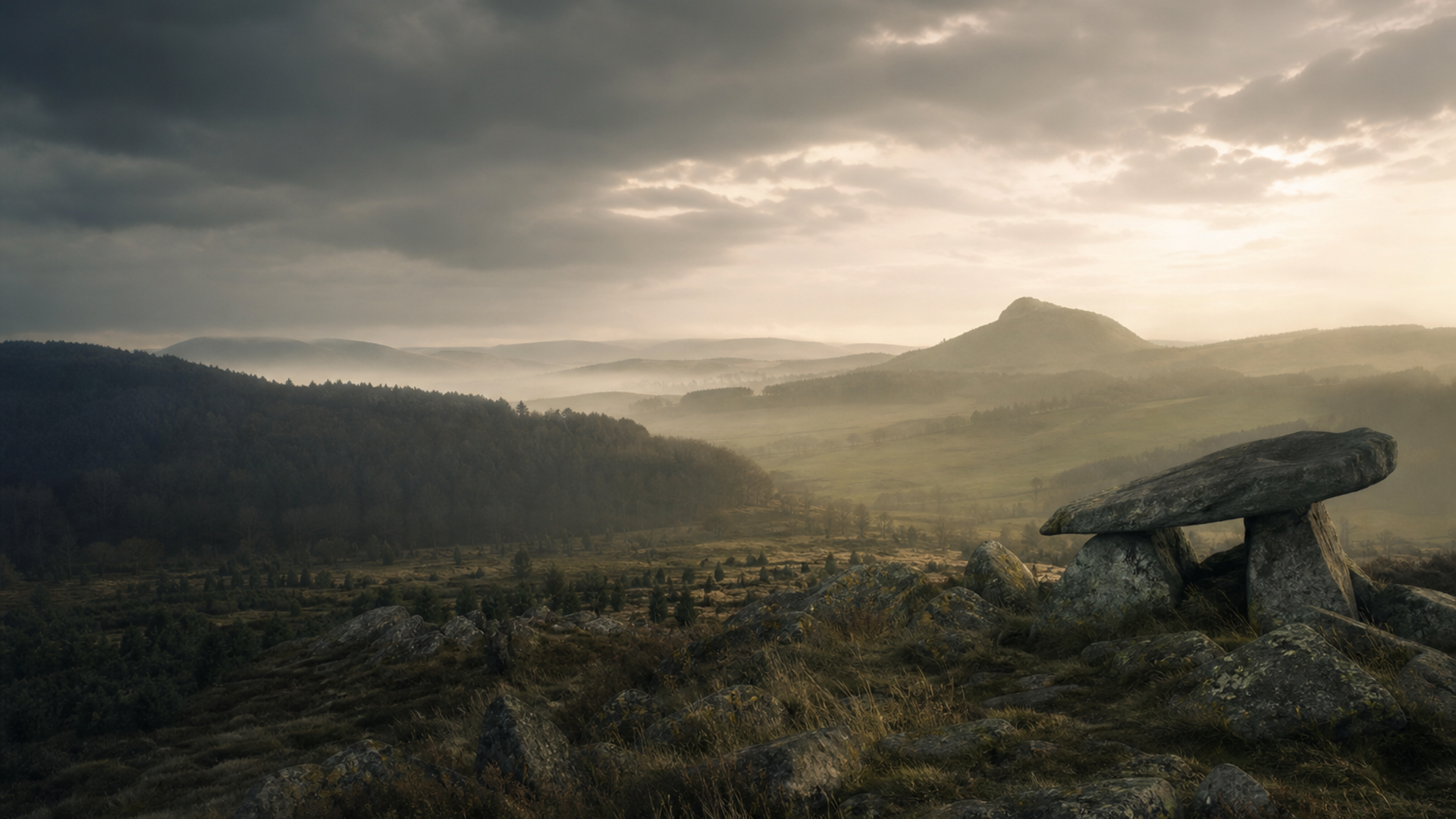

However, the genetic picture must be read cautiously. Ten samples across roughly 4,500 years cannot resolve the timing or scale of demographic events with confidence. Archaeological dates for individual remains are essential to link each haplogroup to a specific horizon. Moreover, uniparental markers (mtDNA and Y) provide lineage snapshots but not the full genome‑wide ancestry structure: they cannot alone estimate proportions of steppe, farmer, or hunter‑gatherer ancestry that genome‑wide data can reveal. Preliminary genome‑wide analyses would be required to test for Bronze Age steppe influx, Neolithic farmer continuity, or local resurgence of hunter‑gatherer ancestry. Given the small sample count, current genetic signals are intriguing but provisional.

  • mtDNA: U (4), K (2), N (1), H (1), H1 (1) — suggests mixed maternal heritage
  • Y‑DNA: G (1) — consistent with some early farmer-associated paternal lines

Legacy & Modern Connections

The genetic echoes recorded in these ancient remains contribute threads to the tapestry of Central European ancestry but stop short of proving direct, uninterrupted descent to modern Czechs. Some maternal lineages observed here (H, K) are still common in Europe today; others (U subtypes) recall earlier Mesolithic heritage that persisted into later periods. Archaeological continuity in settlement locations and material traditions suggests regional resilience, yet material change and likely population movements mean that modern populations are the result of many layered processes.

In museum terms, these individuals allow us to imagine the faces and networks behind long‑gone potteries and house plans. They remind us that present genetic diversity in the Czech Republic is a palimpsest: written and rewritten across millennia by migration, adaptation, and cultural exchange. Future, larger genomic samples and precise radiocarbon dating will be needed to transform these preliminary glimpses into firm narratives of continuity and change.

  • Some ancient maternal lineages seen here persist in modern European gene pools
  • Current dataset is a small window; broader sampling needed for firm continuity claims

AI 助手

AI 助手 由DNAGENICS公司制作

解锁此特性
Ask questions about the Voices from Czech Soil culture. Our AI assistant can explain genetic findings, historical context, archaeological evidence, and modern connections.
AI 样本分析

Voices from Czech Soil 文化是人类历史中值得了解的一章……

遗传分析揭示了与早期种群的联系,同时显示了独特的适应和文化创新的证据。 古代DNA样本提供了对迁徙模式、社会结构以及古代种群之间的生物关系的深刻见解。

这是人工智能分析的预览。 解锁全AI 助手, 以探索关于:

  • 遗传组成和祖先
  • 移徙模式和起源
  • 日常生活和文化习俗
  • 现代遗传遗产
使用优惠码 可减免 25% • 11月14日 到期




