Voices from Kastrouli

下载的 PDF 是图像副本。如需可选中文本及更好的辅助技术支持,请使用打印功能。

Voices from Kastrouli

揭开一个失落的文明

正在加载考古记录……

正在收集古代记录

跳转到主内容
Voices from Kastrouli
文明焦点

Voices from Kastrouli

Late Bronze Age burials near Delphi illuminate a Mycenaean foothold in Phokis

1397 CE - 1112 BCE
Kastrouli (Desfina), Phokis, near Delphi, Greece
滚动开始
Chapter I

剧情

了解 Voices from Kastrouli 文化

Ancient DNA from nine Bronze Age individuals (1397–1112 BCE) recovered at Kastrouli near Delphi offers a cautious glimpse into Mycenaean-era people of central Greece, combining archaeological context with mtDNA evidence that suggests local matrilineal continuity amid wider Aegean networks.

Time Period

c. 1397–1112 BCE (Late Bronze Age)

Region

Kastrouli (Desfina), Phokis, near Delphi, Greece

Common Y-DNA

Undetermined (not reported in this sample set)

Common mtDNA

U (2), U3b (1), K2b (1), H2 (1), T (1)

Chapter II

时间线

这种文化历史上的关键时刻

1112 BCE

Latest dated individual

The most recent radiocarbon date in this sample set marks the tail end of the sampled sequence at Kastrouli, near the close of the Mycenaean era.

1200 BCE

Late Bronze Age upheavals

Widespread social and economic disruptions across the Aegean culminate in the decline of some palatial centers; local communities experienced change and continuity.

1400 BCE

Early Kastrouli burials

Archaeological contexts date multiple burials in Kastrouli to the early 2nd millennium BCE, tying the site into regional Mycenaean networks.

Chapter III

Origins & Emergence

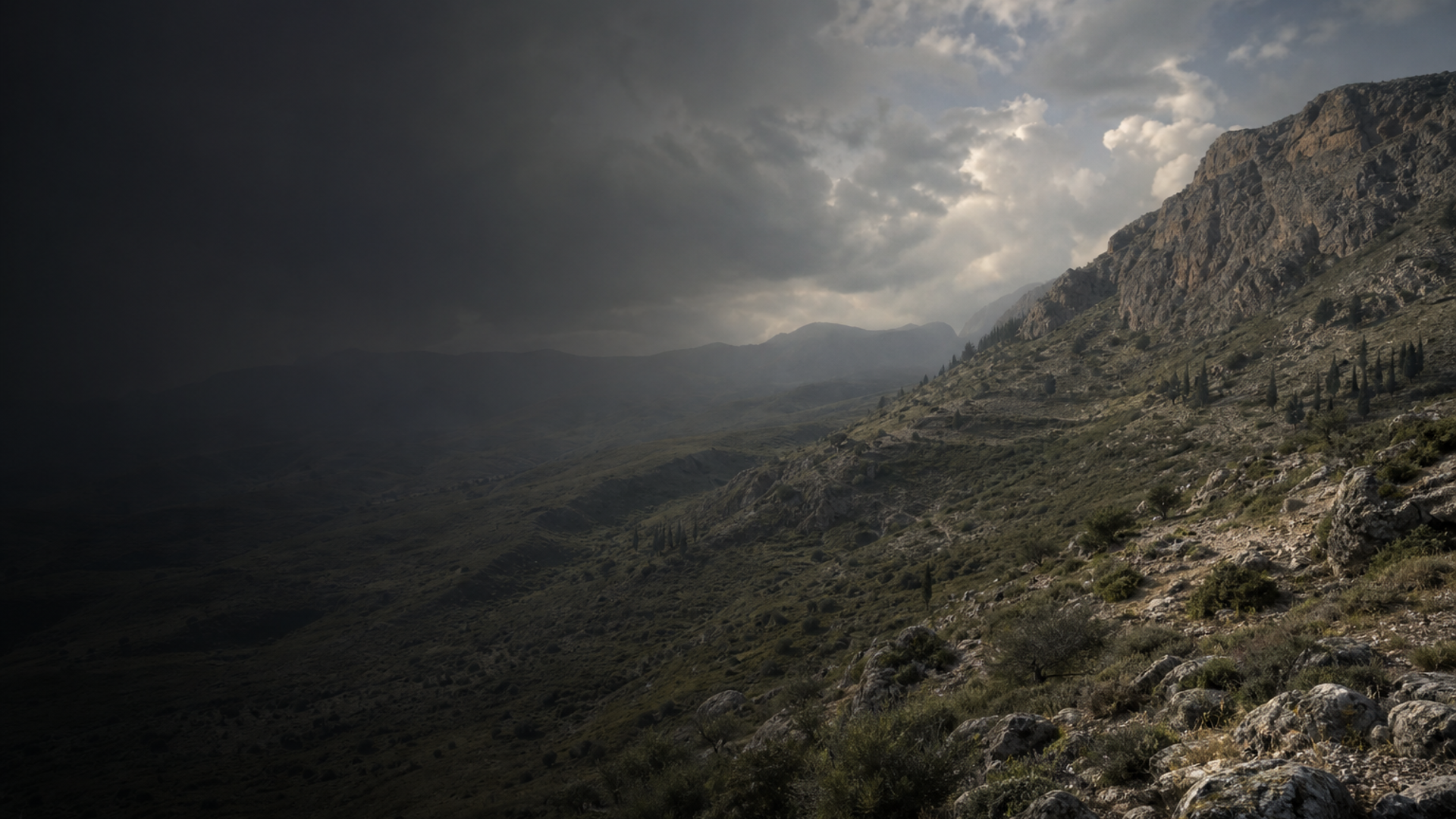
Set on the slopes that look toward Delphi, Kastrouli sits within the dramatic topography that shaped late Bronze Age life in central Greece. Archaeological stratigraphy and radiocarbon contexts place the recovered human remains between 1397 and 1112 BCE, a span that overlaps the high point and unraveling of palatial Mycenaean power across the Aegean. Material culture from nearby sites in Phokis and the wider Boeotian corridor—pottery styles, burial architecture, and grave goods—tie this locality into regional exchange networks that linked coastal and inland polities.

Limited evidence suggests local continuity: some ceramic and funerary traditions at Kastrouli show evolution from earlier Middle and Late Helladic practices rather than abrupt replacement. This is consistent with a landscape of interacting communities—villages, fortified hamlets, and elites—whose identities were negotiated through trade, marriage, and ritual. It is important to emphasize that with only nine sampled individuals, conclusions about population replacement, migration episodes, or demographic shifts must remain provisional. Archaeological data indicates active connections with the broader Mycenaean world, but the human stories we reconstruct here are fragmentary and demand cautious interpretation.

  • Site: Kastrouli, Desfina (Phokis), near Delphi
  • Dates: 1397–1112 BCE (Late Bronze Age / Mycenaean period)
  • Evidence: funerary contexts linked to regional Mycenaean networks
Chapter IV

Daily Life & Society

The people who were laid to rest at Kastrouli lived in a landscape of terraces, olive groves, and limestone ridges where agriculture and herding anchored daily life. Archaeological remains in the region point to mixed farming economies—cereals, pulses, olive cultivation—and pastoral grazing that shaped seasonal movement and resource sharing. Craft activity and long-distance exchange brought bronze tools, imported ceramics, and stylistic influences from coastal centers into inland communities.

Tombs and grave assemblages reveal social differentiation: some burials include finely made vessels or metal objects, while others are more modest, suggesting status variation rather than rigid uniformity. Ritual practice likely threaded household piety with larger communal ceremonies tied to sanctuaries and landscape markers. Proximity to Delphi—later famed as an oracular center—may have intensified local ritual visibility, although evidence tying this small community to pan-Aegean cultic practices remains limited. Ethnographic analogy and regional archaeology help reconstruct aspects of diet, craft, and social networks, but the fragmentary record cautions against over-specific narratives.

  • Economy: mixed farming, pastoralism, and craft production
  • Social structure: evidence of status differences in burial goods
Chapter V

Genetic Profile

Nine mitochondrial genomes recovered from Kastrouli provide a narrow yet informative window into maternal lineages present in central Greece during the Late Bronze Age. The mtDNA haplogroups observed—U (two individuals), U3b, K2b, H2, and T—are lineages known across Europe and the Near East from Neolithic and later contexts. Haplogroup U and its subclades are often associated with Mesolithic and Neolithic European maternal heritage, while K and H lineages are frequent in Neolithic farming populations of the Aegean and beyond. The presence of these lineages at Kastrouli is compatible with archaeological signals of continuity from earlier Aegean farming communities and shared maternal ancestry with broader Mycenaean-era populations.

Crucially, this assemblage lacks reported Y-chromosome results for these individuals in the provided dataset, so paternal affinities and male-mediated migration patterns cannot be assessed here. Broader published studies of Mycenaean Greece have identified admixture between local Aegean farmer-descended populations and incoming elements from the eastern/steppe-Caucasus arcs; however, with fewer than ten samples from Kastrouli, any attempt to place these individuals precisely within that spectrum is preliminary. The mitochondrial evidence suggests matrilineal continuity and integration within regional networks, but larger sample sizes and comparative Y-DNA data are needed to test hypotheses about migration, kinship, and social organization.

  • mtDNA lineages: U (2), U3b, K2b, H2, T — consistent with Aegean Neolithic and Bronze Age pools
  • No Y-DNA reported here; conclusions about male-mediated gene flow are preliminary
Chapter VI

Legacy & Modern Connections

Kastrouli's skeletal voices speak into a long history that folds into the cultural memory of Greece. Archaeologically, the site sits within the tapestry of Mycenaean political and ritual landscapes that later Greek traditions would rework into myth. Genetically, the mitochondrial patterns hint at continuity of maternal lineages in central Greece, a subtle signal that complements archaeological stories of persistent local communities adapting through times of prosperity and crisis.

Modern genetic affinities between inhabitants of Greece and these ancient lineages are a subject of ongoing research; while some lineages persist regionally, population history is complex, shaped by millennia of mobility across the Mediterranean and Balkans. Given the small sample size (n = 9), any direct linkage to living populations must be drawn carefully. These remains are best read as fragments—highly informative but incomplete—that invite further sampling and interdisciplinary study to deepen our understanding of how Bronze Age lives connect to the present.

  • Matrilineal signals suggest continuity, but larger datasets are needed
  • Cultural legacy: Kastrouli contributes to the Mycenaean landscape that underpins later Greek traditions
AI 电源

AI 助手

就 Voices from Kastrouli 文化提问

AI 助手 由DNAGENICS公司制作

解锁此特性
Ask questions about the Voices from Kastrouli culture. Our AI assistant can explain genetic findings, historical context, archaeological evidence, and modern connections.
AI 样本分析

Voices from Kastrouli 文化是人类历史中值得了解的一章……

遗传分析揭示了与早期种群的联系,同时显示了独特的适应和文化创新的证据。 古代DNA样本提供了对迁徙模式、社会结构以及古代种群之间的生物关系的深刻见解。

这是人工智能分析的预览。 解锁全AI 助手, 以探索关于:

  • 遗传组成和祖先
  • 移徙模式和起源
  • 日常生活和文化习俗
  • 现代遗传遗产

探索更古老的文化

揭开古代世界文明的故事

使用优惠码 可减免 35% • 11月12日 到期