Wartberg to Early Bronze: Central Europe

下载的 PDF 是图像副本。如需可选中文本及更好的辅助技术支持,请使用打印功能。

跳转到主内容
文明焦点

Wartberg to Early Bronze: Central Europe

A genetic and archaeological portrait of communities across Germany, Poland, and Czechia (4333–940 BCE)

4333 CE - 940 BCE
Germany, Czech Republic, Poland
11 Ancient Samples

剧情

This synthesis links archaeological sites (Halberstadt-Sonntagsfeld, Niedertiefenbach, Bronocice, Prague-Jinonice) with ancient DNA from 75 individuals (4333–940 BCE). It traces Wartberg-era social life, burial customs, and a mixed genetic profile showing persistence of local ancestry alongside incoming lineages.

Time Period

4333–940 BCE

Region

Germany, Czech Republic, Poland

Common Y-DNA

I (26), R (18)

Common mtDNA

U (16), H (9), K (9), J (9), H-c (4)

样本地点

互动地图暂不可用。请查看样本目录中的地点记录。

时间线

2500 BCE

Intensification of collective burial practices

Regional cemeteries and long mounds linked to Wartberg-era communities show increased use, reflecting stronger communal rituals and memory practices.

Origins & Emergence

Between the late 5th and mid-1st millennia BCE the river valleys and loess plains of central Europe hosted communities whose lives were written in earth, pottery and bone. Archaeological horizons sampled here span sites such as Halberstadt-Sonntagsfeld, Niedertiefenbach, Bronocice, Krusza Zamkowa, and multiple Prague localities. Material culture and burial architecture tie many of these assemblages to the Wartberg phenomenon in central Germany and to contemporaneous Late Lengyel and Lublin-Volhynian influences to the east.

The picture that emerges is one of gradual local development layered with episodic contact. Earthwork cemeteries and collective interments indicate sustained community memory and ritual investment; settlement traces and artefact styles suggest regional exchange networks. Radiocarbon dates across the sequence (4333–940 BCE) mark transitions from Late Neolithic traditions into the Early Bronze Age, when metal objects and new social dynamics appear in the record.

Archaeological data indicates continuity in some regional practices alongside visible change in others—pottery forms, burial configuration, and settlement layout evolve across centuries. Limited evidence suggests that some shifts reflect influences carried along trade routes and long-distance connections, though the intensity and direction of those contacts vary by locality.

  • Sites include Halberstadt-Sonntagsfeld, Niedertiefenbach, Bronocice, Krusza Zamkowa, Prague-Jinonice
  • Cultural links to Wartberg, Late Lengyel, and Lublin-Volhynian spheres
  • Transition from Late Neolithic traditions into the Early Bronze Age

Daily Life & Society

In the soft light of dawn, fields and hearths anchored communities whose daily rhythms were agricultural, domestic and social. Archaeological assemblages show mixed economies: cereal cultivation and animal husbandry formed the subsistence base, while crafted pottery, polished stone tools, and later early metal objects reflect specialized skills and craft exchange.

Burial customs reveal social complexity. Collective graves and long mounds preserve multiple generations and structured deposition, suggesting kin-based groups, ritualized commemoration, and possibly differential status. Settlement traces—pit houses, storage features, and workshop debris—indicate seasonal planning, resource storage, and craft production at local scales.

Material connections across regions point to mobility of ideas and goods: certain pottery styles, flint sources, and finished metal items traveled along networks that linked the loess plains to upland zones. Limited osteological and isotopic work from comparable contexts often reveals varied childhood locales for some individuals, implying movement for marriage, craft apprenticeship, or seasonal work, although direct isotope data for this sample set are not uniformly available.

  • Agriculture, animal husbandry, and craft production formed the subsistence base
  • Collective burials and long mounds indicate kin-based ritual and memory

Genetic Profile

Genomic data from 75 individuals sampled across Germany, Czechia, and Poland (4333–940 BCE) reveal a mixed but regionally coherent genetic landscape. The two most frequent Y-chromosome categories recorded are haplogroup I (26 individuals) and haplogroup R (18 individuals). On the maternal side, haplogroups U (16), H (9), K (9), J (9), and H-c (4) are prominent.
Interpretation: the prevalence of haplogroup I is consistent with persistence of lineages associated in broader studies with Mesolithic and local Neolithic populations in northern and central Europe. Haplogroup R—recorded here without detailed subclade resolution—may include lineages associated with steppe-related influxes in some parts of Europe; however, assigning specific migratory events requires sub-haplogroup data and temporal resolution. Maternal haplogroups U, H, K and J reflect a mixture: U has deep Mesolithic roots in Europe, while H, K and J are widespread in Neolithic farmer-associated contexts and later populations.

Caveats and scale: with 75 samples this dataset is moderately sized and allows detection of broad patterns, but geographic sampling is uneven and some sites contribute only a handful of individuals. Where sample counts per site are low (<10), conclusions about local population structure should be treated as preliminary. Overall, the genetic signal supports continuity of local ancestry combined with episodic gene flow—matching the archaeological picture of sustained local communities engaged in long-distance networks.

  • Y-DNA dominated by I (26) and R (18); mtDNA shows mixture of U, H, K, J
  • Data indicate local ancestry persistence with episodes of external gene flow; site-level samples <10 are preliminary

Legacy & Modern Connections

The bones and pottery of Wartberg-era and Early Bronze Age communities are chapters in a longer story that reaches into modern Central Europe. Genetic contributions from these populations are part of the mosaic that forms present-day northern and central European genomes, but they are not sole ancestors: later movements, admixture, and demographic shifts layered on top of the Late Neolithic and Bronze Age foundations.

Culturally, practices such as communal burial and landscape memory echo in later mortuary traditions, while some craft techniques and exchange patterns anticipate Bronze Age networks. For ancestry interpretation, it is important to avoid linear narratives—modern populations inherit many streams of ancestry, and the presence of shared haplogroups does not imply direct, unbroken descent.

Limited datasets and uneven sampling mean that new ancient genomes and contextual archaeological study will continue to refine how Wartberg-related communities contributed to Europe's genetic and cultural heritage.

  • Contributes to the genetic mosaic of modern Central Europeans but is one of multiple ancestral streams
  • Ritual and material practices influenced later regional Bronze Age traditions

样本目录

10 / 11 samples
纵向 样本 国家 大纪元 日期 文化 性别 Y-DNA mtDNA
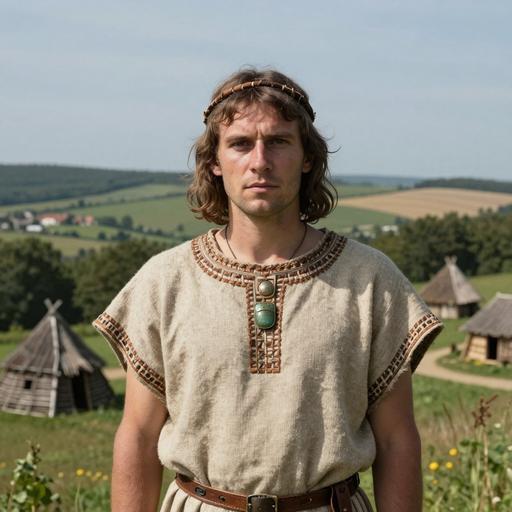
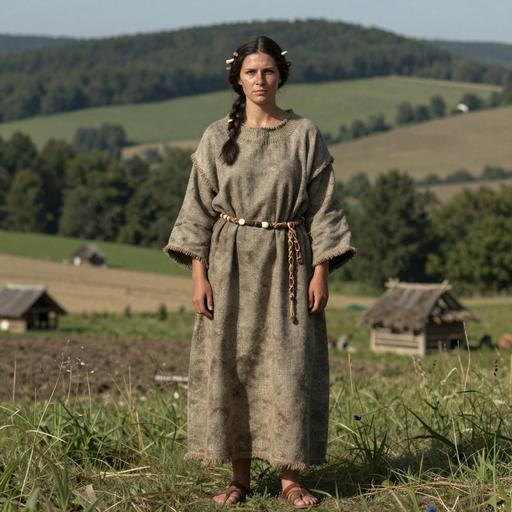
重建的肖像画 Czechia EBA individual, Czech Republic
Czech Republic Czech_EBA 1881-1700 calBCE (3475±20 BP, PSUAMS-2849) Central European F - T1a1*
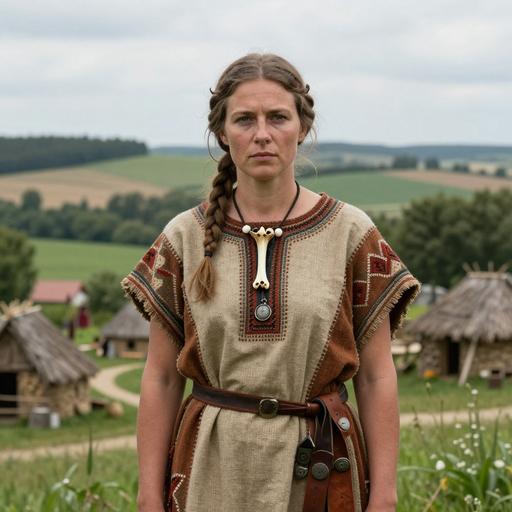
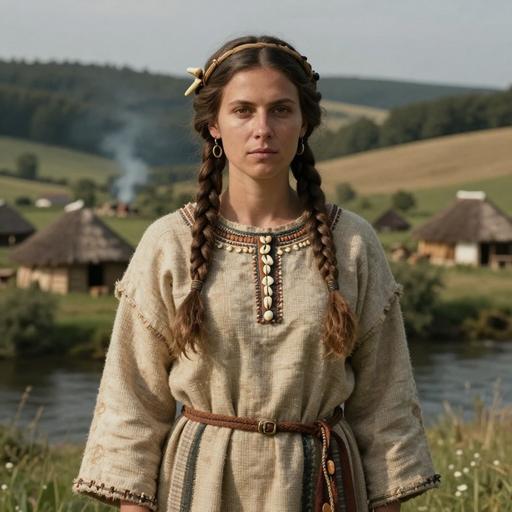
重建的肖像画 Czechia EBA individual, Czech Republic
Czech Republic Czech_EBA 1882-1742 calBCE (3480±20 BP, PSUAMS-2842) Central European M I-PF3892 H4a1a1a
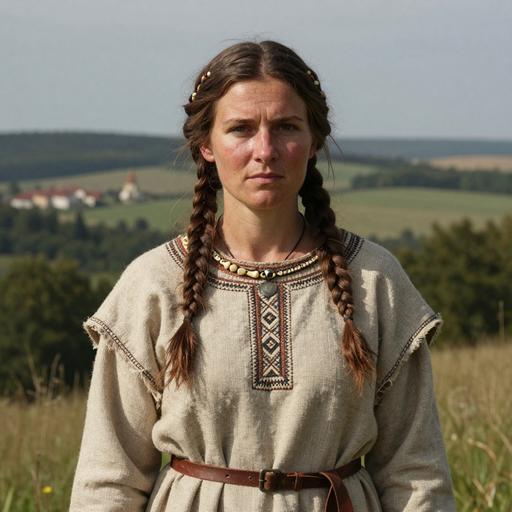
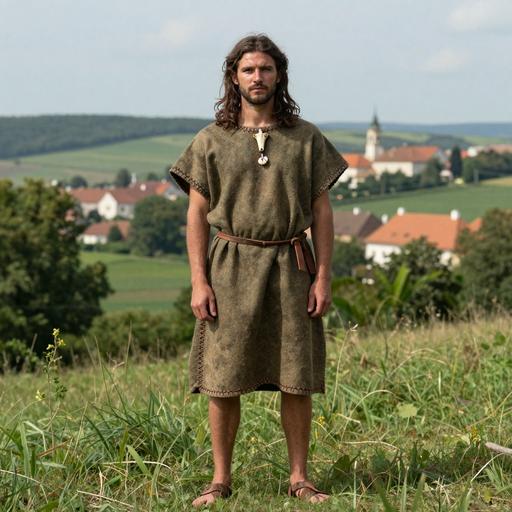
重建的肖像画 Czechia EBA individual, Czech Republic
Czech Republic Czech_EBA 2197-1983 calBCE (3700±25 BP, PSUAMS-3886) Central European M I-PF3892 J1c3a
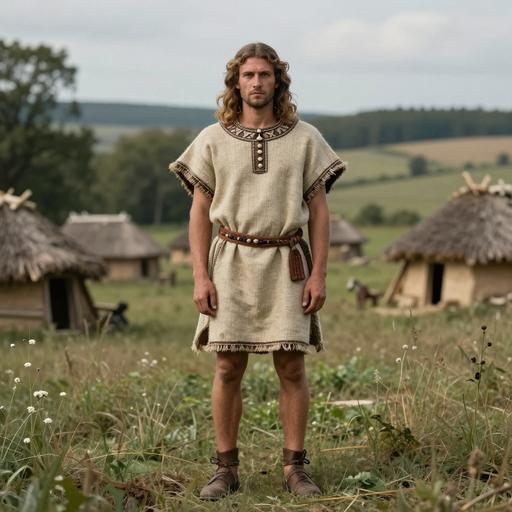
重建的肖像画 Czechia EBA individual, Czech Republic
Czech Republic Czech_EBA 2193-1977 calBCE (3685±25 BP, PSUAMS-3885) Central European F - U5b2c3a
重建的肖像画 Czechia EBA individual, Czech Republic
Czech Republic Czech_EBA 2800-1800 BCE Central European F - R1b1
重建的肖像画 Czechia EBA individual, Czech Republic
Czech Republic Czech_EBA 2200-1950 BCE Central European M R-M198 U5b2c
重建的肖像画 Czechia EBA individual, Czech Republic
Czech Republic Czech_EBA 2800-1800 BCE Central European M R-S1894 K1a-a4
重建的肖像画 Czechia EBA individual, Czech Republic
Czech Republic Czech_EBA 2800-1800 BCE Central European F - H3v-a
重建的肖像画 Czechia EBA individual, Czech Republic
Czech Republic Czech_EBA 2800-1800 BCE Central European F - U5a1a2b
重建的肖像画 Czechia EBA individual, Czech Republic
Czech Republic Czech_EBA 2800-1800 BCE Central European M R-P312 U5a1a2b
重建的肖像画 Czechia EBA individual, Czech Republic
Czech Republic Czech_EBA 2800-1800 BCE Central European M R-M417 H1

AI 助手

AI 助手 由DNAGENICS公司制作

解锁此特性
Ask questions about the Wartberg to Early Bronze: Central Europe culture. Our AI assistant can explain genetic findings, historical context, archaeological evidence, and modern connections.
AI 样本分析

Wartberg to Early Bronze: Central Europe 文化是人类历史中值得了解的一章……

遗传分析揭示了与早期种群的联系,同时显示了独特的适应和文化创新的证据。 古代DNA样本提供了对迁徙模式、社会结构以及古代种群之间的生物关系的深刻见解。

这是人工智能分析的预览。 解锁全AI 助手, 以探索关于:

  • 遗传组成和祖先
  • 移徙模式和起源
  • 日常生活和文化习俗
  • 现代遗传遗产
使用优惠码 可减免 30% • 11月15日 到期