West Byzantine Anatolia (400–800 CE)

下载的 PDF 是图像副本。如需可选中文本及更好的辅助技术支持,请使用打印功能。

West Byzantine Anatolia (400–800 CE)

揭开一个失落的文明

正在加载考古记录……

正在收集古代记录

跳转到主内容
West Byzantine Anatolia (400–800 CE)
文明焦点

West Byzantine Anatolia (400–800 CE)

Communities of Iznik and Bursa seen through archaeology and maternal DNA

400 CE - 800 CE
Marmara, Anatolia (Turkey)
滚动开始
Chapter I

剧情

了解 West Byzantine Anatolia (400–800 CE) 文化

Archaeological and genetic snapshots from 13 individuals (400–800 CE) at Ilıpınar and Iznik reveal a West Byzantine Anatolian population with Mediterranean and West Eurasian maternal lineages. Findings are preliminary but illuminate continuity in late antique Anatolia.

Time Period

400–800 CE

Region

Marmara, Anatolia (Turkey)

Common Y-DNA

Not reported / limited male-line data

Common mtDNA

T, H, J, U (notably T x3, H x2, H87)

Chapter II

时间线

这种文化历史上的关键时刻

395 CE

Division of the Roman Empire

The formal split between eastern and western imperial administrations reshaped provincial governance in Anatolia and set the stage for Byzantine regional identities.

527 CE

Reign of Justinian I begins

Justinian's reign brings legal reform, ambitious building programs, and military campaigns that affect the balance of power in Anatolia and the eastern Mediterranean.

726 CE

Start of Byzantine Iconoclasm (approx.)

Imperial policies opposing certain religious images provoke social and ecclesiastical change within Byzantine communities, including those in Anatolia.

Chapter III

Origins & Emergence

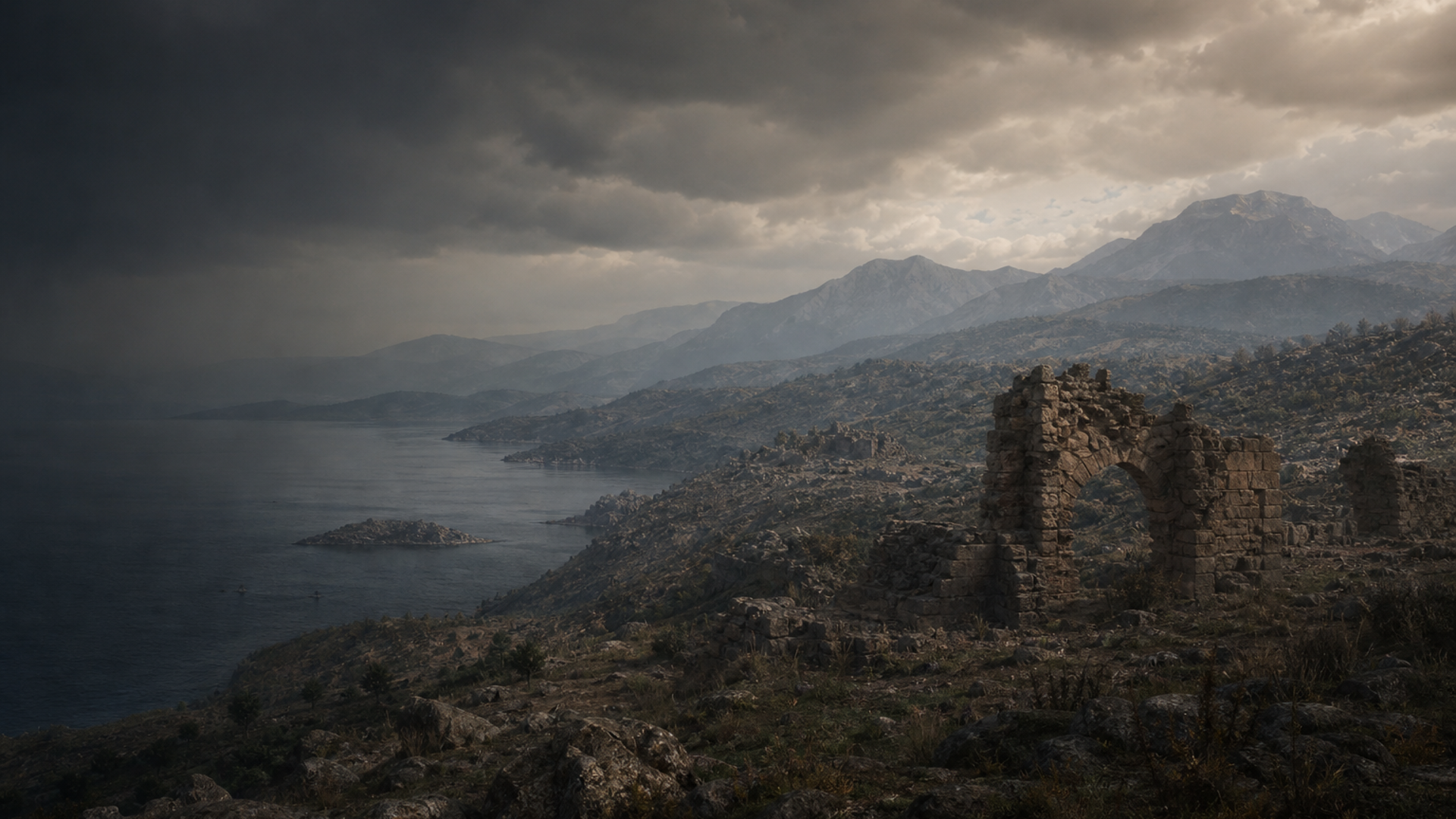
Between the collapse of the unified Roman world and the consolidation of medieval polities, west Anatolia around Iznik (ancient Nicaea) and Bursa formed a theater of cultural continuity and change. Archaeological layers at sites such as Ilıpınar (Marmara. Bursa. Orhangazi) and the basilica complexes at Yenişehirkapı and Basilica (Marmara. İznik) preserve late Roman and early Byzantine architecture, Christian burial grounds, and material ties to provincial trade networks.

Archaeological data indicates continuity in settlement patterns and local crafts, while also recording new administrative and religious expressions of a Christianized empire. Material culture—ceramics, building phases, and funerary types—suggests populations rooted in earlier Roman provincial communities with interactions across the Marmara corridor. Limited genetic sampling (13 individuals) provides a nascent biological dimension: maternal lineages documented here overlap broadly with known Mediterranean and West Eurasian haplogroups, consistent with long-standing exchange and mobility in the region.

Taken together, the picture is of communities that retained local ancestry and lifeways while participating in the shifting political and economic currents of Late Antiquity. However, these conclusions are provisional: the sample set is geographically focused and modest in size, and further sampling is needed to resolve the finer-scale dynamics of migration and continuity.

  • Sites: Ilıpınar (Orhangazi), Yenişehirkapı and Basilica (İznik)
  • Continuity of late Roman provincial settlement into Byzantine era
  • Limited genetic samples suggest Mediterranean/West Eurasian maternal links
Chapter IV

Daily Life & Society

Daily life in West Byzantine Anatolia unfolded in a landscape of small towns, agrarian estates, and market routes linking the Marmara basin. Archaeological layers reveal stone-built churches and basilicas, house foundations, pottery assemblages, and burial grounds that reflect Christian funerary practice. Local economies combined cereal agriculture, olive and grape cultivation, animal husbandry, and artisanal activities such as textile production and metallurgy.

Iznik/Nicaea and nearby settlements occupied strategic positions on inland routes between the Aegean, the interior of Anatolia, and the capital regions to the west. Coins, amphorae, and imported ceramics testify to long-distance trade even as households relied on regional production. Social life was structured around village and town communities, ecclesiastical institutions, and a provincial administration that continued many Roman practices. Conflict and disruption—raids, shifting frontiers, and economic stress—periodically altered settlement patterns, but graves and domestic assemblages show resilience and cultural continuity.

Archaeobotanical and zooarchaeological remains from the region further illuminate diet: cereals, pulses, olives, grapes, and domesticated animals were staples. Craft specializations and workshop debris indicate skilled artisans operating within a network of regional exchange.

  • Economy: mixed agriculture, viticulture, artisan workshops
  • Religion and society centered on basilicas and local ecclesiastical networks
Chapter V

Genetic Profile

Genetic sampling from 13 individuals dated to 400–800 CE at Ilıpınar and Iznik offers an initial look at maternal ancestry in West Byzantine Anatolia. Mitochondrial haplogroups recovered include T (3 samples), H (2), J (1), U (1), and a lineage labeled H87 (1). These matrilineal markers are commonly observed across the Mediterranean and West Eurasia: H and T are frequent in European and Anatolian populations, J often appears in Near Eastern and Mediterranean contexts, and U is widespread in West Eurasia.

Important caveats shape interpretation. First, mtDNA data appear to be available for a subset of the 13 individuals (the counts above sum to fewer than 13), so maternal-line inferences are based on limited numbers and must be considered preliminary. Second, no common Y-DNA haplogroups were reported for this set, leaving male-line dynamics unresolved. Third, these haplogroups reflect deep, widespread maternal ancestries rather than recent, specific migrations; they are consistent with long-standing genetic continuity and regional connectivity rather than evidence for a single migratory event.

Archaeogenetic integration—combining genome-wide data, isotopes, and broader regional sampling—would better quantify local continuity, incoming gene flow, and kinship patterns. For now, the genetic signal aligns with an Anatolian population shaped by Mediterranean and West Eurasian maternal lineages, embedded in a late antique sociocultural landscape.
  • mtDNA: T (3), H (2), J (1), U (1), H87 (1) — maternal diversity suggests Mediterranean/West Eurasian links
  • No published or reported common Y-DNA in this dataset; male-line history remains unresolved
Chapter VI

Legacy & Modern Connections

The West Byzantine communities of the Marmara region contributed threads to the long tapestry of Anatolian history. Archaeological continuity in settlement and church architecture, together with maternal haplogroups that are still widespread in the region, point to biological and cultural persistence across centuries. These populations formed part of the ancestral substrate upon which later medieval and early modern demographic changes—some dramatic, many gradual—would build.

Caution is essential: the samples are spatially concentrated and numerically modest, so claiming direct lines to specific modern groups would overreach the evidence. Nevertheless, when placed into wider regional genetic surveys, these late antique individuals enrich our understanding of how medieval Anatolia absorbed influences while maintaining local continuity. The study underscores the value of integrating archaeology and genetics to trace the deep, often complex roots of modern Anatolian diversity.

  • Contributes to the ancestral substrate of later Anatolian populations
  • Highlights the need for wider genomic and archaeological sampling to clarify continuity
AI 电源

AI 助手

就 West Byzantine Anatolia (400–800 CE) 文化提问

AI 助手 由DNAGENICS公司制作

解锁此特性
Ask questions about the West Byzantine Anatolia (400–800 CE) culture. Our AI assistant can explain genetic findings, historical context, archaeological evidence, and modern connections.
AI 样本分析

West Byzantine Anatolia (400–800 CE) 文化是人类历史中值得了解的一章……

遗传分析揭示了与早期种群的联系,同时显示了独特的适应和文化创新的证据。 古代DNA样本提供了对迁徙模式、社会结构以及古代种群之间的生物关系的深刻见解。

这是人工智能分析的预览。 解锁全AI 助手, 以探索关于:

  • 遗传组成和祖先
  • 移徙模式和起源
  • 日常生活和文化习俗
  • 现代遗传遗产

探索更古老的文化

揭开古代世界文明的故事

使用优惠码 可减免 35% • 11月12日 到期




