West Liao River — Erdaojingzi Lineage

下载的 PDF 是图像副本。如需可选中文本及更好的辅助技术支持,请使用打印功能。

West Liao River — Erdaojingzi Lineage

揭开一个失落的文明

正在加载考古记录……

正在收集古代记录

跳转到主内容
West Liao River — Erdaojingzi Lineage
文明焦点

West Liao River — Erdaojingzi Lineage

Late Neolithic–early Bronze Age people of Erdaojingzi, Inner Mongolia — genetic glimpses from three individuals

2050 CE - 1517 BCE
Inner Mongolia (Chifeng), Northeast China
滚动开始
Chapter I

剧情

了解 West Liao River — Erdaojingzi Lineage 文化

Archaeological and ancient DNA glimpses from Erdaojingzi (Chifeng, Inner Mongolia), dated 2050–1517 BCE. Limited samples (n=3) hint at northern East Asian paternal lineages (NO, O) and diverse maternal lineages (N, A22, B), suggesting local continuity with wider Northeast Asian networks.

Time Period

2050–1517 BCE

Region

Inner Mongolia (Chifeng), Northeast China

Common Y-DNA

NO (1), O (1)

Common mtDNA

N (1), A22 (1), B (1)

Chapter II

时间线

这种文化历史上的关键时刻

2050 BCE

Emergence at Erdaojingzi

Settlement activity in Erdaojingzi (Chifeng) dated to c. 2050 BCE marks Late Neolithic presence within the West Liao River region.

Chapter III

Origins & Emergence

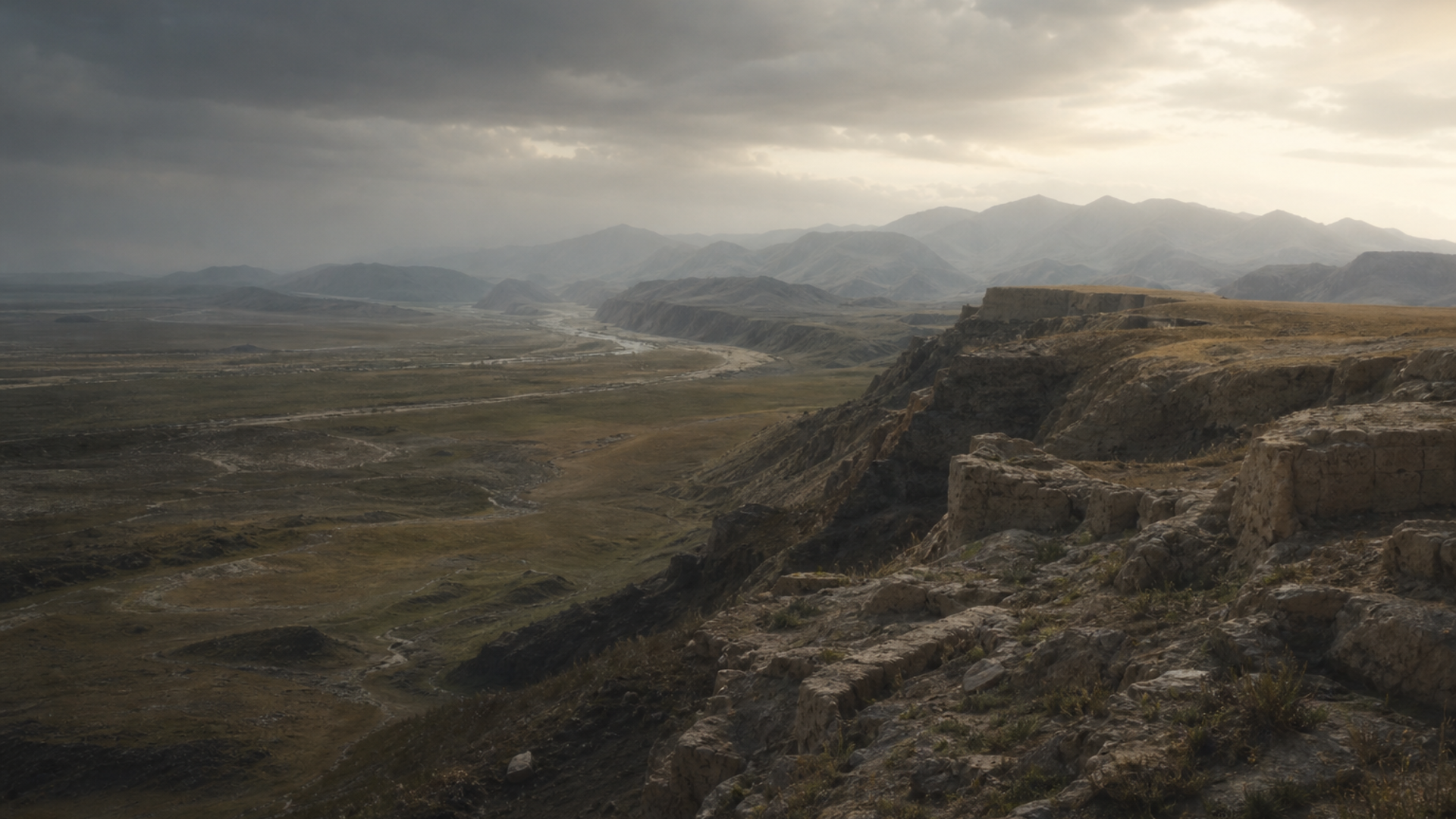
The Erdaojingzi assemblage sits at a cinematic crossroads of riverine plains and rolling steppe at the western edge of the Liao River basin. Archaeological deposits at Erdaojingzi (Chifeng, Inner Mongolia) date between c. 2050 and 1517 BCE and are usually placed within the Late Neolithic to early Bronze Age sequence of the West Liao River region. Material culture—millet-dominated agriculture, ceramic forms that continue long-standing regional traditions, and burial practices with pit graves—ties these communities to the broader Late Neolithic West Liao River horizon.

Archaeological data indicate continuity of local settlement patterns alongside increasing regional connections: exchange of raw materials, stylistic influences in pottery, and the gradual appearance of metallurgical objects in some contemporaneous sites across Northeast China. Limited evidence suggests a community adapted to mixed farming and seasonal mobility, exploiting riverine resources and nearby uplands. Environmental changes and shifting social networks during this period likely shaped local lifeways, with Erdaojingzi representing one node in a network of Late Neolithic settlements.

Caution is necessary: the genetic dataset for this specific label comprises only three individuals. As a result, reconstructions of population origins and movements remain provisional and should be integrated with ongoing excavations and broader regional aDNA studies.

  • Dates: c. 2050–1517 BCE, Late Neolithic to early Bronze Age.
  • Site: Erdaojingzi, Chifeng, Inner Mongolia — riverine settlement context.
  • Cultural ties to Late Neolithic West Liao River traditions; evidence of increasing regional exchange.
Chapter IV

Daily Life & Society

Archaeological traces from the West Liao River landscape evoke domestic rhythms: compact settlements with clustered houses, storage pits for harvested millet, and hearth features for processing grain and fish. Faunal remains from nearby West Liao contexts indicate a mixed economy—domesticated millet and livestock supplemented by hunting and river fishing—though specific faunal assemblages from Erdaojingzi itself remain limited in publication.

Grave assemblages across the region reveal social differentiation: simple pit burials coexisted alongside richer interments where personal ornaments or utilitarian objects were deposited, hinting at developing social hierarchies. Ceramic styles at Erdaojingzi show continuity with regional Late Neolithic forms but also local variation in decoration and vessel shapes, suggesting household-level identity and craft specialization.

Seasonal cycles of planting, harvest, and resource procurement likely defined community calendars. Community organization appears focused on kin-based households with reciprocal ties to neighboring settlements. Archaeological data indicates increasing connectivity during the later portion of the date range, possibly reflecting expanding exchange networks across the West Liao River basin.

  • Economy centered on millet agriculture, supplemented by livestock, hunting, and fishing.
  • Burial variability suggests emerging social differentiation and household identities.
Chapter V

Genetic Profile

The ancient DNA signal from the Erdaojingzi samples is tantalizing but preliminary: only three individuals inform the genetic profile assigned to China_WLR_LN. Paternal markers include haplogroups NO (1) and O (1). Haplogroup NO is a major East Eurasian branch that ultimately splits into lineages common across northern and eastern Eurasia, while haplogroup O is widespread among East and Southeast Asian populations. Together, these Y-chromosome calls are consistent with continuity of northern East Asian paternal ancestry in the West Liao River corridor.

Mitochondrial diversity across the three samples includes broad haplogroup N (1), the A22 subclade (1), and B (1). Haplogroup N is a deep maternal lineage found broadly across Eurasia; A22 and B are lineages with strong ties to East and Northeast Asia and, in later millennia, to populations farther afield. This mix suggests maternal connections that span local Northeast Asian variation and links into wider East Asian maternal pools.

Crucially, with n=3 the dataset is small. Population-level inferences—such as continuity, admixture proportions, or demographic shifts—remain highly tentative. Archaeological context helps situate these genetic snapshots, but larger and temporally broader sampling is required to resolve micro-scale population dynamics in the West Liao River basin.

  • Y-DNA: NO and O — consistent with northern/east Asian paternal lineages.
  • mtDNA: N, A22, B — maternal lineages linking the community to broader East/Northeast Asian variation.
Chapter VI

Legacy & Modern Connections

The Erdaojingzi genetic and archaeological signals contribute a quiet but important note to the deep story of Northeast Asia. The paternal and maternal lineages observed align with haplogroups that persist in modern East Asian populations, suggesting threads of continuity across millennia in the Liao River corridor. Archaeological continuities in settlement patterns and subsistence suggest cultural resilience and local adaptation.

Because the sample size is very small, claims about direct ancestry to any modern group must be cautious. Instead, these data highlight local contributions to the genetic tapestry of East Asia and identify the West Liao River region as a locus where local traditions met broader regional currents. Future aDNA work with expanded sampling across sites and times will clarify how Erdaojingzi’s people fit into the long, shifting mosaic that leads to present-day populations.

  • Genetic lineages observed are consistent with long-term East Asian population continuity.
  • Small sample size means modern connections are suggestive rather than conclusive.
AI 电源

AI 助手

就 West Liao River — Erdaojingzi Lineage 文化提问

AI 助手 由DNAGENICS公司制作

解锁此特性
Ask questions about the West Liao River — Erdaojingzi Lineage culture. Our AI assistant can explain genetic findings, historical context, archaeological evidence, and modern connections.
AI 样本分析

West Liao River — Erdaojingzi Lineage 文化是人类历史中值得了解的一章……

遗传分析揭示了与早期种群的联系,同时显示了独特的适应和文化创新的证据。 古代DNA样本提供了对迁徙模式、社会结构以及古代种群之间的生物关系的深刻见解。

这是人工智能分析的预览。 解锁全AI 助手, 以探索关于:

  • 遗传组成和祖先
  • 移徙模式和起源
  • 日常生活和文化习俗
  • 现代遗传遗产

探索更古老的文化

揭开古代世界文明的故事

使用优惠码 可减免 35% • 11月12日 到期




