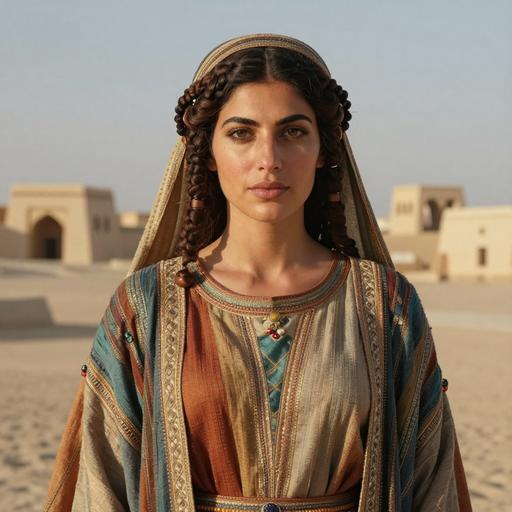
The Early Tylos Period in Bahrain, corresponding to the Seleucid-Characene era, represents a fascinating cultural and political epoch in the history of the Persian Gulf region. This era, spanning approximately from the 3rd century BCE to the 3rd century CE, is characterized by a rich amalgamation of indigenous traditions and external influences, primarily due to Bahrain's strategic position along prominent trade routes.
Geopolitical Context
During this period, what is now modern-day Bahrain was known as Tylos, a name derived from Greek sources. The region was under the influence of the Seleucid Empire initially, following Alexander the Great's conquests. This Hellenistic influence introduced various socio-cultural dynamics, which are evident in archaeological finds from the era. Subsequently, control of the area transferred to the Characene Kingdom, a vassal state of the Parthians. This shifting control brought in different cultural and trade influences, establishing Tylos as a crucial mercantile and cultural hub.
Society and Culture
Social Structure:
The society in Tylos was a melting pot of various peoples, including Arabs, Persians, Greeks, and later, Parthians. The co-mingling of these groups contributed to a diverse cultural landscape. The social hierarchy was influenced by local traditions intertwined with Hellenistic customs, where local chieftains or rulers acted in concert with Greek or Parthian administrative systems.
Language and Education:
The lingua franca of the period likely included Greek, Aramaic, and various local dialects. Greek language and culture had a notable impact on the intellectual and administrative aspects of life, evidenced by inscriptions and artifacts. Local education may have been influenced by Greek models, encouraging literacy among the elite.
Religion:
Religiously, Tylos exhibited syncretism, where local deities and religious practices were blended with Hellenistic traditions. There is evidence of the worship of Mesopotamian gods, Arabian deities, and even elements of Greek religion. This era also saw the introduction and integration of new religious practices, reflecting the pluralistic nature of the society.
Art and Architecture:
Art and architecture from this period reveal a fusion of styles. Public and religious buildings might showcase Greek architectural elements, such as columns and amphitheater-like structures, blended with local building techniques and materials. Artifacts such as pottery, sculptures, and coinage from the period demonstrate a mixture of Hellenistic and indigenous motifs.
Economy and Trade
Economic Activities:
Bahrain's economy during the Tylos period was heavily reliant on trade, facilitated by its strategic location. The island served as a trading relay point connecting the Hellenistic world with the Indian subcontinent and the Arabian Peninsula. Commerce included the exchange of goods such as pearls, dates, textiles, ceramics, and perhaps copper and bitumen from the region.
Trade Networks:
The Seleucid and Characene governance provided a relatively stable political framework that enabled flourishing trade networks. These networks linked the Mediterranean, the Near East, and the Indian Ocean, making Tylos a nexus for goods, cultures, and ideas.
Urbanization:
The economic affluence from trade led to urban development. Settlements were likely organized with both Greek-inspired planning and traditional layouts, contributing to a cosmopolitan urban environment. Ports and marketplaces were vibrant centers of economic and cultural exchanges.
Legacy
The Early Tylos Period set the stage for subsequent historical developments in Bahrain and the Persian Gulf region. The integration of diverse cultural and economic influences left a lasting impact on the local culture, which continued to evolve under later empires. The echo of this period in Bahrain's archaeological record provides valuable insights into the ways that local and global dynamics can blend to shape societies over the centuries.
In summary, the Early Tylos Period in Bahrain during the Seleucid-Characene era was a dynamic and socially complex epoch. It was marked by significant cross-cultural interactions that influenced its social structures, economy, religion, and art, leaving an enduring mark on the cultural history of the Gulf region.