Menu
Store
Blog
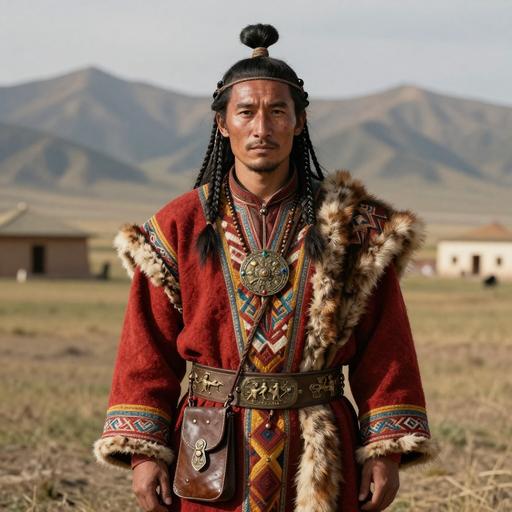
Portrait reconstruction of DA17
Ancient Individual

A man buried in Kazakhstan in the Iron Age era

DA17
810 BCE - 572 BCE
Male
Central Saka Culture in Kazakhstan
Kazakhstan
Scroll to begin
Chapter I

Identity

The biological and cultural markers that define this ancient individual

Sample ID

DA17

Date Range

810 BCE - 572 BCE

Biological Sex

Male

mtDNA Haplogroup

H10

Y-DNA Haplogroup

R-Z2124

Cultural Period

Central Saka Culture in Kazakhstan

Chapter II

Place

Where this individual was discovered

Country Kazakhstan
Locality Tian Shan. Central Steppe
Coordinates 51.0837, 75.4276
Chapter III

Time

When this individual lived in the broader context of human history

DA17 810 BCE - 572 BCE
Chapter IV

Story

The narrative of this ancient life

The Central Saka culture, part of the larger Saka or Scythian cultural sphere, represents a fascinating era in the history of the Central Asian steppes, particularly in what is now modern-day Kazakhstan. This culture flourished during the early Iron Age, approximately between the 8th and 3rd centuries BCE, and is an integral part of the history of the steppe nomads.

Geography and Environment

The Central Saka culture was situated in the vast steppe region of Central Asia, characterized by its open grasslands, rolling hills, and significant river systems like the Syr Darya and the Irtysh. This expansive landscape provided ideal conditions for a nomadic lifestyle, with abundant grazing land for herds of horses, cattle, and sheep, which were central to the Saka economy and way of life.

Lifestyle and Economy

As nomads, the Saka were renowned for their mobility, which was facilitated by their mastery of horseback riding. They developed sophisticated pastoral practices and relied heavily on their herds for sustenance, clothing, and trade. While they were primarily nomadic herders, evidence suggests some level of settlement that facilitated trade and seasonal occupation.

The Saka economy was deeply tied to their environment, capitalizing on the open grasslands for livestock. Their economy also included metalworking, particularly in gold, which they used to craft intricate jewelry and weapons. Trade routes connected them to other cultures, facilitating exchange with neighboring agrarian societies and more distant civilizations, such as the Persian Empire and China.

Social and Political Structure

The Saka society was organized into tribal confederations, led by chieftains or kings who wielded both political and military power. These leaders were often warrior aristocrats who commanded loyalty through their prowess in battle and skill in governance. The society was likely stratified, with a warrior elite dominating professionals like blacksmiths, healers, and spiritual leaders, as well as common herders.

Warfare and Weaponry

The Saka were formidable warriors, employing advanced military tactics honed in the harsh steppe environment. They are particularly noted for their exceptional skills in mounted archery, using composite bows that allowed them to execute deadly hit-and-run tactics. Their weaponry was innovative, including a variety of swords, daggers, and armor, often adorned with gold and intricate designs reflecting their artistic sensibilities.

Art and Symbolism

Art was an essential aspect of Saka culture, with a distinctive style known as Saka-Scythian or Scytho-Siberian Art. This art was characterized by zoomorphic motifs and intricate depictions of animals, which had symbolic meanings and were likely connected to their spiritual beliefs and shamanistic practices. The use of gold in Saka art is particularly notable, symbolizing wealth, power, and divine favor.

Burial Practices and Religion

The Saka are renowned for their elaborate burial mounds, known as kurgans, which offer valuable insights into their social hierarchy and religious beliefs. These burial sites often include lavish grave goods, such as weapons, jewelry, and the remains of sacrificed horses, suggesting beliefs in an afterlife and the importance of status after death.

Their spiritual beliefs were likely animistic and shamanistic, with reverence for natural elements and ancestors. The presence of totemic symbols in their art and grave goods indicates a rich mythological landscape.

Legacy

The Central Saka culture left an indelible mark on the history and cultural development of Central Asia. Their interactions with neighboring civilizations influenced numerous aspects of culture, trade, and military practices across Eurasia. The Saka's artistic legacy, particularly their skill in metalwork, remains celebrated, and their burial mounds continue to be a significant source of archaeological interest and cultural heritage in Kazakhstan.

The Saka laid the groundwork for subsequent nomadic cultures in the region and contributed to the dynamic history of the Eurasian steppe, highlighting their role as both conquerors and cultural conduits amidst the vast, interconnected world of the ancient steppes.

Chapter V

Genetics

The genetic ancestry of this ancient individual

Ancient Genetic Admixture

This analysis compares the DNA profile of DA17 with ancient reference populations, showing the genetic composition in terms of prehistoric ancestral groups.

Neolithic Farmers 37.2%
Western Steppe Pastoralists 30.0%
European Hunter-Gatherers 21.2%
Ancient Asians 11.6%

Modern Genetic Admixture

This analysis compares the DNA profile with present-day reference populations, showing what percentage of genetic makeup resembles modern populations from different regions.

Asia 51.2%
Central Asian, Northern Indian & Pakistani 23.8%
Pakistan 17.7%
Indian 6.1%
Northern West Asian 23.0%
Caucasian 23.0%
Northern Asian 4.4%
Siberian 4.4%
Europe 45.5%
Eastern European 23.8%
Northwestern European 21.7%
English 10.2%
Finnish 8.6%
Scandinavian 2.8%
America 2.0%
America 2.0%
Native American 2.0%
Africa 1.4%
African Hunter-Gatherer 1.4%

Closest Modern Populations

These are the modern populations showing the closest statistical alignment to A man buried in Kazakhstan in the Iron Age era, ranked by genetic distance. Lower distance values indicate closer statistical similarity.

1
Pamiri Rushan
4.2634
2
Tajik Yaghnobi
4.9024
3
Pamiri Shugnan
4.9393
4
Tajik Tajikistan Kulob
5.5858
5
Pamiri Badakhshan
5.6307
6
Tajik Tajikistan Ayni
6.1458
7
Tajik Tajikistan Hisor
6.1679
8
Pamiri Ishkashim
6.2714
9
Pamiri Wakhi
7.1362
10
Pamiri Sarikoli
7.3778
Chapter VI

Context

Other ancient individuals connected to this sample

Sources

References

Scientific publications and genetic data

Scientific Publication

137 ancient human genomes from across the Eurasian steppes

Authors Damgaard PB, Marchi N, Rasmussen S
Abstract

For thousands of years the Eurasian steppes have been a centre of human migrations and cultural change. Here we sequence the genomes of 137 ancient humans (about 1× average coverage), covering a period of 4,000 years, to understand the population history of the Eurasian steppes after the Bronze Age migrations. We find that the genetics of the Scythian groups that dominated the Eurasian steppes throughout the Iron Age were highly structured, with diverse origins comprising Late Bronze Age herders, European farmers and southern Siberian hunter-gatherers. Later, Scythians admixed with the eastern steppe nomads who formed the Xiongnu confederations, and moved westward in about the second or third century BC, forming the Hun traditions in the fourth-fifth century AD, and carrying with them plague that was basal to the Justinian plague. These nomads were further admixed with East Asian groups during several short-term khanates in the Medieval period. These historical events transformed the Eurasian steppes from being inhabited by Indo-European speakers of largely West Eurasian ancestry to the mostly Turkic-speaking groups of the present day, who are primarily of East Asian ancestry.

G25 Coordinates

The G25 coordinates for sample DA17 can be used for detailed admixture analysis in our G25 Studio tool.

DA17,0.10257362,0.04799324,-0.00272468,0.0426257,-0.03486428,0.01744328,0.01135426,0.00537128,-0.0275527,-0.03126412,0.00219754,-0.00189692,0.00262106,-0.00826414,0.00110294,-0.00440336,-0.00970978,-0.0015379,-0.00661578,-0.01058652,-0.00337596,0.00237616,-0.00519818,0.00538352,-0.0039005
Analyze in G25 Studio
Use code for 40% off Expires Feb 26