Menu
Store
Blog
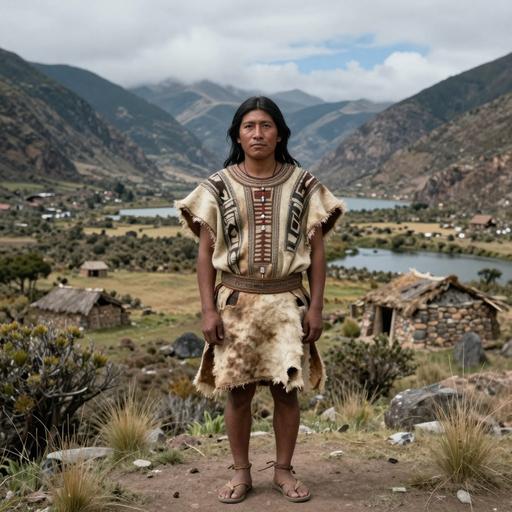
Portrait reconstruction of I0238
Ancient Individual

A man buried in Peru in the Ancient South America era

I0238
7000 BCE - 6000 BCE
Male
Lauricocha, Peru 8,600 Years Ago
Peru
Scroll to begin
Chapter I

Identity

The biological and cultural markers that define this ancient individual

Sample ID

I0238

Date Range

7000 BCE - 6000 BCE

Biological Sex

Male

mtDNA Haplogroup

A2-a*

Y-DNA Haplogroup

Q-L53

Cultural Period

Lauricocha, Peru 8,600 Years Ago

Chapter II

Place

Where this individual was discovered

Country Peru
Locality Lauricocha. Highlands
Chapter III

Time

When this individual lived in the broader context of human history

I0238 7000 BCE - 6000 BCE
Chapter IV

Story

The narrative of this ancient life

The Lauricocha culture, flourishing around 8,600 years ago in what is today Peru, represents one of the earliest expressions of pre-Colombian civilization in the Andean region. Emerging during the Archaic period, this era served as a critical transitional phase from nomadic hunter-gatherer lifestyles to more settled forms of existence with early agricultural practices. Understanding the Lauricocha culture offers invaluable insights into the development of Andean civilizations that would eventually culminate in complex societies such as the Inca Empire.

Geography and Environment

Lauricocha is situated in the High Andes of Peru, a region characterized by its challenging yet resource-rich high-altitude environment. This area is dotted with mountain lakes, frigid climates, and rugged landscapes, which would have demanded resilience and adaptability from its inhabitants. The altitude affected the vegetation and wildlife, which in turn influenced the diet and lifestyle of the Lauricocha people.

Subsistence and Economy

The economy of the Lauricocha culture was primarily based on a hunter-gatherer paradigm, with a gradual shift towards the domestication of plants and animals. The inhabitants hunted a variety of game, including deer and the now-extinct Andean camelids. Fishing and gathering of native plant species, such as tubers and seeds, supplemented their diet.

Evidence points to the early domestication of plants like quinoa and potatoes. This not only indicates the beginnings of agriculture but also shows the community's adaptation to high-altitude agriculture. The gradual shift to a more sedentary lifestyle, marked by these agricultural practices, laid the groundwork for future complex societies in the region.

Settlement Patterns

Lauricocha settlements were reflective of a semi-nomadic lifestyle. The people constructed temporary shelters from available materials such as animal skins, wood, and stone. As they gradually became more sedentary, these settlements evolved into more permanent dwellings, suggesting a move towards village life.

Archaeological evidence from the Lauricocha caves suggests that these sites might have served both residential and ceremonial purposes. The strategic location allowed them to exploit diverse ecological zones, contributing to their subsistence strategies.

Social Structure and Organization

Social structures during this era were likely organized into small kin-based groups or bands. Leadership might have been informal, based on age, experience, and skill rather than formal hierarchical structures that characterized later Andean societies. The division of labor was possibly gender-based, with men primarily responsible for hunting and women gathering, though such roles were likely adaptable to needs and circumstances.

Religion and Beliefs

The spiritual life of the Lauricocha people remains somewhat speculative, though burial practices provide clues. The burial sites indicate a belief in an afterlife, as bodies were often interred with tools, ornaments, and other goods that might be needed in the next world. Such practices hint at the beginnings of a religious system that venerated ancestors or supernatural forces tied closely to nature and the environment.

Art and Material Culture

Material culture from the Lauricocha sites includes a variety of stone tools, including bifacial projectile points and scrapers. These artifacts reflect both the technological abilities of the society and the availability of raw materials in the region. The development of such tools would have been essential in their survival in the harsh Andean environment.

The existence of simple pottery has been debated, though its emergence would signal a significant technological advance, correlating with the storage and processing of food resources.

Legacy and Conclusion

The Lauricocha culture offers a fascinating glimpse into early Andean life, representing a foundational period in the region's prehistory. Their adaptive strategies, particularly in response to their challenging environment, set the stage for the development of later, more complex Andean civilizations. This period marks a significant evolutionary step in social complexity, economy, and technology, paving the way for future cultural developments in the Andes. Understanding the Lauricocha culture not only enlightens us about the past but also enriches our appreciation for the continuity and innovation that characterize human societies.

Chapter V

Genetics

The genetic ancestry of this ancient individual

Ancient Genetic Admixture

This analysis compares the DNA profile of I0238 with ancient reference populations, showing the genetic composition in terms of prehistoric ancestral groups.

Ancient Native Americans 78.1%
Ancient Asians 17.6%
Ancient Oceanians 4.3%

Modern Genetic Admixture

This analysis compares the DNA profile with present-day reference populations, showing what percentage of genetic makeup resembles modern populations from different regions.

America 89.7%
America 89.7%
Native American 89.7%
Asia 10.2%
Northern Asian 6.2%
Siberian 6.2%
Chinese & Southeast Asian 4.0%
Indonesian Khmer Thai Myanma 3.1%
Chinese 1.0%

Closest Modern Populations

These are the modern populations showing the closest statistical alignment to A man buried in Peru in the Ancient South America era, ranked by genetic distance. Lower distance values indicate closer statistical similarity.

1
Piapoco
1.9738
2
Aymara
2.1829
3
Wichi
2.2027
4
Yukpa
2.4345
5
Bolivian Lapaz
3.1544
6
Karitiana
3.1677
7
Colla
3.5555
8
Cachi
4.1505
9
Surui
4.1787
10
Mixe
4.7080
Chapter VI

Context

Other ancient individuals connected to this sample

Sources

References

Scientific publications and genetic data

Scientific Publication

Reconstructing the Deep Population History of Central and South America

Authors Posth C, Nakatsuka N, Lazaridis I
Abstract

We report genome-wide ancient DNA from 49 individuals forming four parallel time transects in Belize, Brazil, the Central Andes, and the Southern Cone, each dating to at least ∼9,000 years ago. The common ancestral population radiated rapidly from just one of the two early branches that contributed to Native Americans today. We document two previously unappreciated streams of gene flow between North and South America. One affected the Central Andes by ∼4,200 years ago, while the other explains an affinity between the oldest North American genome associated with the Clovis culture and the oldest Central and South Americans from Chile, Brazil, and Belize. However, this was not the primary source for later South Americans, as the other ancient individuals derive from lineages without specific affinity to the Clovis-associated genome, suggesting a population replacement that began at least 9,000 years ago and was followed by substantial population continuity in multiple regions.

G25 Coordinates

The G25 coordinates for sample I0238 can be used for detailed admixture analysis in our G25 Studio tool.

I0238,0.05741374,-0.31200404,0.1117846,0.10281418,-0.11638398,-0.00981854,-0.30680714,-0.36074398,-0.01556412,-0.0178245,0.00107852,-0.0010682,-0.00090732,0.02526132,-0.0058609,-0.00059202,0.0059457,0.00292104,9.012E-05,-0.00229028,-0.00122036,0.00820816,-0.00317358,-0.00535104,-0.00612159
Analyze in G25 Studio
Use code for 40% off Expires Feb 27