Menu
Store
Blog
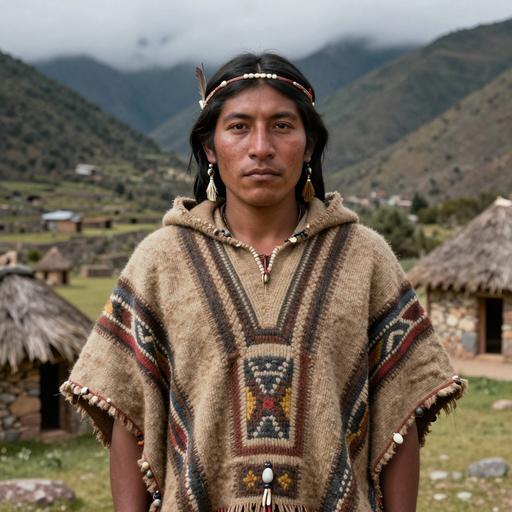
Portrait reconstruction of I0039
Ancient Individual

A man buried in Peru in the Ancient South America era

I0039
1660 BCE - 1500 BCE
Male
Lauricocha, Peru 3,500 Years Ago
Peru
Scroll to begin
Chapter I

Identity

The biological and cultural markers that define this ancient individual

Sample ID

I0039

Date Range

1660 BCE - 1500 BCE

Biological Sex

Male

mtDNA Haplogroup

A2-a*

Y-DNA Haplogroup

Q-Z780

Cultural Period

Lauricocha, Peru 3,500 Years Ago

Chapter II

Place

Where this individual was discovered

Country Peru
Locality Lauricocha. Highlands
Chapter III

Time

When this individual lived in the broader context of human history

I0039 1660 BCE - 1500 BCE
Chapter IV

Story

The narrative of this ancient life

3,500 years ago, the region that is now Peru was home to the Lauricocha culture, a significant part of the formative period of Andean civilizations. This era marked a profound transformation in social organization, technological advancement, and cultural sophistication across the Andes. The Lauricocha culture is especially notable for being one of the earliest societies in the high-altitude environments of the Andean mountains, providing crucial insights into the adaptation and innovation of early Andean peoples.

Environment and Geography

Lauricocha is located in the highlands of the Andes, specifically in the modern-day Huánuco region of Peru. Situated in a rugged, mountainous terrain, this area presents a challenging environment with its high altitude, steep valleys, and cold climate. The region is characterized by its puna ecosystem—an extensive grassland biome found at elevations between 3,500 to 5,000 meters. This setting required the inhabitants to develop sophisticated strategies for survival, resource management, and social organization.

Social Structure and Economy

The Lauricocha culture represents an early form of complex society that predated the more centralized and hierarchical states like the Chavín and later the Inca. The inhabitants of Lauricocha were primarily hunter-gatherers, although evidence suggests some early forms of agriculture. Llama and alpaca herding became vital for their economy, providing meat, wool, and a means of transportation. The domestication of these animals was crucial for traversing the harsh Andean terrain and facilitating trade between different ecological zones.

Technological and Architectural Achievements

Lauricocha society displayed remarkable adaptability and skill in tool-making and architecture. Archaeological finds, such as stone tools and projectile points, indicate advanced lithic technology. These tools were essential for hunting and crafting other implements necessary for daily life. Evidence of early sedentism comes from the discovery of rock shelters and cave habitats that were adapted into more permanent dwellings.

Rituals and Beliefs

Spiritual and ritualistic practices were central to the Lauricocha people, likely linked to their interactions with the natural world. The discovery of burial sites in caves and rock shelters suggests a complex belief system surrounding death and an afterlife. These burials often contained grave goods, indicating a belief in a spiritual realm where such objects might be of use. Furthermore, the location of these sites indicates an early form of animism, where the landscape itself—mountains, rivers, and caves—was believed to be imbued with spiritual significance.

Interaction with Other Cultures

Though isolated by the Andes' formidable geography, the Lauricocha culture likely maintained trade and communication with other contemporary cultures within the region. These interactions facilitated the exchange of goods, ideas, and technologies, contributing to the broader cultural developments across the Andes. Over time, these connections paved the way for the emergence of more complex societies, such as the Chavín, who would later exert significant cultural influence across the Andean world.

Legacy and Influence

The Lauricocha culture laid the groundwork for subsequent Andean civilizations. Their innovations in high-altitude agriculture, animal domestication, and adaptation strategies influenced later cultural and technological developments. As the precursor to the more renowned civilizations that would dominate the Andes, such as the Chavín, Moche, and Inca, Lauricocha represents a critical chapter in the Andes' rich history—a testament to the resilience and ingenuity of early human societies in challenging environments.

In conclusion, the Lauricocha culture of 3,500 years ago embodies the innovative spirit and adaptive strategies of early Andean societies, establishing a foundational legacy for the civilizations that would follow. Through their economy, social structures, and spiritual practices, the Lauricocha people significantly contributed to the cultural tapestry of pre-Columbian South America.

Chapter V

Genetics

The genetic ancestry of this ancient individual

Ancient Genetic Admixture

This analysis compares the DNA profile of I0039 with ancient reference populations, showing the genetic composition in terms of prehistoric ancestral groups.

Ancient Native Americans 76.6%
Ancient Asians 21.0%
Ancient Oceanians 2.5%

Modern Genetic Admixture

This analysis compares the DNA profile with present-day reference populations, showing what percentage of genetic makeup resembles modern populations from different regions.

America 90.0%
America 90.0%
Native American 90.0%
Asia 9.6%
Northern Asian 6.4%
Siberian 6.4%
Chinese & Southeast Asian 3.3%
Chinese 1.9%
Tibetan 1.4%

Closest Modern Populations

These are the modern populations showing the closest statistical alignment to A man buried in Peru in the Ancient South America era, ranked by genetic distance. Lower distance values indicate closer statistical similarity.

1
Piapoco
1.6662
2
Aymara
2.0713
3
Wichi
2.1483
4
Yukpa
2.2761
5
Bolivian Lapaz
3.2138
6
Karitiana
3.2743
7
Colla
3.7297
8
Cachi
4.2843
9
Surui
4.3401
10
Mixe
4.3650
Chapter VI

Context

Other ancient individuals connected to this sample

Sources

References

Scientific publications and genetic data

Scientific Publication

Reconstructing the Deep Population History of Central and South America

Authors Posth C, Nakatsuka N, Lazaridis I
Abstract

We report genome-wide ancient DNA from 49 individuals forming four parallel time transects in Belize, Brazil, the Central Andes, and the Southern Cone, each dating to at least ∼9,000 years ago. The common ancestral population radiated rapidly from just one of the two early branches that contributed to Native Americans today. We document two previously unappreciated streams of gene flow between North and South America. One affected the Central Andes by ∼4,200 years ago, while the other explains an affinity between the oldest North American genome associated with the Clovis culture and the oldest Central and South Americans from Chile, Brazil, and Belize. However, this was not the primary source for later South Americans, as the other ancient individuals derive from lineages without specific affinity to the Clovis-associated genome, suggesting a population replacement that began at least 9,000 years ago and was followed by substantial population continuity in multiple regions.

G25 Coordinates

The G25 coordinates for sample I0039 can be used for detailed admixture analysis in our G25 Studio tool.

I0039,0.05510054,-0.31939492,0.1122996,0.10037022,-0.11486822,-0.01046506,-0.30581544,-0.359259,-0.01538772,-0.01684894,0.00024622,-0.00115462,-0.00103,0.02527768,-0.00585302,-0.00053884,0.00619142,0.00272642,0.00047026,-0.00187962,-0.0009044,0.00779842,-0.00232616,-0.00526634,-0.00607176
Analyze in G25 Studio
Use code for 40% off Expires Feb 27