Menu
Store
Blog
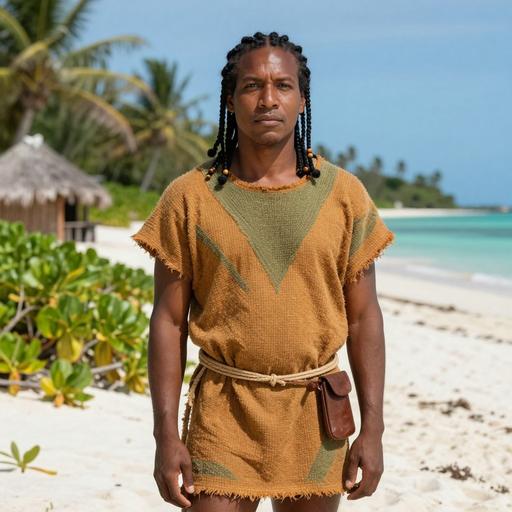
Portrait reconstruction of I13741
Ancient Individual

A man buried in Bahamas in the Ceramic era

I13741
900 CE - 1500 CE
Male
Ragged Island Ceramic Culture
Bahamas
Scroll to begin
Chapter I

Identity

The biological and cultural markers that define this ancient individual

Sample ID

I13741

Date Range

900 CE - 1500 CE

Biological Sex

Male

mtDNA Haplogroup

C1b2

Y-DNA Haplogroup

Q-L472

Cultural Period

Ragged Island Ceramic Culture

Chapter II

Place

Where this individual was discovered

Country Bahamas
Locality Flamingo Cay (Ragged Island Range, Jumento Cays)
Chapter III

Time

When this individual lived in the broader context of human history

I13741 900 CE - 1500 CE
Chapter IV

Story

The narrative of this ancient life

The Ragged Island Ceramic Culture is an intriguing pre-Columbian archaeological culture that flourished in what is now the Caribbean. It is primarily known through the study of ceramic artifacts discovered on Ragged Island, part of the Bahamas' Out Islands. This culture is one of the many fascinating, yet often under-researched, cultures that thrived in the Caribbean prior to European contact. Below is an extensive and detailed description of the Ragged Island Ceramic Culture, exploring its social organization, economy, art, and more.

Geographic and Temporal Context

The Ragged Island Ceramic Culture is situated within the broader geographical context of the Lucayan Archipelago, part of the larger Bahama Archipelago. This region includes both the Bahamas and the Turks and Caicos Islands. The culture is believed to have been active during the late Ceramic Age, approximately between 700 and 1500 CE. Ragged Island, with its relatively small size and limited resources, played a critical role as a settlement and trading node in this period.

Material Culture

The Ragged Island Ceramic Culture is primarily identified through its distinctive pottery. The ceramics are characterized by their utilitarian forms, often including bowls, jars, and cups. They exhibit a variety of decorative motifs, such as incised patterns, stamped designs, and modeled features. The clay used for these ceramics was likely sourced locally, and the production techniques suggest a high level of craftsmanship.

The ceramics serve not only as utilitarian objects but also as cultural artifacts that provide insights into the aesthetic values and social structures of the people. Their design often incorporates symbolic elements that may have held religious or social significance.

Social and Political Organization

The social organization of the Ragged Island Ceramic Culture is not well-documented, but based on comparative studies with other Caribbean cultures of the period, it is plausible that the society was organized into small, kin-based groups. Leadership may have been based on family lineage, age, and social standing. There is evidence suggesting some level of political organization, possibly through chiefdoms or tribal councils, which coordinated trade and communal activities.

Clan ties and alliances were likely crucial, considering the island’s limited resources and the need for inter-island exchange networks. The social structure would have been adapted to the island environment, maximizing the use of available resources while maintaining sustainable practices.

Economy and Subsistence

The economy of the Ragged Island Ceramic Culture was primarily subsistence-based, relying on fishing, foraging, and small-scale farming. Marine resources would have been a staple, including fish, shellfish, and sea turtles. The people likely practiced some form of horticulture, cultivating crops such as maize, beans, squash, and cassava, which were indigenous to the region.

Trade played a pivotal role in the economy, with ceramic goods possibly acting as a trade medium. The strategic location of Ragged Island would have facilitated trade interactions with other Caribbean cultures, such as the Taino and the Arawak. This exchange network allowed for the flow of goods, ideas, and people among the islands, enriching the cultural and material life of the Ragged Island inhabitants.

Religion and Spirituality

The spiritual life of the Ragged Island Ceramic Culture, while not extensively documented, likely mirrored the animistic and shamanistic beliefs common to Caribbean cultures at the time. Religious practices may have included ancestor worship, ceremonies to honor natural spirits, and shaman-led rituals. The ocean, being a significant part of their daily life, may have held a profound spiritual significance.

Artistic expression, as seen in pottery and possibly other perishable items like wood carvings or textiles, may have had religious connotations or functioned as symbolic representations in rituals. These artifacts would serve both functional and ceremonial purposes, often blurring the boundaries between the sacred and the mundane.

Legacy and Research

The legacy of the Ragged Island Ceramic Culture is a testament to the adaptability and resilience of small island communities in the pre-Columbian Caribbean. They managed to create a distinctive cultural identity that reflected their unique environment. Archaeological research continues to uncover more about their daily lives, their social structures, and their interactions with neighboring cultures.

Ongoing excavations and studies aim to fill the gaps in our understanding of this culture, with a focus on how environmental factors influenced their development and how these people interacted with the greater Caribbean. The study of the Ragged Island Ceramic Culture contributes significantly to the broader narrative of human adaptation and ingenuity in island ecosystems.

Chapter V

Context

Other ancient individuals connected to this sample

Sources

References

Scientific publications and genetic data

Scientific Publication

A genetic history of the pre-contact Caribbean

Authors Fernandes DM, Sirak KA, Ringbauer H
Abstract

Humans settled the Caribbean about 6,000 years ago, and ceramic use and intensified agriculture mark a shift from the Archaic to the Ceramic Age at around 2,500 years ago1-3. Here we report genome-wide data from 174 ancient individuals from The Bahamas, Haiti and the Dominican Republic (collectively, Hispaniola), Puerto Rico, Curaçao and Venezuela, which we co-analysed with 89 previously published ancient individuals. Stone-tool-using Caribbean people, who first entered the Caribbean during the Archaic Age, derive from a deeply divergent population that is closest to Central and northern South American individuals; contrary to previous work4, we find no support for ancestry contributed by a population related to North American individuals. Archaic-related lineages were >98% replaced by a genetically homogeneous ceramic-using population related to speakers of languages in the Arawak family from northeast South America; these people moved through the Lesser Antilles and into the Greater Antilles at least 1,700 years ago, introducing ancestry that is still present. Ancient Caribbean people avoided close kin unions despite limited mate pools that reflect small effective population sizes, which we estimate to be a minimum of 500-1,500 and a maximum of 1,530-8,150 individuals on the combined islands of Puerto Rico and Hispaniola in the dozens of generations before the individuals who we analysed lived. Census sizes are unlikely to be more than tenfold larger than effective population sizes, so previous pan-Caribbean estimates of hundreds of thousands of people are too large5,6. Confirming a small and interconnected Ceramic Age population7, we detect 19 pairs of cross-island cousins, close relatives buried around 75 km apart in Hispaniola and low genetic differentiation across islands. Genetic continuity across transitions in pottery styles reveals that cultural changes during the Ceramic Age were not driven by migration of genetically differentiated groups from the mainland, but instead reflected interactions within an interconnected Caribbean world1,8.

Use code for 40% off Expires Feb 27