Menu
Store
Blog
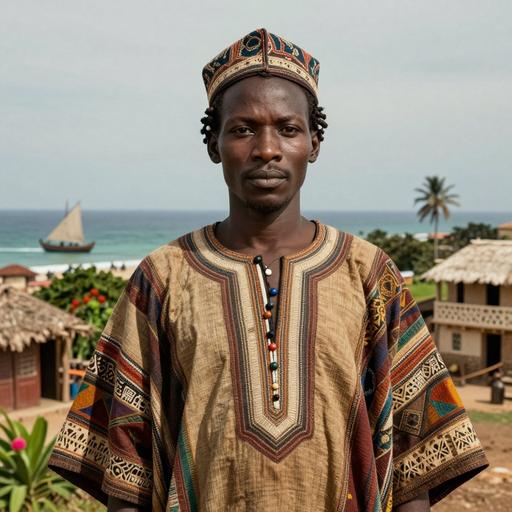
Portrait reconstruction of I14001
Ancient Individual

A man buried in Tanzania in the Swahili era

I14001
1511 CE - 1664 CE
Male
Swahili Culture of Lindi
Tanzania
Scroll to begin
Chapter I

Identity

The biological and cultural markers that define this ancient individual

Sample ID

I14001

Date Range

1511 CE - 1664 CE

Biological Sex

Male

mtDNA Haplogroup

L0a1a2

Y-DNA Haplogroup

E-BY53757

Cultural Period

Swahili Culture of Lindi

Chapter II

Place

Where this individual was discovered

Country Tanzania
Locality Lindi
Coordinates -9.9900, 39.7100
Chapter III

Time

When this individual lived in the broader context of human history

I14001 1511 CE - 1664 CE
Chapter IV

Story

The narrative of this ancient life

The Swahili culture of Lindi, a region located along the southeastern coast of Tanzania, is characterized by a rich blend of indigenous African traditions and external influences due to its historical positioning as a hub of trade and cultural exchange. This unique coastal culture thrives between the blue waters of the Indian Ocean and the diverse African landscapes of the hinterland.

Geographic and Historical Context

Lindi, historically part of the larger Swahili coast, has been influenced by monsoon-driven trade winds that facilitated contact with traders from the Arabian Peninsula, India, Persia, and later European colonizers. This melding of cultures has been ongoing since at least the 7th century. The area has served as an entry point and melting pot, where social, economic, and cultural interactions have flourished.

Language

The Swahili language, Kiswahili, serves as both a unifying and distinguishing element of this culture. It is a Bantu language that has assimilated a number of loanwords from Arabic, Persian, Portuguese, and other languages. As the lingua franca of the region, Kiswahili is pivotal not only in daily communication but also in preserving the oral literature and cultural narratives of the Swahili people of Lindi.

Trade and Economy

Historically, Lindi was a critical node in the trade network of the Swahili coast, which dealt in commodities such as ivory, gold, slaves, and later, agricultural products like cloves and sisal. The economy of contemporary Lindi is still significantly influenced by agriculture, fishing, and, recently, natural gas exploration. Nonetheless, traditional crafts, including woodworking and weaving, continue to be important, often practiced in markets and workshops that echo the region's bustling trading past.

Architecture

Swahili architecture in Lindi is distinguished by coral stone constructions and intricate carvings, often featuring large wooden doors with ornate brass inlays. The prominent structures are a blend of African, Arab, and Persian architectural designs, with a focus on courtyards, open spaces, and verandas that take advantage of the coastal breeze. Many old stone buildings and mosques in the region are remnants of its Islamic past, while modern edifices continue to integrate traditional styles.

Religion

Islam is the predominant religion in Lindi, introduced by Arab traders around the 9th century. The religion significantly shapes the cultural and social practices of the area. This is evident in the celebration of religious festivals like Eid al-Fitr and Eid al-Adha, as well as the regular observance of daily prayers. Islamic teachings influence community values, art, and literature, reinforcing social cohesion and identity among the Swahili of Lindi.

Art and Music

Swahili arts are vibrant in Lindi, with music and dance playing central roles in cultural expression. Taarab, a genre that blends Swahili poetry with musical styles from the Arab world, India, and Africa, is particularly popular. Instruments such as the oud, violins, and drums accompany these performances. Dance forms such as Ngoma are essential in ceremonies and celebrations, marked by rhythmic beats and lively movements.

Visual arts in Lindi often showcase traditional motifs, with crafts such as pottery and beadwork displaying a high level of skill and creativity. The kanga, a colorful garment worn by many Swahili women, features intricate designs and often includes Swahili proverbs, combining fashion with cultural wisdom.

Social Structure and Traditions

The social organization in Swahili Lindi is typically communal, with extended families playing an important role in social and economic structures. Elders are respected, and communal decision-making is common. This sense of community extends to the collective organization of labor for fishing, farming, and social events, where cooperation and reciprocity are key values.

Rites of passage, particularly involving circumcision for boys and elaborate wedding ceremonies, are important cultural traditions that reinforce community bonds and cultural identity. These events are accompanied by feasting, music, and storytelling.

Conclusion

The Swahili culture of Lindi is a testament to the dynamic interactions between African traditions and external influences over centuries of coastal trade and cultural exchange. Its people continue to preserve and innovate a rich cultural heritage that embodies the diversity and adaptability of this vibrant region. Through language, art, architecture, and social customs, the Swahili culture in Lindi remains a living narrative of historical convergence and local ingenuity.

Chapter V

Context

Other ancient individuals connected to this sample

Sources

References

Scientific publications and genetic data

Scientific Publication

Entwined African and Asian genetic roots of medieval peoples of the Swahili coast

Authors Brielle ES, Fleisher J, Wynne-Jones S
Abstract

The urban peoples of the Swahili coast traded across eastern Africa and the Indian Ocean and were among the first practitioners of Islam among sub-Saharan people1,2. The extent to which these early interactions between Africans and non-Africans were accompanied by genetic exchange remains unknown. Here we report ancient DNA data for 80 individuals from 6 medieval and early modern (AD 1250-1800) coastal towns and an inland town after AD 1650. More than half of the DNA of many of the individuals from coastal towns originates from primarily female ancestors from Africa, with a large proportion-and occasionally more than half-of the DNA coming from Asian ancestors. The Asian ancestry includes components associated with Persia and India, with 80-90% of the Asian DNA originating from Persian men. Peoples of African and Asian origins began to mix by about AD 1000, coinciding with the large-scale adoption of Islam. Before about AD 1500, the Southwest Asian ancestry was mainly Persian-related, consistent with the narrative of the Kilwa Chronicle, the oldest history told by people of the Swahili coast3. After this time, the sources of DNA became increasingly Arabian, consistent with evidence of growing interactions with southern Arabia4. Subsequent interactions with Asian and African people further changed the ancestry of present-day people of the Swahili coast in relation to the medieval individuals whose DNA we sequenced.

Use code for 40% off Expires Feb 27