Menu
Store
Blog
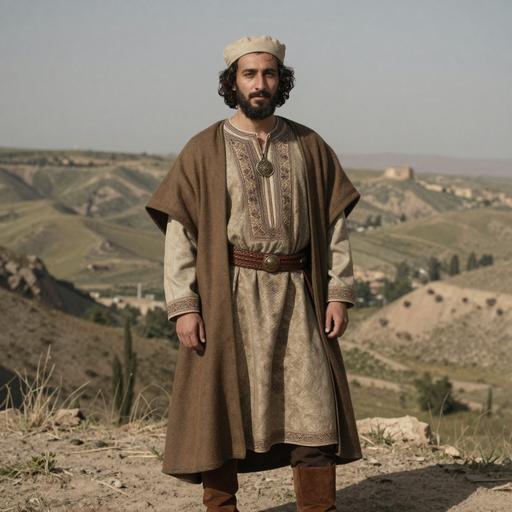
Portrait reconstruction of I4540
Ancient Individual

A man buried in Turkey in the Middle Ages era

I4540
1457 CE - 1631 CE
Male
Medieval Turkey
Turkey
Scroll to begin
Chapter I

Identity

The biological and cultural markers that define this ancient individual

Sample ID

I4540

Date Range

1457 CE - 1631 CE

Biological Sex

Male

mtDNA Haplogroup

R0a2

Y-DNA Haplogroup

Not available

Cultural Period

Medieval Turkey

Chapter II

Place

Where this individual was discovered

Country Turkey
Locality Aktaş Mevki (Southeast. Mardin. Midyat)
Coordinates 37.4150, 41.3730
Chapter III

Time

When this individual lived in the broader context of human history

I4540 1457 CE - 1631 CE
Chapter IV

Story

The narrative of this ancient life

The medieval period of Turkey, particularly during the Islamic Golden Age, represents a fascinating era marked by significant cultural, scientific, and political developments. Stretching roughly from the 8th to the 13th century, this era saw a confluence of various influences that shaped the region's identity and its contribution to the broader Islamic civilization. Here’s an extensive overview of the period:

Historical Context

During this time, the region that we now know as Turkey was undergoing numerous transformations. Initially part of the Byzantine Empire, which was a continuation of the Roman Empire in the east, parts of Anatolia (modern-day Turkey) were gradually becoming influenced and later controlled by emerging Turkic and Islamic powers. The most notable transitions occurred through the incursions of the Seljuk Turks and later the rise of the Ottoman Empire toward the end of this era.

Political Developments

  • The Seljuk Empire: In the 11th century, the Seljuk Turks conquered large parts of Anatolia after their victory over the Byzantines at the Battle of Manzikert in 1071. This victory is often considered a turning point, leading to the gradual Turkification and Islamization of Anatolia. The establishment of the Sultanate of Rum by the Seljuks in central Anatolia further solidified their power in the region.
  • Byzantine-Seljuk Relations: The coexistence and conflicts between the Byzantines and Seljuks shaped much of the history during this period. While animosities were frequent due to territorial disputes, there were also periods of diplomacy and trade that benefited both civilizations.
  • The Crusades: The medieval period also witnessed the impacts of the Crusades, where European Crusaders attempted to regain control of the Holy Lands. Anatolia became a significant battleground, influencing both local and wider geopolitical shifts.

Cultural Flourishing

  • Architecture and Art: The Seljuks contributed immensely to Islamic architecture, establishing a distinct style that would later influence Ottoman architecture. Examples include mosques, madrasas (educational institutions), and caravanserais (roadside inns) with intricate stonework and tile decoration.
  • Literature and Language: Persian was the cultural and literary language of the Seljuk court. This era saw the production of significant literary works, including poetry and historical chronicles. Although Turkish was spoken among the populace, Persian and later Arabic heavily influenced the written works and administration.
  • Religious and Philosophical Thought: During this period, Turkey became a significant center for Islamic thought and Sufism, a mystical branch of Islam. It housed scholars like Al-Ghazali, whose works reconciled Greek philosophical thought with Islamic theology, profoundly influencing Islamic philosophy and spirituality.

Scientific Contributions

  • Centers of Learning: Under the Seljuks and during the broader Islamic Golden Age, Turkey was part of a network of learning across the Islamic world. Scholars in Anatolia contributed to advances in mathematics, astronomy, medicine, and a variety of other fields.
  • Notable Figures: While many scholars were not exclusively based in what is modern-day Turkey, the exchange of knowledge was significant. Scientists such as Al-Biruni and Avicenna, though not from Anatolia, reflect the era's spirit of intellectual pursuit shared across the Islamic world, impacting scholars in the region.

Social and Economic Aspects

  • Trade and Economy: The strategic location of Anatolia bridged the East and West, facilitating active trade routes that connected the Islamic world to Europe and Asia. Merchants in the region dealt in silk, spices, textiles, and other valuable commodities, contributing to a prosperous economy.
  • Urban and Rural Life: Urban centers like Konya (the capital of the Seljuk Sultanate of Rum) and other emerging cities became bustling hubs of trade, culture, and administration. The rural areas, meanwhile, were characterized by agricultural activities, supporting the food needs of the growing urban populations.

Legacy

The medieval era of Turkey during the Islamic Golden Age laid the groundwork for the subsequent rise of the Ottoman Empire, a dominant power that would further define the region’s history. The connections made through culture, trade, and intellectual exchange during this period left enduring impacts on Turkey and the broader Islamic and global civilizations.

In summary, medieval Turkey during the Islamic Golden Age was a vibrant intersection of cultures, ideas, and advancements. Through the blend of Turkic, Persian, Islamic, and Byzantine influences, it developed a rich and diverse heritage that would shape the historical trajectory of the region for centuries to come.

Chapter V

Genetics

The genetic ancestry of this ancient individual

Ancient Genetic Admixture

This analysis compares the DNA profile of I4540 with ancient reference populations, showing the genetic composition in terms of prehistoric ancestral groups.

Neolithic Farmers 74.7%
European Hunter-Gatherers 21.3%
Western Steppe Pastoralists 4.0%

Modern Genetic Admixture

This analysis compares the DNA profile with present-day reference populations, showing what percentage of genetic makeup resembles modern populations from different regions.

Asia 82.8%
Northern West Asian 53.2%
Mesopotamian 35.9%
Cypriot 9.1%
Caucasian 6.0%
Anatolian 2.2%
Arab, Egyptian & Levantine 27.7%
Levantine 21.5%
Arabian 6.2%
Central Asian, Northern Indian & Pakistani 2.0%
Indian 2.0%
Europe 16.1%
Southern European 16.1%
Italian 16.1%
Africa 1.1%
North African 1.1%
Egyptian 1.1%

Closest Modern Populations

These are the modern populations showing the closest statistical alignment to A man buried in Turkey in the Middle Ages era, ranked by genetic distance. Lower distance values indicate closer statistical similarity.

1
Georgian Jew
1.5787
2
Armenian Erzurum
1.6204
3
Armenian Ararat
1.6869
4
Armenian Urfa
1.7779
5
Assyrian
1.8096
6
Armenian Gesaria
1.8867
7
Mountain Jew Dagestan
1.9528
8
Armenian Aintab
2.0967
9
Mountain Jew Azerbaijan
2.3003
10
Armenian Syunik
2.4733
Chapter VI

Context

Other ancient individuals connected to this sample

Sources

References

Scientific publications and genetic data

Scientific Publication

The genetic history of the Southern Arc: A bridge between West Asia and Europe | Science

Authors Lazaridis I, Alpaslan-Roodenberg S, Acar A
Abstract

The period from the Copper Age to the Bronze Age marked major social and economic transformations in West Eurasia. To better understand these changes and their genetic impacts, we generated genome-wide data from 727 individuals who lived between 5000 and 1000 BCE in southeastern Europe and southwestern Asia.

G25 Coordinates

The G25 coordinates for sample I4540 can be used for detailed admixture analysis in our G25 Studio tool.

I4540,0.10023458,0.13672406,-0.05600426,-0.06414456,-0.0244176,-0.01914932,0.0027204,-0.00937364,-0.01962642,-0.00487384,0.00147952,0.000674,0.00024508,0.0028755,-0.0025434,0.00351068,-0.00315948,0.00031314,0.00137446,0.0006967,0.00516718,0.00507032,0.0019724,-0.00296326,0.00193393
Analyze in G25 Studio
Use code for 40% off Expires Feb 27