Menu
Store
Blog
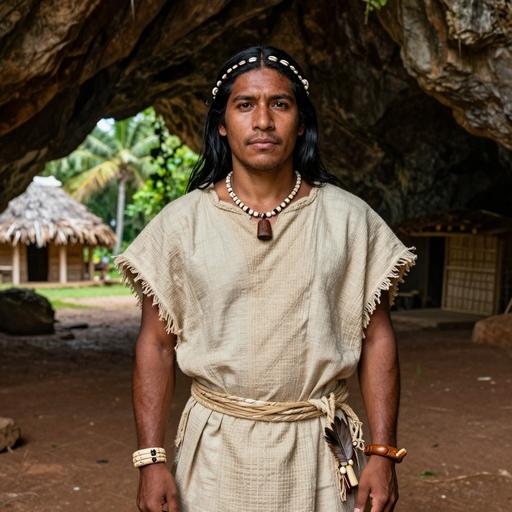
Portrait reconstruction of I7980
Ancient Individual

A man buried in Dominican Republic in the Modern era

I7980
1492 CE - 1950 CE
Male
Modern Dominican
Dominican Republic
Scroll to begin
Chapter I

Identity

The biological and cultural markers that define this ancient individual

Sample ID

I7980

Date Range

1492 CE - 1950 CE

Biological Sex

Male

mtDNA Haplogroup

D4

Y-DNA Haplogroup

F

Cultural Period

Modern Dominican

Chapter II

Place

Where this individual was discovered

Country Dominican Republic
Locality Cueva Roja (southern DR, Pedernales)
Chapter III

Time

When this individual lived in the broader context of human history

I7980 1492 CE - 1950 CE
Chapter IV

Story

The narrative of this ancient life

The modern Dominican Republic, a vibrant nation situated on the island of Hispaniola in the Caribbean, showcases a rich tapestry of cultures, traditions, and history. This modern era is characterized by a fascinating blend of the old and the new, where the country's colonial past harmoniously coexists with contemporary influences.

Historical Background

The island was originally inhabited by the Taíno people before Christopher Columbus arrived in 1492, marking the beginning of European colonization. The Dominican Republic gained independence first from Spain in the 19th century, followed by fleeting unifications and separations with neighboring Haiti, before finally establishing itself as an autonomous nation. The political landscape has also been shaped by U.S. intervention and the Trujillo dictatorship, all leaving indelible marks on the nation's collective memory and identity.

Cultural Identity

Modern Dominican culture is deeply rooted in its diverse heritage, influenced by Spanish colonialists, African slaves, and Taíno indigenous people. This vibrant cultural mosaic is most evident in the nation's music, dance, food, and festivals. The Dominican Republic is renowned for its merengue and bachata music and dances, both of which have earned international acclaim and are considered national treasures. These genres are integral both to daily life and festive occasions.

Language and Religion

The official language of the Dominican Republic is Spanish, which is spoken in a distinctive accent and often incorporates slang and expressions unique to the region. The majority of Dominicans are Roman Catholics, attributable to the Spanish influence, although there is a rising presence of Protestant evangelical groups across the country.

Culinary Traditions

Dominican cuisine is a flavorful testament to the country's multicultural ties. Staples such as rice, beans, plantains, and meats are often incorporated into dishes like \La Bandera" (literally translating to "The Flag"), which consists of rice, red beans, and meat. The use of tropical fruits and local produce is widespread, offering dishes and beverages that are both refreshing and aromatic.

Arts and Literature

The Dominican Republic has produced a wide array of artists and authors who have contributed significantly to both regional and global cultural landscapes. Literature from the nation often delves into themes of identity, diaspora, and historical complexities, with writers like Junot Díaz gaining international recognition. Visual arts and crafts also thrive, particularly in forms that celebrate the country’s African and Taíno heritage.

Societal Aspects

Family plays a central role in Dominican society, with strong emphasis on extended family networks. The Dominican social fabric is inclusive, resilient, and characterized by warmth and hospitality. However, like many countries, it faces challenges such as economic inequality, infrastructure issues, and political corruption. Efforts toward improvement are ongoing, with initiatives aimed at education reform, healthcare improvements, and sustainable tourism.

Economy and Development

The modern Dominican economy is one of the fastest-growing in the Caribbean. The nation relies heavily on services, particularly tourism, with its pristine beaches, resorts, and cultural sites drawing millions of international visitors yearly. The agricultural sector is also robust, with exports such as sugar, coffee, and tobacco playing significant roles. Manufacturing and telecommunication sectors have shown remarkable growth, further suggesting a diversifying economy.

Innovation and Technology

The younger generations in the Dominican Republic are increasingly tech-savvy, with growing access to digital technology, internet, and mobile communication services. This technological embrace is fostering innovation in areas such as entrepreneurship, education, and entertainment, reflecting global trends while catering to local needs.

Conclusion

The modern Dominican era is one of dynamic interplay between tradition and modernity. The nation continually honors its past while progressively looking toward the future. It's a testament to resilience, creativity, and cultural richness, encapsulating an era that balances development and tradition, making the Dominican Republic a unique and evolving cultural landscape in the Caribbean."

Chapter V

Context

Other ancient individuals connected to this sample

Sources

References

Scientific publications and genetic data

Scientific Publication

A genetic history of the pre-contact Caribbean

Authors Fernandes DM, Sirak KA, Ringbauer H
Abstract

Humans settled the Caribbean about 6,000 years ago, and ceramic use and intensified agriculture mark a shift from the Archaic to the Ceramic Age at around 2,500 years ago1-3. Here we report genome-wide data from 174 ancient individuals from The Bahamas, Haiti and the Dominican Republic (collectively, Hispaniola), Puerto Rico, Curaçao and Venezuela, which we co-analysed with 89 previously published ancient individuals. Stone-tool-using Caribbean people, who first entered the Caribbean during the Archaic Age, derive from a deeply divergent population that is closest to Central and northern South American individuals; contrary to previous work4, we find no support for ancestry contributed by a population related to North American individuals. Archaic-related lineages were >98% replaced by a genetically homogeneous ceramic-using population related to speakers of languages in the Arawak family from northeast South America; these people moved through the Lesser Antilles and into the Greater Antilles at least 1,700 years ago, introducing ancestry that is still present. Ancient Caribbean people avoided close kin unions despite limited mate pools that reflect small effective population sizes, which we estimate to be a minimum of 500-1,500 and a maximum of 1,530-8,150 individuals on the combined islands of Puerto Rico and Hispaniola in the dozens of generations before the individuals who we analysed lived. Census sizes are unlikely to be more than tenfold larger than effective population sizes, so previous pan-Caribbean estimates of hundreds of thousands of people are too large5,6. Confirming a small and interconnected Ceramic Age population7, we detect 19 pairs of cross-island cousins, close relatives buried around 75 km apart in Hispaniola and low genetic differentiation across islands. Genetic continuity across transitions in pottery styles reveals that cultural changes during the Ceramic Age were not driven by migration of genetically differentiated groups from the mainland, but instead reflected interactions within an interconnected Caribbean world1,8.

Use code for 40% off Expires Feb 27