Menu
Store
Blog
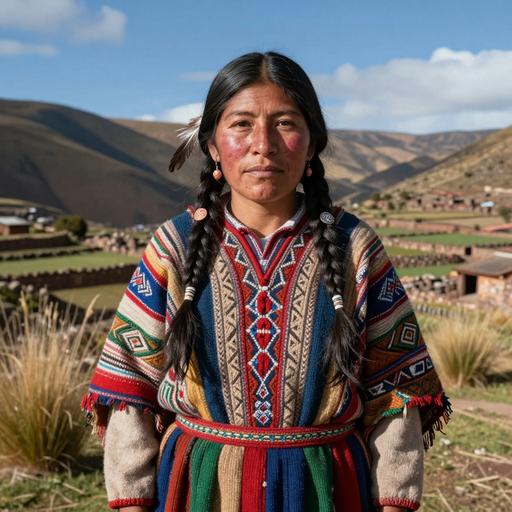
Portrait reconstruction of IL2
Ancient Individual

A woman buried in Peru in the Pre-Columbian South America era

IL2
100 CE - 550 CE
Female
Rio Uncallane, Peru 1,800 Years Ago
Peru
Scroll to begin
Chapter I

Identity

The biological and cultural markers that define this ancient individual

Sample ID

IL2

Date Range

100 CE - 550 CE

Biological Sex

Female

mtDNA Haplogroup

D1

Cultural Period

Rio Uncallane, Peru 1,800 Years Ago

Chapter II

Place

Where this individual was discovered

Country Peru
Locality Rio Ilave Basin. Rio Uncallane
Chapter III

Time

When this individual lived in the broader context of human history

IL2 100 CE - 550 CE
Chapter IV

Story

The narrative of this ancient life

The era referred to as Rio Uncallane, Peru 1,800 years ago, falls within the Early Intermediate Period of Andean civilizations, roughly around 200 AD. This period is marked by significant cultural development and the flourishing of pre-Columbian societies before the rise of the Inca Empire. The Andean region, characterized by its diverse environments ranging from coastal areas to high-altitude mountains, supported various civilizations, each with distinct cultural practices, technological advancements, and social structures.

Geographical Context

The Rio Uncallane area, located in the modern-day Peruvian Andes, is part of a diverse and contrasting landscape. This geography includes fertile valleys, mountains, and high-altitude plains, which significantly influenced the lifestyles and economies of the Andean people. Agricultural terraces, known for their ability to maximize arable land area and manage water resources efficiently, were commonly used during this era. The Andes’ altitudinal diversity allowed for the cultivation of various crops, such as maize, potatoes, quinoa, and other native Andean plants, which formed the dietary staples of the population.

Cultural and Social Structure

Andean societies in 200 AD were characterized by complex social hierarchies and communal practices. These cultures were primarily organized in chiefdoms or small kingdoms, each led by a local elite who wielded power over a stratified societal structure. The political authority was often tied to religious leadership, and leaders were considered to have divine or supernatural connections.

Religion played a pivotal role in shaping the culture of the Rio Uncallane period. Andean spirituality was polytheistic, with a pantheon of deities linked to natural phenomena. Ritual practices and offerings to gods, particularly those associated with agriculture and weather, were commonplace. Ceremonies often took place in huacas, sacred sites that could be natural landmarks like mountains or man-made structures such as temples and pyramids.

Art and Architecture

The period is noted for its artistic innovation, particularly in textiles, pottery, and metalwork. Textiles were not only practical but also symbolic, used in clothing, trade, and religious ceremonies. They were often richly decorated with geometric patterns and motifs depicting animals, plants, or mythological entities.

Pottery from this period demonstrates skilled craftsmanship with intricate designs and a variety of shapes and sizes, used in both everyday and ceremonial contexts. Metalworking, although in its nascent stages compared to later periods, started to show sophistication, particularly in the use of gold and other metals for ornamental and ceremonial objects.

Economy and Trade

The economy of the Rio Uncallane region hinged on agriculture, but trade also played a crucial role. The Andean societies were part of extensive trade networks that allowed the exchange of goods over long distances. This included trade between coastal and highland regions, with products such as fish, salt, feathers, and agricultural produce being exchanged. Llamas and alpacas, domesticated animals, were essential for transportation and trade, especially in the high-altitude areas.

Technological and Agricultural Practices

Agricultural innovation was a hallmark of Andean cultures from this period. The use of andenes, or stepped agricultural terraces, allowed for effective farming on the steep slopes of the Andes. These terraces not only increased arable land but also aided in water management and soil conservation. Irrigation systems were developed to enhance agricultural productivity, underscoring the people’s adaptation to their environment.

Conclusion

The Rio Uncallane culture, like many Andean societies of the Early Intermediate Period, showcased a nuanced understanding of their environment, leading to advanced agricultural techniques and vibrant cultural expressions. Despite existing in fragmented chiefdoms, these societies achieved economic stability, artistic development, and religious sophistication, laying the groundwork for subsequent civilizations in the Andes, including the expansive empire-building efforts of the Wari and, eventually, the Inca. The legacy of these early cultures is evident in the surviving artifacts, architectural remains, and agricultural techniques that continue to influence the region.

Chapter V

Genetics

The genetic ancestry of this ancient individual

Ancient Genetic Admixture

This analysis compares the DNA profile of IL2 with ancient reference populations, showing the genetic composition in terms of prehistoric ancestral groups.

Ancient Native Americans 78.3%
Ancient Asians 19.3%
Western Steppe Pastoralists 2.5%

Modern Genetic Admixture

This analysis compares the DNA profile with present-day reference populations, showing what percentage of genetic makeup resembles modern populations from different regions.

America 91.9%
America 91.9%
Native American 91.9%
Asia 8.0%
Chinese & Southeast Asian 3.4%
Tibetan 2.6%
Vietnamese 0.8%
Northern Asian 3.2%
Mongolian 2.5%
Siberian 0.8%
Central Asian, Northern Indian & Pakistani 1.4%
Indian 1.0%

Closest Modern Populations

These are the modern populations showing the closest statistical alignment to A woman buried in Peru in the Pre-Columbian South America era, ranked by genetic distance. Lower distance values indicate closer statistical similarity.

1
Piapoco
2.0700
2
Aymara
2.0800
3
Yukpa
2.4640
4
Wichi
2.5178
5
Bolivian Lapaz
2.8849
6
Colla
3.3102
7
Karitiana
3.6676
8
Cachi
3.7578
9
Mixe
4.1588
10
Surui
4.6796
Chapter VI

Context

Other ancient individuals connected to this sample

Sources

References

Scientific publications and genetic data

Scientific Publication

The genetic prehistory of the Andean highlands 7000 years BP though European contact

Authors Lindo J, Haas R, Hofman C
Abstract

The peopling of the Andean highlands above 2500 m in elevation was a complex process that included cultural, biological, and genetic adaptations. Here, we present a time series of ancient whole genomes from the Andes of Peru, dating back to 7000 calendar years before the present (BP), and compare them to 42 new genome-wide genetic variation datasets from both highland and lowland populations. We infer three significant features: a split between low- and high-elevation populations that occurred between 9200 and 8200 BP; a population collapse after European contact that is significantly more severe in South American lowlanders than in highland populations; and evidence for positive selection at genetic loci related to starch digestion and plausibly pathogen resistance after European contact. We do not find selective sweep signals related to known components of the human hypoxia response, which may suggest more complex modes of genetic adaptation to high altitude.

G25 Coordinates

The G25 coordinates for sample IL2 can be used for detailed admixture analysis in our G25 Studio tool.

IL2,0.05729544,-0.31338922,0.11154254,0.1011262,-0.11352388,-0.0094019,-0.30324248,-0.35648652,-0.01541188,-0.01783254,0.00156924,-0.0011752,-0.00057336,0.0245971,-0.00610082,-0.0008806,0.00594542,0.00282022,-8.426E-05,-0.00243986,-0.00099974,0.00839596,-0.00306652,-0.00527054,-0.00606411
Analyze in G25 Studio
Use code for 40% off Expires Feb 27