Menu
Store
Blog
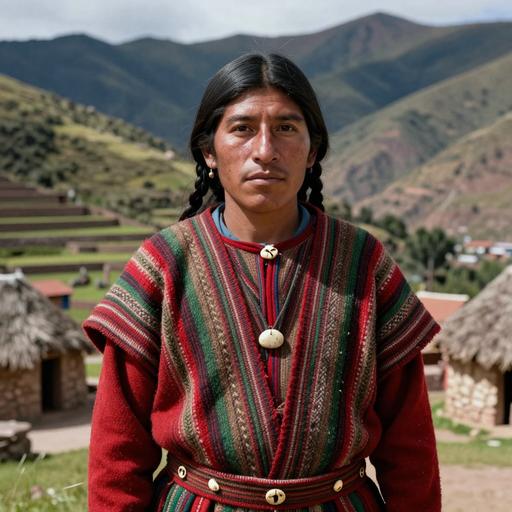
Portrait reconstruction of IL7
Ancient Individual

A man buried in Peru in the Pre-Columbian South America era

IL7
120 CE - 231 CE
Male
Rio Uncallane, Peru 1,600 Years Ago
Peru
Scroll to begin
Chapter I

Identity

The biological and cultural markers that define this ancient individual

Sample ID

IL7

Date Range

120 CE - 231 CE

Biological Sex

Male

mtDNA Haplogroup

C1b

Y-DNA Haplogroup

Q-B48

Cultural Period

Rio Uncallane, Peru 1,600 Years Ago

Chapter II

Place

Where this individual was discovered

Country Peru
Locality Rio Ilave Basin. Rio Uncallane
Chapter III

Time

When this individual lived in the broader context of human history

IL7 120 CE - 231 CE
Chapter IV

Story

The narrative of this ancient life

The Rio Uncallane region of Peru, around 1,600 years ago, was part of a larger tapestry of Andean civilizations that developed advanced societies long before European contact. This period roughly corresponds to the Middle Horizon (circa 600-1000 CE), a time when several significant cultures, including the Huari (Wari) and Tiwanaku, were flourishing in the Andes. These civilizations exerted influence over vast territories, contributing to a rich cultural exchange and the development of a complex socio-political landscape.

Geography and Environment

Located in the Andes, the Rio Uncallane area would have been characterized by rugged mountain terrain, high-altitude plateaus, and fertile valleys. The varied climate and landscapes facilitated diverse agricultural activities, supported by sophisticated irrigation systems. Andean agricultural innovations included terrace farming and the cultivation of staple crops like potatoes, maize, quinoa, and amaranth, as well as the domestication of llamas and alpacas for transportation, wool, and meat.

Social Structure

The societies in this era were hierarchical, with a clear distinction between elites and commoners. The elite class likely comprised priests, rulers, and warriors who wielded significant control over resources and labor. Religion played a central role in legitimizing the power of the ruling classes, with ancestral worship and the veneration of deities influencing both governance and daily life.

Political Organization

This period saw the rise of the Wari Empire, known for its administrative sophistication and military prowess. The Wari established a network of roads and outposts that facilitated trade and communication across large distances. As a multi-ethnic state, the Wari imposed administrative structures that integrated various local cultures. It is possible that the Rio Uncallane region functioned under Wari influence or as part of its administrative network.

Economy

Economically, this era was marked by a mixed subsistence strategy, combining agriculture, pastoralism, and trade. The exchange of goods, such as textiles, ceramics, metals (gold, silver, and copper), and exotic items from coastal and jungle regions, was prevalent. The Wari’s extensive road systems supported this trade and facilitated the movement of goods and resources across their empire and beyond.

Religion and Ideology

Religion and cosmology were pivotal in shaping Rio Uncallane society, echoing broader Andean beliefs in duality, reciprocity, and the nurturing of Pachamama (Mother Earth). This period was marked by the existence of monumental religious centers where rituals were performed to honor deities associated with nature, agriculture, and celestial bodies. The use of hallucinogenic substances in rituals, particularly by shamans, was common to achieve spiritual transcendence and connect with the divine.

Art and Architecture

Art and architecture from this period reflected both religious significance and social stratification. The Wari are noted for their intricate textiles, which often bore vibrant patterns and were symbols of status. Architectural accomplishments included the construction of large urban centers with ceremonial plazas, intricate road systems, and defensive structures. The use of ashlar masonry, where stones are precisely cut to fit together without mortar, is a significant architectural achievement of the time.

Legacy and Influence

The Rio Uncallane and surrounding regions’ cultural developments set the stage for later Andean civilizations, including the Inca Empire, which rose several centuries later. The technological and organizational advancements of this era were critical in forming a foundation upon which the Inca would build.

In conclusion, 1,600 years ago, the Rio Uncallane region was an integral part of a vibrant and dynamic civilization characterized by advanced agriculture, sophisticated socio-political organization, and a rich cultural and religious life. The influences of this era are evident in the continued cultural traditions, architectural innovations, and societal frameworks that persisted in the Andes for centuries.

Chapter V

Genetics

The genetic ancestry of this ancient individual

Ancient Genetic Admixture

This analysis compares the DNA profile of IL7 with ancient reference populations, showing the genetic composition in terms of prehistoric ancestral groups.

Ancient Native Americans 77.0%
Ancient Asians 23.0%

Modern Genetic Admixture

This analysis compares the DNA profile with present-day reference populations, showing what percentage of genetic makeup resembles modern populations from different regions.

America 88.7%
America 88.7%
Native American 88.7%
Asia 11.3%
Northern Asian 6.2%
Siberian 6.2%
Central Asian, Northern Indian & Pakistani 2.8%
Indian 2.8%
Chinese & Southeast Asian 2.4%
Tibetan 2.4%

Closest Modern Populations

These are the modern populations showing the closest statistical alignment to A man buried in Peru in the Pre-Columbian South America era, ranked by genetic distance. Lower distance values indicate closer statistical similarity.

1
Piapoco
1.7907
2
Wichi
2.0136
3
Aymara
2.0199
4
Yukpa
2.4197
5
Bolivian Lapaz
3.1959
6
Karitiana
3.3547
7
Colla
3.7561
8
Cachi
4.3149
9
Mixe
4.3336
10
Surui
4.4273
Chapter VI

Context

Other ancient individuals connected to this sample

Sources

References

Scientific publications and genetic data

Scientific Publication

The genetic prehistory of the Andean highlands 7000 years BP though European contact

Authors Lindo J, Haas R, Hofman C
Abstract

The peopling of the Andean highlands above 2500 m in elevation was a complex process that included cultural, biological, and genetic adaptations. Here, we present a time series of ancient whole genomes from the Andes of Peru, dating back to 7000 calendar years before the present (BP), and compare them to 42 new genome-wide genetic variation datasets from both highland and lowland populations. We infer three significant features: a split between low- and high-elevation populations that occurred between 9200 and 8200 BP; a population collapse after European contact that is significantly more severe in South American lowlanders than in highland populations; and evidence for positive selection at genetic loci related to starch digestion and plausibly pathogen resistance after European contact. We do not find selective sweep signals related to known components of the human hypoxia response, which may suggest more complex modes of genetic adaptation to high altitude.

G25 Coordinates

The G25 coordinates for sample IL7 can be used for detailed admixture analysis in our G25 Studio tool.

IL7,0.05634616,-0.3195738,0.11392814,0.10093816,-0.11793812,-0.01182052,-0.30508032,-0.35859332,-0.01455462,-0.01675952,0.0020497,-0.00077534,-0.00137818,0.0254636,-0.00614752,-0.00079298,0.0061293,0.00345652,0.00137858,-0.0014701,-0.000141,0.00696224,-0.00251654,-0.00502596,-0.00532717
Analyze in G25 Studio
Use code for 40% off Expires Feb 27