Menu
Store
Blog
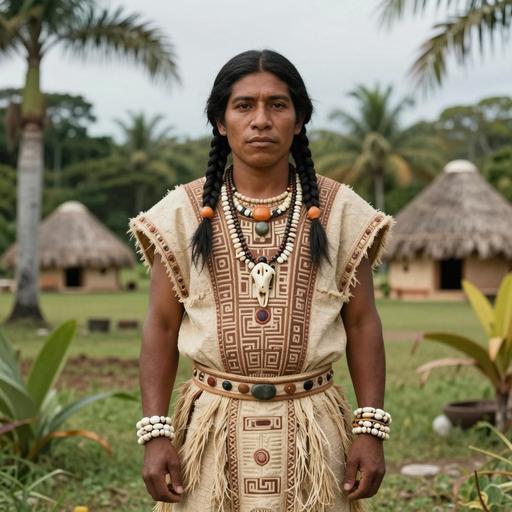
Portrait reconstruction of LOI001
Ancient Individual

A man buried in Puerto Rico in the Pre-Columbian Caribbean era

LOI001
1283 CE - 1388 CE
Male
Ceramic Period Los Indios, Puerto Rico
Puerto Rico
Scroll to begin
Chapter I

Identity

The biological and cultural markers that define this ancient individual

Sample ID

LOI001

Date Range

1283 CE - 1388 CE

Biological Sex

Male

mtDNA Haplogroup

A2

Y-DNA Haplogroup

Q1b1a1a1

Cultural Period

Ceramic Period Los Indios, Puerto Rico

Chapter II

Place

Where this individual was discovered

Country Puerto Rico
Locality Santa Isabel. Los Indios
Chapter III

Time

When this individual lived in the broader context of human history

LOI001 1283 CE - 1388 CE
Chapter IV

Story

The narrative of this ancient life

The Ceramic Period in Puerto Rico, particularly as it pertains to the Taíno people, represents a significant era in the pre-Columbian history of the Caribbean. This period is marked by the advent and widespread use of ceramics, which not only illustrates technological and artistic developments but also offers insights into the sociocultural evolution of the Taíno people.

Background and Timeline

The Ceramic Period in Puerto Rico spans from around 400 BC to the arrival of Europeans in the late 15th century. It is divided into several sub-phases, but the Classic Taíno period (approximately AD 1200-1500) is the most significant in terms of cultural and societal development. The transition from the Archaic Period to the Ceramic Period is denoted by the introduction of pottery, agriculture, and more sedentary village life.

Cultural and Social Aspects

The Taíno were the dominant indigenous group in Puerto Rico during the Ceramic Period. They were part of the larger Arawakan-speaking population inhabiting the Greater Antilles. The Taíno formed a complex society characterized by a hierarchical structure, religious beliefs, and an economy based on agriculture, hunting, and fishing.

  • Social Structure: The Taíno society was stratified and led by a chief known as a cacique. The cacique held political and religious powers, overseeing community affairs, trade relationships, and religious rituals. Below the cacique were the nitaínos (nobles and warriors) and a larger class of naborias (commoners and laborers).

  • Settlement Patterns: The Taíno established villages near fertile land and water sources. Settlements often featured central plazas used for social and ceremonial events. The batey, a rectangular area, was a focal point for games and gatherings.

Ceramic Craftsmanship

The development of ceramics was a hallmark of this period. Taíno pottery, largely made by women, demonstrates significant craftsmanship and artistic expression.

  • Styles and Techniques: Taíno ceramics were coil-built and decorated with a variety of techniques including incising, modeling, and painting. The designs often included intricate geometric patterns and representations of deities and animals, reflecting their cosmology and beliefs.

  • Functional and Ritual Use: Pottery was used in daily life for cooking, storage, and serving food. Some ceramics, particularly the more elaborately decorated pieces, had ritual significance and were used in religious ceremonies.

Religion and Cosmology

The Taíno practiced a polytheistic religion with a rich pantheon of gods known as zemis. Zemis, often represented in ceramic, stone, or wood, were central to Taíno spirituality, reflecting their connection to the natural world and ancestral spirits.

  • Rituals and Offerings: Religious practices included ceremonies led by the behiques (shamans or spiritual leaders), who interpreted the will of the zemis, conducted healing rituals, and managed the spiritual life of the community.

  • Artistic Expression: Ceramic representations of zemis and other religious iconography illustrate the Taíno's intricate belief system and their artistic skills. These artifacts provide crucial insight into the symbolic and religious lives of the Taíno.

Agriculture and Economy

Agriculture was the backbone of the Taíno economy. They cultivated crops such as cassava, maize, and sweet potatoes using the conuco system, a form of raised-bed agriculture that was highly efficient.

  • Trade Networks: The Taíno engaged in extensive trade networks across the Caribbean. Ceramics, as durable goods, were likely key trade items and may have facilitated cultural exchanges and the spread of ideas and technology.

Legacy

The Ceramic Period culminated in a rich cultural tapestry that laid the foundations for Taíno society encountered by Europeans. Unfortunately, the arrival of Europeans led to drastic changes. However, archaeological studies of ceramic artifacts continue to offer valuable insights into the pre-Columbian history and cultural heritage of Puerto Rico and the broader Caribbean region. These artifacts illuminate the sophisticated and artistic nature of the Taíno, attesting to their significant legacy in the cultural history of the Americas.

Chapter V

Genetics

The genetic ancestry of this ancient individual

Ancient Genetic Admixture

This analysis compares the DNA profile of LOI001 with ancient reference populations, showing the genetic composition in terms of prehistoric ancestral groups.

Ancient Native Americans 76.9%
Ancient Asians 13.6%
European Hunter-Gatherers 7.2%
Neolithic Farmers 2.3%

Modern Genetic Admixture

This analysis compares the DNA profile with present-day reference populations, showing what percentage of genetic makeup resembles modern populations from different regions.

America 90.2%
America 90.2%
Native American 90.2%
Asia 7.3%
Northern West Asian 3.7%
Cypriot 3.7%
Northern Asian 3.0%
Siberian 3.0%
Central Asian, Northern Indian & Pakistani 0.7%
Indian 0.7%
Africa 2.6%
Congolese & Southern East African 2.6%
South East African 2.6%

Closest Modern Populations

These are the modern populations showing the closest statistical alignment to A man buried in Puerto Rico in the Pre-Columbian Caribbean era, ranked by genetic distance. Lower distance values indicate closer statistical similarity.

1
Cachi
2.1702
2
Colla
2.6050
3
Bolivian Lapaz
2.6832
4
Mayan
3.0818
5
Aymara
3.3490
6
Yukpa
3.8633
7
Zapotec
3.9248
8
Piapoco
3.9654
9
Mixe
4.0304
10
Mixtec
4.0510
Chapter VI

Context

Other ancient individuals connected to this sample

Sources

References

Scientific publications and genetic data

Scientific Publication

Genomic insights into the early peopling of the Caribbean

Authors Nägele K, Posth C, Iraeta Orbegozo M
Abstract

The Caribbean was one of the last regions of the Americas to be settled by humans, but where they came from and how and when they reached the islands remain unclear. We generated genome-wide data for 93 ancient Caribbean islanders dating between 3200 and 400 calibrated years before the present and found evidence of at least three separate dispersals into the region, including two early dispersals into the Western Caribbean, one of which seems connected to radiation events in North America. This was followed by a later expansion from South America. We also detected genetic differences between the early settlers and the newcomers from South America, with almost no evidence of admixture. Our results add to our understanding of the initial peopling of the Caribbean and the movements of Archaic Age peoples in the Americas.

G25 Coordinates

The G25 coordinates for sample LOI001 can be used for detailed admixture analysis in our G25 Studio tool.

LOI001,0.0531911,-0.29571484,0.10648894,0.10028054,-0.11053984,-0.00855128,-0.2935297,-0.34393222,-0.01344176,-0.01495406,0.00066356,-0.00052264,-0.00151914,0.02440716,-0.00498752,-0.00118014,0.00517588,0.00286236,0.00068502,-0.00170964,-0.00059194,0.00777626,-0.00284602,-0.0051074,-0.00583348
Analyze in G25 Studio
Use code for 40% off Expires Feb 27