Menu
Store
Blog
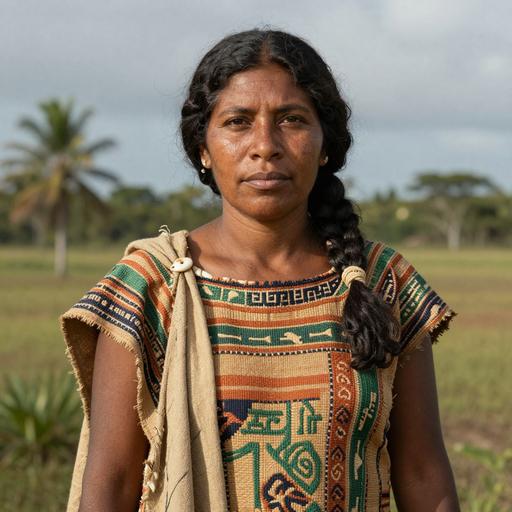
Portrait reconstruction of CAA001003
Ancient Individual

A woman buried in Cuba in the Pre-Columbian Caribbean era

CAA001003
129 CE - 307 CE
Female
Archaic Period Las Carolinas, Cuba
Cuba
Scroll to begin
Chapter I

Identity

The biological and cultural markers that define this ancient individual

Sample ID

CAA001003

Date Range

129 CE - 307 CE

Biological Sex

Female

mtDNA Haplogroup

D1

Cultural Period

Archaic Period Las Carolinas, Cuba

Chapter II

Place

Where this individual was discovered

Country Cuba
Locality Matanzas. Las Carolinas II
Chapter III

Time

When this individual lived in the broader context of human history

CAA001003 129 CE - 307 CE
Chapter IV

Story

The narrative of this ancient life

The Archaic Period in the Caribbean, including areas such as Las Carolinas in Cuba, represents a significant era in the pre-Columbian history of the Taíno and their ancestors. This period is characterized by developments in technology, subsistence strategies, and social organization, laying the groundwork for complex societies that would emerge later in the region. To understand the Archaic Period Las Carolinas in particular, let's delve into its historical context, cultural practices, and archaeological significance.

Historical Context

The Archaic Period in the Caribbean is believed to have occurred approximately between 5000 and 500 BCE. This era predated the arrival of the Taíno culture, which dominated much of the Greater Antilles, including parts of Cuba, by the late prehistoric times. During the Archaic Period, groups of people were transitioning from a nomadic, hunter-gatherer existence to more settled, village-based communities.

In the Las Carolinas region of Cuba, these early groups were likely part of what is sometimes referred to in archaeological terms as \Casimiroid" or "Guanahatabey" cultures. These names are often used to describe the pre-Taíno inhabitants of Cuba, who were among the first settlers in the Greater Antilles, arriving via canoe from mainland South America or nearby islands.

Subsistence and Economy

The Archaic peoples of Las Carolinas primarily practiced a subsistence strategy based on hunting, fishing, and gathering. This involved the exploitation of the rich ecological resources available in their environment, such as shellfish, fish, and small mammals, as well as wild plant species. Evidence from archaeological sites suggests the use of a variety of tools crafted from stone, shell, and bone to aid in these activities.

Fishing would have been a crucial part of their diet, benefiting from the abundant coastal resources. The seasonal availability of particular resources likely influenced settlement patterns, leading to semi-permanent or temporary settlements based on resource distribution.

Cultural Practices and Social Organization

The social organization of the Archaic cultures in Las Carolinas was likely egalitarian, with small, kin-based groups living together in modest communities. The absence of complex hierarchical structures commonly associated with later Taíno societies suggests that these groups had a relatively simple social organization.

Material culture from this period, including stone tools, pottery, and personal ornaments, indicates a degree of craft specialization and artistic expression. In particular, the use of tools such as stone axes and hammers highlights an understanding of local geology and the ability to manipulate various materials for practical and symbolic purposes.

Archaeological Significance

Archaeological investigations in Las Carolinas have uncovered a wealth of information about the Archaic period. Sites often consist of middens or refuse piles, which can include a variety of artifacts and ecofacts that provide insights into the daily lives of these ancient peoples. Shell middens, for example, reveal dietary habits and environmental interactions, while lithic assemblages showcase the technological advancements of the time.

Radio-carbon dating of organic materials found at these sites helps establish a chronological framework, contributing to our understanding of the broader migratory patterns and cultural exchanges within the Caribbean basin. Additionally, the study of burial practices, although limited in this period, offers glimpses into the spiritual or ritualistic aspects of these societies.

Conclusion

The Archaic Period of Las Carolinas in Cuba is a testament to the early human adaptation and resilience in the Caribbean. Despite the lack of monumental architecture or large settlements, these societies thrived in harmony with their environment, setting the stage for the emergence of more complex societies like the Taíno. Through interdisciplinary archaeological studies, we continue to uncover the intricate tapestry of life during this formative era, enhancing our understanding of cultural evolution in pre-Columbian Cuba and the Caribbean at large."

Chapter V

Genetics

The genetic ancestry of this ancient individual

Ancient Genetic Admixture

This analysis compares the DNA profile of CAA001003 with ancient reference populations, showing the genetic composition in terms of prehistoric ancestral groups.

Ancient Native Americans 79.5%
Ancient Asians 20.5%

Modern Genetic Admixture

This analysis compares the DNA profile with present-day reference populations, showing what percentage of genetic makeup resembles modern populations from different regions.

America 89.8%
America 89.8%
Native American 89.8%
Asia 9.4%
Northern Asian 9.4%
Siberian 8.2%
Mongolian 1.2%
Africa 0.8%
Northern East African 0.8%
Eastern African 0.8%

Closest Modern Populations

These are the modern populations showing the closest statistical alignment to A woman buried in Cuba in the Pre-Columbian Caribbean era, ranked by genetic distance. Lower distance values indicate closer statistical similarity.

1
Aymara
2.2806
2
Bolivian Lapaz
2.5959
3
Piapoco
2.8224
4
Mixe
3.0669
5
Yukpa
3.0837
6
Wichi
3.1652
7
Colla
3.1945
8
Cachi
3.3077
9
Mayan
3.9919
10
Huichol
3.9991
Chapter VI

Context

Other ancient individuals connected to this sample

Sources

References

Scientific publications and genetic data

Scientific Publication

Genomic insights into the early peopling of the Caribbean

Authors Nägele K, Posth C, Iraeta Orbegozo M
Abstract

The Caribbean was one of the last regions of the Americas to be settled by humans, but where they came from and how and when they reached the islands remain unclear. We generated genome-wide data for 93 ancient Caribbean islanders dating between 3200 and 400 calibrated years before the present and found evidence of at least three separate dispersals into the region, including two early dispersals into the Western Caribbean, one of which seems connected to radiation events in North America. This was followed by a later expansion from South America. We also detected genetic differences between the early settlers and the newcomers from South America, with almost no evidence of admixture. Our results add to our understanding of the initial peopling of the Caribbean and the movements of Archaic Age peoples in the Americas.

G25 Coordinates

The G25 coordinates for sample CAA001003 can be used for detailed admixture analysis in our G25 Studio tool.

CAA001003,0.05667626,-0.3173904,0.11395222,0.09751118,-0.11677362,-0.0132279,-0.2949466,-0.3463579,-0.01307688,-0.01535266,0.00321352,-0.0005311,-0.0018169,0.0245455,-0.00622042,-0.00129858,0.00575218,0.00364932,0.00211226,-0.00109508,0.00121474,0.00566112,-0.00228942,-0.00476366,-0.00461202
Analyze in G25 Studio
Use code for 40% off Expires Feb 27