Menu
Store
Blog
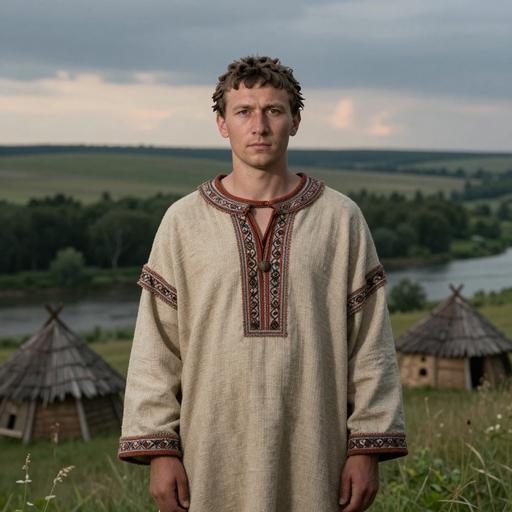
Portrait reconstruction of NEO278
Ancient Individual

A man buried in Ukraine in the Neolithic era

NEO278
1117 BCE - 931 BCE
Male
Don Culture of Ukraine
Ukraine
Scroll to begin
Chapter I

Identity

The biological and cultural markers that define this ancient individual

Sample ID

NEO278

Date Range

1117 BCE - 931 BCE

Biological Sex

Male

mtDNA Haplogroup

U5b1a

Y-DNA Haplogroup

R-M198

Cultural Period

Don Culture of Ukraine

Chapter II

Place

Where this individual was discovered

Country Ukraine
Locality Kleshnya-3 (Luhansk Oblast, Sievierodonetsk District)
Coordinates 48.9660, 38.2380
Chapter III

Time

When this individual lived in the broader context of human history

NEO278 1117 BCE - 931 BCE
Chapter IV

Story

The narrative of this ancient life

The Don Culture of Ukraine is often associated with the broader spectrum of Proto-Indo-European cultures, which spanned from Eastern Europe to parts of Asia during the late Neolithic to early Bronze Age period. The exact time frame can be traced back to approximately 4,200 to 2,600 BCE, a crucial era that planted the seeds for the development of many subsequent European and Asian civilizations.

Geographic Context:

The Don Culture primarily occupied the expanses of modern-day Eastern Ukraine, centered around the Don River basin, which served as a crucial lifeline for the communities. This region, typified by its steppes and grasslands, provided an ideal environment for pastoralism and early agricultural activities. The strategic location facilitated interactions with adjacent cultures such as the Dnieper-Donets, Yamnaya, and Sredny Stog cultures, influencing the cultural and genetic melting pot integral to the Proto-Indo-European expansion.

Social Structure:

The social organization of the Don Culture communities was likely clan-based, resembling a loosely structured tribal framework common among other Proto-Indo-European societies. Leadership within these communities might have been hierarchical but also somewhat fluid, with chiefs or leaders emerging based on merit, skill, or familial ties. Relations were heavily kinship-oriented, fostering strong familial bonds and interconnected communities, which were essential for survival in the relatively harsh steppe environment.

Economy and Subsistence:

The economy of the Don Culture was primarily subsistence-based, with a blend of pastoralism and agriculture. The domestication of key animals like cattle, sheep, and horses played a vital role in their daily lives, providing meat, wool, hides, and labor. These animals also had significant societal and ritualistic importance, often featuring in burial practices and as symbols of wealth and status. Agricultural activities focused on cultivating hardy grain crops suitable for the steppe climate, supplemented by hunting and foraging.

Technological Advances:

The Don Culture was marked by notable technological strides. Pottery from this era showcases varying styles and techniques, including cord-impressed decorations and burnished finishes, indicating a high level of artistry and skill. While stone tools remained prevalent, there was a gradual transition to metallurgy, with copper items beginning to appear, signifying the dawn of the Copper Age and enhancing tool efficacy and durability. This technological evolution was crucial for advancing agricultural productivity and crafting robust weaponry.

Linguistic Contributions:

The Don Culture is a part of the larger tapestry of Proto-Indo-European linguistic development. Although we lack written records, linguistic reconstructions provide insight into the language spoken by these communities. This language, characterized by complex inflectional morphology and a rich vocabulary related to kinship, nature, and pastoral life, is hypothesized as the root from which many European and Asian languages evolved.

Religious Beliefs and Practices:

The religious beliefs of the Don Culture are inferred from archaeological evidence, pointing towards a pantheon of deities associated with natural elements. Burial customs included kurgan mounds and grave goods, suggesting a belief in an afterlife. These practices reflected a spiritual connection to ancestors and the land, possibly indicating an animistic or shamanistic religious orientation. Rituals may have involved both communal and individual ceremonies aimed at ensuring prosperity, fertility, and harmony with the natural world.

Art and Symbolism:

Artistic expression within the Don Culture was both practical and symbolic. Pottery, carvings, and textiles often featured geometric patterns and motifs reflective of their cosmological views and societal values. Jewelry and personal adornments, crafted from bone, metal, and stone, not only served decorative purposes but also indicated social status and identity within the community.

Cultural Legacy:

The Don Culture's legacy is deeply entwined with the Proto-Indo-European migrations that reshaped the demographic and cultural landscape of Europe and Asia. Influences from this culture can be seen in the linguistic, technological, and social patterns that persist in descendant societies. The cultural syncretism initiated by the interactions between the Don Culture and neighboring peoples set the stage for the emergence of complex societies and advanced civilizations across the continent.

In summary, the Don Culture of Ukraine represents a critical segment of the Proto-Indo-European heritage, characterized by its pastoral economy, evolving social structures, and significant contributions to the linguistic and cultural evolution across Eurasia. Understanding this culture provides vital insights into the prehistoric roots of modern European and Asian civilizations.

Chapter V

Context

Other ancient individuals connected to this sample

Sources

References

Scientific publications and genetic data

Scientific Publication

Population genomics of post-glacial western Eurasia

Authors Allentoft ME, Sikora M, Refoyo-Martínez A
Abstract

Western Eurasia witnessed several large-scale human migrations during the Holocene1-5. Here, to investigate the cross-continental effects of these migrations, we shotgun-sequenced 317 genomes-mainly from the Mesolithic and Neolithic periods-from across northern and western Eurasia. These were imputed alongside published data to obtain diploid genotypes from more than 1,600 ancient humans. Our analyses revealed a 'great divide' genomic boundary extending from the Black Sea to the Baltic. Mesolithic hunter-gatherers were highly genetically differentiated east and west of this zone, and the effect of the neolithization was equally disparate. Large-scale ancestry shifts occurred in the west as farming was introduced, including near-total replacement of hunter-gatherers in many areas, whereas no substantial ancestry shifts happened east of the zone during the same period. Similarly, relatedness decreased in the west from the Neolithic transition onwards, whereas, east of the Urals, relatedness remained high until around 4,000 BP, consistent with the persistence of localized groups of hunter-gatherers. The boundary dissolved when Yamnaya-related ancestry spread across western Eurasia around 5,000 BP, resulting in a second major turnover that reached most parts of Europe within a 1,000-year span. The genetic origin and fate of the Yamnaya have remained elusive, but we show that hunter-gatherers from the Middle Don region contributed ancestry to them. Yamnaya groups later admixed with individuals associated with the Globular Amphora culture before expanding into Europe. Similar turnovers occurred in western Siberia, where we report new genomic data from a 'Neolithic steppe' cline spanning the Siberian forest steppe to Lake Baikal. These prehistoric migrations had profound and lasting effects on the genetic diversity of Eurasian populations.

Use code for 40% off Expires Feb 26