Menu
Store
Blog
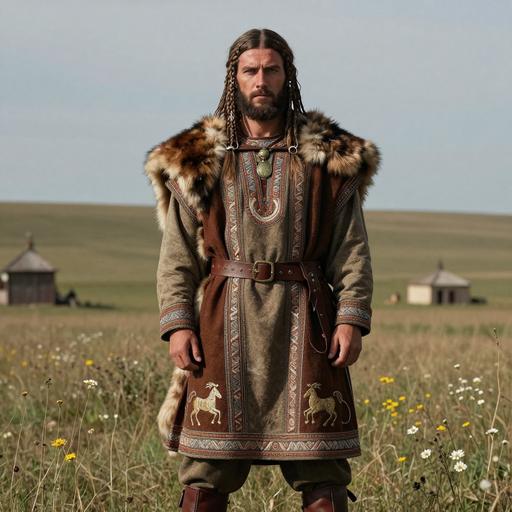
Portrait reconstruction of NEO518
Ancient Individual

A man buried in Ukraine in the Iron Age era

NEO518
542 BCE - 392 BCE
Male
Scythian Culture
Ukraine
Scroll to begin
Chapter I

Identity

The biological and cultural markers that define this ancient individual

Sample ID

NEO518

Date Range

542 BCE - 392 BCE

Biological Sex

Male

mtDNA Haplogroup

U5a2d

Y-DNA Haplogroup

R-YP1455

Cultural Period

Scythian Culture

Chapter II

Place

Where this individual was discovered

Country Ukraine
Locality Igren'-8 (Dnipropetrovsk Oblast, Dnipro District, Dnipro municipality)
Coordinates 48.4436, 35.1159
Chapter III

Time

When this individual lived in the broader context of human history

NEO518 542 BCE - 392 BCE
Chapter IV

Story

The narrative of this ancient life

The Scythian culture, flourishing from around the 8th century BCE to approximately the 3rd century BCE, is a fascinating and influential civilization often characterized by its unique nomadic lifestyle, intricate art, and mastery of horse riding and warfare. This culture primarily inhabited the vast steppes of Central Asia, encompassing regions that today make up parts of modern Ukraine, southern Russia, and Kazakhstan. The Scythians left an enduring legacy through their interactions with other civilizations, their technological advancements, and their distinctive cultural practices.

Geography and Society

The Scythians dominated the Eurasian steppe, an expansive region of grassland that provided an ideal environment for their nomadic herding lifestyle. Their society was highly mobile; they lived in temporary camps and constructed tents known as yurts, which allowed for easy relocation. This adaptability was crucial for managing their herds of horses, sheep, and cattle, which formed the backbone of their economy.

Socially, Scythian society was organized around clans and tribes, often led by warrior elites. Leadership was typically hereditary, but it was also secured through military prowess and alliances. The Scythians were known for their fierce warrior culture, and their formidable skills in mounted warfare made them both respected and feared by neighboring civilizations.

Art and Symbolism

Scythian art is particularly renowned for its distinctive \animal style," characterized by intricate designs and motifs that commonly featured animals such as deer, griffins, and birds. These motifs were found in various forms, including metalwork in gold and bronze, textiles, and carvings. The animal motifs often held spiritual significance and were believed to offer protection or embody aspects of the Scythians’ environment and lifestyle.

Gold was a prominent medium in Scythian art, signifying wealth and status. Elaborate jewelry, weaponry, and ritual objects have been unearthed from burial mounds (kurgans), showcasing the Scythians’ exceptional craftsmanship and the importance of animalistics within their spiritual and cultural paradigms.

Religion and Beliefs

The Scythian belief systems were deeply intertwined with their natural surroundings, and their religion was characterized by a rich tapestry of shamanistic and animistic elements. They revered a pantheon of deities, often associated with natural elements and war. The most detailed accounts, provided by ancient historians such as Herodotus, describe rituals involving animal and, at times, human sacrifices intended to appease their gods and ensure prosperity and victory in battles.

Funerary practices were highly significant in Scythian culture. The kurgans, some of which were monumental in scale, provide insight into their beliefs about the afterlife. These burial sites, often reserved for the elite, contained not only the deceased but also a wealth of goods, horses, and even servants and concubines to accompany them into the afterlife.

Warfare and Allies

The Scythians were masters of mounted warfare, an achievement largely due to their exceptional horsemanship and use of the composite bow, which provided both range and power. Their mobility and tactical use of cavalry enabled them to conduct swift raids and effectively combat larger, traditionally organized armies. The Scythians were not just invaders but also skilled in forming temporary coalitions and alliances, often serving as mercenaries or settling conflicts between neighboring states.

Their reputation as fearsome warriors drew the attention of powerful empires such as the Persians and the Greeks. While they successfully repelled some invasions, their interactions led to cultural exchanges that influenced both Scythian society and those they encountered.

Legacy and Influence

The Scythians' influence stretched beyond their immediate geography through trade and conflict. Greek historians, such as Herodotus, documented them extensively, contributing to our understanding of their culture. Archeological finds continue to shed light on their technological and artistic contributions, influencing the cultures around them, most evidently seen in later nomadic peoples and their successors, such as the Sarmatians and Huns.

Today, the Scythians are remembered not only as fierce warriors but as a complex society that adapted to one of the most challenging environments on earth. They left behind a legacy of innovation in warfare, expressive art, and enduring cultural practices that have intrigued historians and archaeologists alike. Their history serves as a testament to the resilience and ingenuity of nomadic cultures in the ancient world."

Chapter V

Context

Other ancient individuals connected to this sample

Sources

References

Scientific publications and genetic data

Scientific Publication

Population genomics of post-glacial western Eurasia

Authors Allentoft ME, Sikora M, Refoyo-Martínez A
Abstract

Western Eurasia witnessed several large-scale human migrations during the Holocene1-5. Here, to investigate the cross-continental effects of these migrations, we shotgun-sequenced 317 genomes-mainly from the Mesolithic and Neolithic periods-from across northern and western Eurasia. These were imputed alongside published data to obtain diploid genotypes from more than 1,600 ancient humans. Our analyses revealed a 'great divide' genomic boundary extending from the Black Sea to the Baltic. Mesolithic hunter-gatherers were highly genetically differentiated east and west of this zone, and the effect of the neolithization was equally disparate. Large-scale ancestry shifts occurred in the west as farming was introduced, including near-total replacement of hunter-gatherers in many areas, whereas no substantial ancestry shifts happened east of the zone during the same period. Similarly, relatedness decreased in the west from the Neolithic transition onwards, whereas, east of the Urals, relatedness remained high until around 4,000 BP, consistent with the persistence of localized groups of hunter-gatherers. The boundary dissolved when Yamnaya-related ancestry spread across western Eurasia around 5,000 BP, resulting in a second major turnover that reached most parts of Europe within a 1,000-year span. The genetic origin and fate of the Yamnaya have remained elusive, but we show that hunter-gatherers from the Middle Don region contributed ancestry to them. Yamnaya groups later admixed with individuals associated with the Globular Amphora culture before expanding into Europe. Similar turnovers occurred in western Siberia, where we report new genomic data from a 'Neolithic steppe' cline spanning the Siberian forest steppe to Lake Baikal. These prehistoric migrations had profound and lasting effects on the genetic diversity of Eurasian populations.

Use code for 40% off Expires Feb 26