Menu
Store
Blog
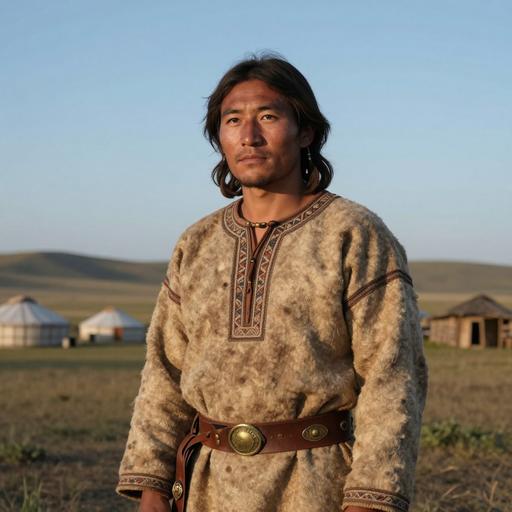
Portrait reconstruction of NEO70
Ancient Individual

A man buried in Russia in the Bronze Age era

NEO70
1192 BCE - 936 BCE
Male
Karasuk culture
Russia
Scroll to begin
Chapter I

Identity

The biological and cultural markers that define this ancient individual

Sample ID

NEO70

Date Range

1192 BCE - 936 BCE

Biological Sex

Male

mtDNA Haplogroup

F1b1b

Y-DNA Haplogroup

N-Y6503

Cultural Period

Karasuk culture

Chapter II

Place

Where this individual was discovered

Country Russia
Locality Bazaikha (Krasnoyarsk Krai, Krasnoyarsk municipality)
Coordinates 55.9903, 92.8510
Chapter III

Time

When this individual lived in the broader context of human history

NEO70 1192 BCE - 936 BCE
Chapter IV

Story

The narrative of this ancient life

The Karasuk culture, existing approximately from 1500 BCE to 800 BCE, represents a significant epoch within the broader context of the Eurasian Steppe during the Late Bronze Age. Named after archaeological discoveries near the Karasuk River in southern Siberia, this culture spanned large areas across western Siberia, Kazakhstan, and extending into Mongolia and northwestern China. The Karasuk culture is notable for its advancements in metallurgy, complex societal structures, and cultural exchanges across vast expanses of land.

Geographical Context

The Karasuk culture thrived in a diverse ecological zone characterized by expansive grasslands, river valleys, and mountainous regions. This environment facilitated a semi-nomadic lifestyle, allowing for pastoral activities and enabling trade and cultural exchanges between different groups within the steppe and neighboring regions.

Settlements and Lifestyle

While largely pastoral, evidence suggests that the Karasuk people established permanent and semi-permanent settlements primarily along riverbanks and fertile plains. These settlements provided strategic locations for agriculture, livestock herding, and access to trade routes. The economic backbone of the Karasuk people was herding cattle, sheep, and horses, supplemented by hunting, foraging, and limited agricultural activities.

Metallurgy and Craftsmanship

A hallmark of the Karasuk culture was its advanced metallurgy. The Karasuk people are credited with significant enhancements in bronze-working techniques, producing weapons such as daggers, axes, and spearheads, as well as ornate personal items like jewelry and various tools. The distinct 'Karasuk style' of metalwork is characterized by intricate geometric patterns and animal motifs, indicating a high level of craftsmanship and artistic expression.

Trade and Interaction

The Karasuk culture was situated within a network of trade routes connecting the East and West. This prominent position facilitated cultural and technological exchanges, influencing and being influenced by contemporaneous cultures such as the Andronovo, Tagar, and the early Chinese civilizations. Through these interactions, they played a crucial role in the dissemination of metallurgical techniques, artistic styles, and possibly even linguistic and social innovations.

Burial Practices and Religion

The Karasuk culture is primarily known through its cemeteries, which reveal elaborate burial practices. The dead were interred under stone mounds or kurgans, often accompanied by grave goods indicative of their social status and wealth. These artifacts include bronze weapons, tools, and personal adornments which reflect their beliefs regarding the afterlife and the importance of status even in death.

The nature of religious beliefs within the Karasuk culture remains partially speculative, but burial practices suggest a possible emphasis on ancestor worship and a connection with nature and the animal kingdom, evidenced by recurring animal motifs in their art.

Societal Organization

The societal structure of the Karasuk culture was likely complex and stratified. Archaeological evidence points to the existence of social hierarchies, with elites wielding significant control over resources and trade. The distribution of wealth and specialized craftsmanship reflects a division of labor and the existence of skilled artisans within these communities.

Legacy and Influence

The decline of the Karasuk culture around 800 BCE coincides with the emergence of newer cultural complexes such as the Scythians, who also inhabited the Eurasian steppe and may have assimilated elements of Karasuk cultural practices into their own. The artistic and metallurgical advancements developed during the Karasuk era set a foundation for succeeding cultures in the region and contributed to the broader narrative of human development during the Bronze Age.

In summary, the Karasuk culture is a vital chapter in the history of the Eurasian Steppe, characterized by its strategic geographic positioning, advanced metallurgical prowess, intricate social structures, and rich cultural exchanges. Its legacy is preserved through the remarkable artifacts and burial sites it left behind, offering us valuable insights into the lives and practices of these Bronze Age communities.

Chapter V

Context

Other ancient individuals connected to this sample

Sources

References

Scientific publications and genetic data

Scientific Publication

Population genomics of post-glacial western Eurasia

Authors Allentoft ME, Sikora M, Refoyo-Martínez A
Abstract

Western Eurasia witnessed several large-scale human migrations during the Holocene1-5. Here, to investigate the cross-continental effects of these migrations, we shotgun-sequenced 317 genomes-mainly from the Mesolithic and Neolithic periods-from across northern and western Eurasia. These were imputed alongside published data to obtain diploid genotypes from more than 1,600 ancient humans. Our analyses revealed a 'great divide' genomic boundary extending from the Black Sea to the Baltic. Mesolithic hunter-gatherers were highly genetically differentiated east and west of this zone, and the effect of the neolithization was equally disparate. Large-scale ancestry shifts occurred in the west as farming was introduced, including near-total replacement of hunter-gatherers in many areas, whereas no substantial ancestry shifts happened east of the zone during the same period. Similarly, relatedness decreased in the west from the Neolithic transition onwards, whereas, east of the Urals, relatedness remained high until around 4,000 BP, consistent with the persistence of localized groups of hunter-gatherers. The boundary dissolved when Yamnaya-related ancestry spread across western Eurasia around 5,000 BP, resulting in a second major turnover that reached most parts of Europe within a 1,000-year span. The genetic origin and fate of the Yamnaya have remained elusive, but we show that hunter-gatherers from the Middle Don region contributed ancestry to them. Yamnaya groups later admixed with individuals associated with the Globular Amphora culture before expanding into Europe. Similar turnovers occurred in western Siberia, where we report new genomic data from a 'Neolithic steppe' cline spanning the Siberian forest steppe to Lake Baikal. These prehistoric migrations had profound and lasting effects on the genetic diversity of Eurasian populations.

Use code for 40% off Expires Feb 26