Menu
Store
Blog
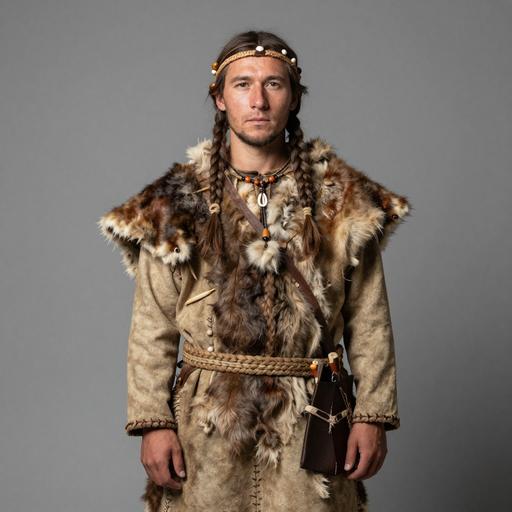
Portrait reconstruction of NEO72
Ancient Individual

A man buried in Russia in the Neolithic era

NEO72
7313 BCE - 6697 BCE
Male
Koshkino-Boborykino Culture
Russia
Scroll to begin
Chapter I

Identity

The biological and cultural markers that define this ancient individual

Sample ID

NEO72

Date Range

7313 BCE - 6697 BCE

Biological Sex

Male

mtDNA Haplogroup

R1b1

Y-DNA Haplogroup

Q-L56

Cultural Period

Koshkino-Boborykino Culture

Chapter II

Place

Where this individual was discovered

Country Russia
Locality Mergen-6 (Tyumen Oblast, Ishimsky District)
Coordinates 56.0362, 69.3389
Chapter III

Time

When this individual lived in the broader context of human history

NEO72 7313 BCE - 6697 BCE
Chapter IV

Story

The narrative of this ancient life

The Koshkino-Boborykino culture, associated with the Proto-Ugric peoples, represents a fascinating and formative chapter in the prehistoric era of northwestern Siberia. Dating from approximately the 3rd to the 1st millennium BCE, this culture is named after its type sites located in the regions near the Koshkino settlement and Boborykino burial grounds in modern-day Russia. The Koshkino-Boborykino culture is significant for its role in the ethnogenesis of the Ugric-speaking peoples, a branch of the Uralic language family. This culture, which existed alongside and interacted with other contemporary cultures, showcases a rich tapestry of technological, societal, and environmental adaptation features.

Geographic and Environmental Context

The geographical scope of the Koshkino-Boborykino culture lies in the vast expanse of the taiga and forest-steppe regions of western Siberia. This area is characterized by dense forests, numerous waterways, and a climate that exhibits marked seasonal variations. The presence of rivers such as the Ob and Irtysh facilitated communication and trade and influenced settlement patterns. The environment dictated a lifestyle based on hunting, fishing, and gathering, which were key subsistence strategies for these people.

Material Culture and Technology

The material culture of the Koshkino-Boborykino culture is characterized by sophisticated craftsmanship, as evidenced by their pottery, tools, and ornaments. Pottery from this culture typically features distinctive decorations, including comb-patterned and incised designs, reflecting both aesthetic tastes and possibly symbolic meanings.

Lithic technology of the Koshkino-Boborykino culture was well-developed, with stone tools crafted using techniques that indicate a deep understanding of the properties of raw materials. Flint and obsidian were commonly used for the production of arrowheads, scrapers, and other tools. The presence of metal objects, albeit limited, suggests that these people were part of early metallurgical diffusion networks, accessing bronze through trade or local production during the latter phases of their cultural development.

Subsistence and Economy

The economy of the Koshkino-Boborykino culture was primarily based on hunting, fishing, and gathering, with evidence pointing to a semi-nomadic lifestyle. Faunal remains indicate that they hunted a wide variety of animals, including reindeer, elk, and small mammals, which provided food, clothing, and materials for tools. Fish, being abundant in the rivers, formed a significant part of their diet, as shown by remains found at habitation sites.

There is also evidence of early interactions with agricultural communities to the south, wherein the exchange of goods and ideas occurred, although agriculture did not become a primary subsistence activity for the Koshkino-Boborykino people. This openness to trade and exchange underscored their adaptability and the interconnectedness of ancient Eurasian cultures.

Social Structure and Organization

While detailed information on the social structure of the Koshkino-Boborykino culture is limited, burial practices provide some insights. The Boborykino burial grounds reveal that their mortuary practices involved specific and sometimes elaborate rituals, indicating social stratification or the existence of a spiritual belief system. Grave goods, such as tools, weapons, and personal adornments, suggest a respect for the deceased and possibly beliefs in an afterlife.

The social organization may have been kin-based, involving clan or extended family units that cooperated for economic activities and mutual defense. The mobility required by their subsistence strategies likely influenced social flexibility and a fluidity in leadership roles, adapted to different seasonal or environmental challenges.

Cultural Interactions and Legacy

The Koshkino-Boborykino culture did not exist in isolation. Their location in western Siberia placed them at a crossroads of cultural interactions. They may have exchanged ideas and goods with other contemporaneous cultures, such as those in the Steppe and forest-steppe regions, contributing to a dynamic exchange network across Northern Eurasia. Over time, the interactions with neighboring cultures, along with internal developments, likely contributed to linguistic and cultural shifts that paved the way for the emergence of distinct Ugric-speaking groups.

As a significant ancestor of later Ugric cultures, the Koshkino-Boborykino culture's legacy is found in the underlying foundations of Ugric linguistic and cultural identities. It represents a pivotal moment in the prehistoric tapestry of Siberia, bridging the past with the future evolution of the Uralic language family and cultural groups.

Overall, the Koshkino-Boborykino culture is a testament to the resilience and adaptability of human societies in challenging environments, marked by a rich cultural and technological tapestry that would influence successive generations across vast Siberian expanses.

Chapter V

Context

Other ancient individuals connected to this sample

Sources

References

Scientific publications and genetic data

Scientific Publication

Population genomics of post-glacial western Eurasia

Authors Allentoft ME, Sikora M, Refoyo-Martínez A
Abstract

Western Eurasia witnessed several large-scale human migrations during the Holocene1-5. Here, to investigate the cross-continental effects of these migrations, we shotgun-sequenced 317 genomes-mainly from the Mesolithic and Neolithic periods-from across northern and western Eurasia. These were imputed alongside published data to obtain diploid genotypes from more than 1,600 ancient humans. Our analyses revealed a 'great divide' genomic boundary extending from the Black Sea to the Baltic. Mesolithic hunter-gatherers were highly genetically differentiated east and west of this zone, and the effect of the neolithization was equally disparate. Large-scale ancestry shifts occurred in the west as farming was introduced, including near-total replacement of hunter-gatherers in many areas, whereas no substantial ancestry shifts happened east of the zone during the same period. Similarly, relatedness decreased in the west from the Neolithic transition onwards, whereas, east of the Urals, relatedness remained high until around 4,000 BP, consistent with the persistence of localized groups of hunter-gatherers. The boundary dissolved when Yamnaya-related ancestry spread across western Eurasia around 5,000 BP, resulting in a second major turnover that reached most parts of Europe within a 1,000-year span. The genetic origin and fate of the Yamnaya have remained elusive, but we show that hunter-gatherers from the Middle Don region contributed ancestry to them. Yamnaya groups later admixed with individuals associated with the Globular Amphora culture before expanding into Europe. Similar turnovers occurred in western Siberia, where we report new genomic data from a 'Neolithic steppe' cline spanning the Siberian forest steppe to Lake Baikal. These prehistoric migrations had profound and lasting effects on the genetic diversity of Eurasian populations.

Use code for 40% off Expires Feb 26