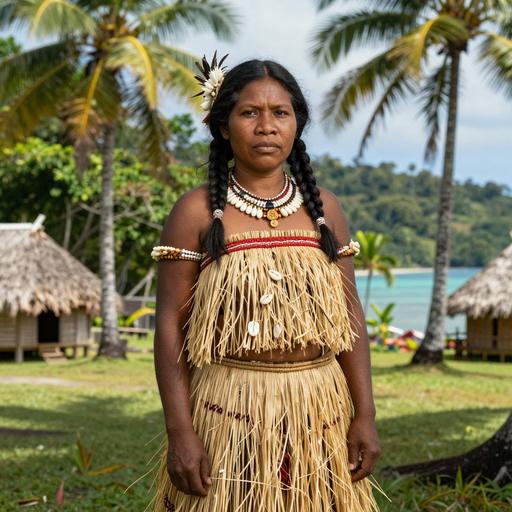
Vanuatu, located in the South Pacific Ocean, consists of an archipelago of over 80 islands. Around 500 years ago, this region was inhabited by Melanesian people who had developed a unique and vibrant culture deeply intertwined with their environment. Understanding the era around 1523 requires examining various aspects, including social structure, subsistence practices, spiritual beliefs, and interactions with other Pacific cultures.
Social Structure and Organization
The social structure of Melanesian Vanuatu around 500 years ago was primarily organized around kinship and clan systems. Villages were typically small, with extended families living together or in close proximity. Leadership was often hereditary, but in some cases, it was based on merit or the individual’s abilities and skills. Chiefs held authority and were responsible for maintaining social order, mediating conflicts, and presiding over community rituals and ceremonies.
Decision-making was generally communal, with elders playing influential roles due to their knowledge and experience. Status and rank within the society were important, and distinctions were often made based on age, gender, and the accumulation of resources or ceremonial knowledge.
Subsistence Practices
Subsistence in Vanuatu at this time was largely based on agriculture, fishing, and foraging. The Melanesian people practiced shifting cultivation (swidden agriculture), which involved clearing small plots of land for farming and then letting the forest regenerate as fields were left fallow. The primary crops included yams, taro, bananas, and coconuts. People also engaged in fishing, which was a vital part of their diet. They utilized various techniques and tools, such as nets, lines, and spears, to catch fish from the abundant local waters.
Wild food resources like nuts, fruits, and tubers supplemented their diet, and animal husbandry was practiced to a lesser extent, with pigs being particularly significant both for food and for ceremonial purposes.
Spiritual Beliefs and Practices
Spiritual life in Melanesian Vanuatu was rich and complex, centered around animistic beliefs. Ancestor worship played a crucial role, with the spirits of deceased ancestors being believed to exert influence over the living. People conducted various rituals and ceremonies to honor these spirits and seek their guidance or assistance.
Additionally, the belief in a spirit world inhabited by various deities and supernatural beings influenced daily life. People believed that these beings could affect natural events and human affairs, and thus they engaged in rituals, used charms, and observed taboos to appease them and secure their favor.
Ritual specialists or shamans acted as intermediaries between the physical and spiritual worlds, performing ceremonies, divining answers to problems, healing through spiritual means, and safeguarding the community against malevolent spirits.
Art and Material Culture
Artistic expression in Vanuatu was evident through sculpture, body decoration, and ceremonial artifacts. Woodcarving was highly developed, with intricate designs adorning canoes, masks, and ritual objects. These carvings often held symbolic meanings and were used in various ceremonies.
Body decoration, including tattooing and the wearing of ornaments made from shells, bones, and feathers, was common, serving both aesthetic and social functions. Such decorations often symbolized status or accomplishments and played a role in rites of passage.
Interaction and Trade
Although relatively isolated geographically, the people of Vanuatu engaged in trade with neighboring islands and cultures. They exchanged goods such as shell money, mats, pig tusks, and other valuable items. This interaction facilitated the exchange of ideas and technologies, influencing the cultural development of the region.
The trading networks extended across Melanesia and into parts of Polynesia and Micronesia, enhancing the interconnectedness of Pacific Island communities.
Conclusion
Five hundred years ago, the people of Vanuatu developed a sophisticated culture deeply adapted to their island environment. They excelled in agriculture, maintained vibrant spiritual practices, and produced expressive art. Despite the challenges posed by their geographical isolation, they remained active participants in the broader tapestry of Pacific Islander culture through trade and exchanges. This period laid the groundwork for the rich cultural legacy that persists in Vanuatu today.