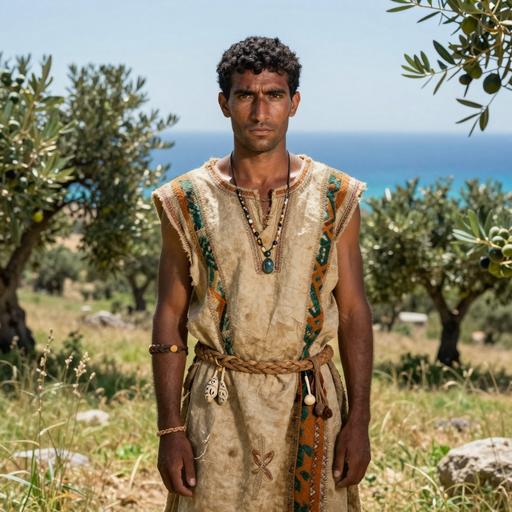
The Kaf Taht el-Ghar represents a significant Neolithic culture from early Moroccan history, primarily situated in the broader context of North African prehistoric developments. This era, dating back to approximately 6000 to 5000 BCE, is pivotal in understanding the transition from hunter-gatherer societies to more settled agricultural communities in the region. The Early Neolithic period of the Kaf Taht el-Ghar is characterized by distinct cultural, technological, and environmental adaptations that its people developed as they interacted with their surroundings.
Geographical Context:
Kaf Taht el-Ghar is an archaeological site located in northern Morocco, nestled within the rugged terrain near the Rif Mountains. The geography of this region presents a mix of coastal environments, fertile plains, and mountainous areas, which provided a variety of resources for prehistoric communities. The strategic location near the Mediterranean Sea possibly facilitated contact and exchange with other early cultures around the Mediterranean basin.
Cultural Characteristics:
Settlement Patterns:
- The Neolithic inhabitants of Kaf Taht el-Ghar began to establish semi-permanent or permanent settlements, marking a shift from a nomadic lifestyle. These settlements were typically small and consisted of simple structures made from locally available materials like wood, reeds, and clay.
Subsistence Strategies:
- The culture saw a gradual shift towards agriculture, with evidence of early domestication of plants such as cereals and legumes. This agricultural practice was complemented by continued hunting and gathering, particularly of wild fruits, nuts, and the hunting of game, which allowed for a more stable and diverse diet.
Tool Technology:
- The Kaf Taht el-Ghar culture is noted for its advancement in lithic technologies. The people developed a variety of stone tools that facilitated agricultural practices, including sickles for harvesting and grinding stones for processing grains. These tools signify a technological leap from the predominantly flint-based implements of the Mesolithic era.
Pottery:
- Pottery from this culture displays ingenuity in craftsmanship, with the early introduction of decorated ceramics. These ceramics provide insights into the aesthetic preferences and daily domestic activities of the culture, often featuring simple geometric patterns and shapes.
Social Structure:
- Although comprehensive details of the social structure are sparse, it is inferred from settlement patterns and burial practices that there might have been emerging social stratification. Communal cooperation would have been essential for successful agricultural and societal development.
Environmental and Ecological Impact:
The Early Neolithic people of Kaf Taht el-Ghar were adept at modifying their environment to sustain agriculture, leading to gradual ecological changes. This includes early practices of land clearing for crop cultivation, which, over time, would have led to impacts on the local flora and fauna. The archaeological record shows evidence of managed landscapes that supported increased food production.
Interactions and Influence:
- It's likely that Kaf Taht el-Ghar had interactions with neighboring cultures across North Africa and the wider Mediterranean region. These interactions probably included the exchange of goods, knowledge, and agricultural techniques, suggesting a network of proto-trade routes that influenced the dynamics of Neolithic transitions in the area. The influence of this culture, therefore, is seen as both a product of its unique environmental adaptations and its engagement with broader Neolithic trends across the Mediterranean.
Legacy and Importance:
The Kaf Taht el-Ghar culture is vital in understanding the broader scope of the Neolithic Revolution in North Africa. It highlights the diverse responses to environmental and climatic changes during the Holocene and represents a key cultural and technological evolution that paved the way for subsequent complex societies in Morocco and beyond. As such, the Early Neolithic of Kaf Taht el-Ghar serves as an essential chapter in the prehistory of the region, illustrating the ingenuity and adaptability of early human communities in transforming their world.