Menu
Store
Blog
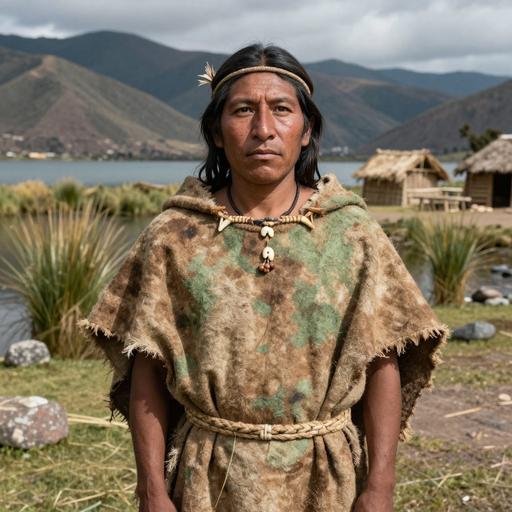
Portrait reconstruction of SMP5
Ancient Individual

A man buried in Peru in the Ancient South America era

SMP5
4987 BCE - 4794 BCE
Male
Soro Mikaya Patjxa, Peru 6,800 Years Ago
Peru
Scroll to begin
Chapter I

Identity

The biological and cultural markers that define this ancient individual

Sample ID

SMP5

Date Range

4987 BCE - 4794 BCE

Biological Sex

Male

mtDNA Haplogroup

C1c

Y-DNA Haplogroup

Q-B48

Cultural Period

Soro Mikaya Patjxa, Peru 6,800 Years Ago

Chapter II

Place

Where this individual was discovered

Country Peru
Locality Rio Ilave Basin. Soro Mik’aya Patjxa
Chapter III

Time

When this individual lived in the broader context of human history

SMP5 4987 BCE - 4794 BCE
Chapter IV

Story

The narrative of this ancient life

The Soro Mikaya Patjxa site, located in the Andean highlands of Peru, offers invaluable insights into the pre-ceramic cultures of the Andean region around 6,800 years ago (approximately 4,800 BCE). This era is significant as it falls within the Archaic Period, a time characterized by distinct transitions in subsistence strategies, social organization, and environmental adaptation among Andean populations. This period is crucial for understanding the evolution of complex societies that would later give rise to the sophisticated Andean civilizations like the Inca.

Environmental and Geographic Context

The Andean highlands, where Soro Mikaya Patjxa is situated, are marked by diverse microenvironments ranging from high-altitude grasslands to glacial peaks and valleys. These landscapes pose unique challenges and opportunities for human habitation. Around 6,800 BP, climatic conditions were likely cooler and drier than today, influencing the availability of resources and types of flora and fauna present. The high-altitude puna grasslands were exploited extensively by the inhabitants, while adjacent valleys provided diverse plant resources.

Subsistence Strategies

The people of Soro Mikaya Patjxa likely practiced a mixed subsistence strategy that included hunting, gathering, and early forms of plant management or cultivation. Evidence from similar sites suggests that high-altitude camelids like vicuñas and guanacos were important game species, valued for their meat and hides. The gathering of wild plant species, such as tubers and edible seeds, constituted a substantial portion of their diet. It is during this time that we begin to see indications of domestication and cultivation practices emerging, although full-scale agriculture would not become widespread until later periods.

Tools and Technology

The archaeological findings at Soro Mikaya Patjxa indicate the use of lithic technology, with a variety of stone tools employed for hunting, processing food, and crafting. Projectile points, scrapers, and knives made from locally sourced stone materials suggest a high degree of skill in flintknapping. The technology reflects adaptations to the environment as well as innovations necessary for the specific challenges of high-altitude life.

Social Organization and Culture

Evidence from sites corresponding to this period hints at relatively small, mobile bands or communities. These groups were possibly organized around kinship ties, where cooperative hunting and resource-sharing would have been crucial for survival. Overlapping territories might have led to interactions with neighboring groups, fostered through trade, exchange, and seasonal gatherings. Such interactions could facilitate cultural exchange and contribute to social complexity over time.

Rituals and Beliefs

Though direct evidence from Soro Mikaya Patjxa is limited, contemporary Andean cultures suggest a rich tapestry of rituals and beliefs centered around the natural world. Andean cosmology has traditionally included reverence for mountains, water bodies, and celestial bodies. While the specifics of spiritual life at Soro Mikaya Patjxa remain speculative, it is likely that early cultural expressions and belief systems were already forming. These may have included ritualistic practices associated with hunting, ancestor veneration, and the natural landscape.

Legacy and Transition

The inhabitants of Soro Mikaya Patjxa were part of a broader tapestry of early Andean human activity that laid the groundwork for later cultural developments. Their adaptations to the harsh environments, developing subsistence strategies, and gradual shifts towards agricultural production set the stage for the more complex societies that would emerge in the subsequent millennia, culminating in the rise of state-level civilizations such as the Norte Chico, Moche, Tiwanaku, and eventually, the Inca.

In summary, the Soro Mikaya Patjxa site represents a snapshot of early human adaptation and cultural evolution in the Andean highlands, marking significant transitional phases in pre-ceramic Andean civilizations around 6,800 years ago. Though the archaeological record remains incomplete, ongoing research continues to reveal the intricacies of life during this captivating period of human history.

Chapter V

Context

Other ancient individuals connected to this sample

Sources

References

Scientific publications and genetic data

Scientific Publication

The genetic prehistory of the Andean highlands 7000 years BP though European contact

Authors Lindo J, Haas R, Hofman C
Abstract

The peopling of the Andean highlands above 2500 m in elevation was a complex process that included cultural, biological, and genetic adaptations. Here, we present a time series of ancient whole genomes from the Andes of Peru, dating back to 7000 calendar years before the present (BP), and compare them to 42 new genome-wide genetic variation datasets from both highland and lowland populations. We infer three significant features: a split between low- and high-elevation populations that occurred between 9200 and 8200 BP; a population collapse after European contact that is significantly more severe in South American lowlanders than in highland populations; and evidence for positive selection at genetic loci related to starch digestion and plausibly pathogen resistance after European contact. We do not find selective sweep signals related to known components of the human hypoxia response, which may suggest more complex modes of genetic adaptation to high altitude.

Use code for 40% off Expires Feb 27