Saltar al contenido principal
mtDNA · Materno linaje

H5M

mtDNA Haplogroup H5M

Un perfil de referencia de una rama de linaje. Compartir haplogrupos no demuestra una relación familiar ni una identidad cultural.

Perfil de referencia

Contexto de la rama

Contexto histórico de la rama de linaje mtDNA H5M

Origins and Evolution

H5M is a daughter lineage of mtDNA haplogroup H5, which itself derives from the broadly distributed European and West Asian haplogroup H. Given the phylogenetic position of H5 and its estimated coalescence in the late Pleistocene to early Holocene, H5M most plausibly arose after the diversification of H5, probably in the early Holocene (roughly 8–10 kya) in the Near East / West Asia region. As a downstream branch of H5, H5M bears the characteristic H5 mutations with additional private mutations that define the M branch.

Because H5M is a relatively low‑frequency lineage in modern populations, its dating is less precisely constrained than high-frequency clades; molecular-clock estimates and the geographic distribution of related H5 subclades support a Holocene origin linked to post‑glacial resettlement and early farming expansions out of West Asia into Europe.

Subclades (if applicable)

H5M appears to be a terminal or narrowly branching subclade of H5 in current phylogenies: it is defined by a small set of diagnostic mutations and has relatively few well‑documented downstream branches. Where researchers have sequenced full mitochondrial genomes, H5M samples show limited internal diversity compared with older H5 subclades such as H5a, consistent with a more recent or more localized expansion and possible founder events in certain regions. As with many rare mtDNA clades, discovery of additional complete mitogenomes could reveal previously unrecognized substructure.

Geographical Distribution

H5M is detected at low to moderate frequencies where H5 in general is present, with strongest representation in regions closest to the proposed origin. Modern and limited ancient sample records indicate occurrences in:

  • Southern Europe (notably Italy and parts of the Balkans)
  • The Near East and Anatolia
  • The Caucasus (Armenia, Georgia)
  • Western and Eastern Europe at lower frequencies and patchy distributions
  • North Africa and Mediterranean islands at low frequencies

The pattern suggests a Near Eastern origin with dispersal into Europe along coastal and inland corridors used by Neolithic farmers and later population movements. The clade is generally rare and often appears in low numbers in population surveys, consistent with localized founder effects rather than a continent‑wide expansion.

Historical and Cultural Significance

The distribution and age of H5M fit a model in which many H‑derived lineages expanded with early Holocene demographic changes, especially the spread of agriculture from Anatolia and the Levant into Europe. While some H5 subclades (for example H5a) show clear founder signals in specific historical populations (including certain Jewish communities), H5M does not currently show a broad, high‑frequency association with any single archaeological culture. Instead, its presence in Neolithic and later contexts likely reflects small founder events and regional continuity.

Because H5M is uncommon in modern datasets and appears only sporadically in ancient DNA reports, it has not been tied to a single major prehistoric migration event (e.g., Corded Ware or Yamnaya expansions) as a diagnostic marker. Rather, it provides useful resolution for fine‑scale studies of maternal ancestry, regional demographic continuity, and micro‑history in southern Europe, the Caucasus, and adjacent Near Eastern zones.

Conclusion

H5M is a rare, regionally informative branch of H5 arising in the early Holocene near the Near East / West Asia and carried into neighboring regions by Neolithic and later movements. Its low frequency and limited substructure make it especially valuable for high‑resolution phylogeographic studies and for reconstructing local maternal lineages, but the clade requires more complete mitogenomes and ancient DNA sampling to refine its internal topology, age estimates, and precise prehistoric trajectories.

Puntos clave

  • Origins and Evolution
  • Subclades (if applicable)
  • Geographical Distribution
  • Historical and Cultural Significance
  • Conclusion
Perfil de referencia

Árbol y relaciones

Contexto filogenético y subclados

Trayectoria evolutiva

Sigue las ramas superiores registradas hasta H5M. Las fechas son estimaciones y pueden cambiar al revisarse los datos de referencia.

Pasos Haplogrupo Antigüedad estimada Época arqueológica Tiempo transcurrido Subclados inmediatos Portadores modernos analizados Referencias antiguas
1 H5M Actual ~9,000 years ago Neolithic 9,000 years 0 14 0
2 H5 ~12,000 years ago Mesolithic 12,500 years 14 473 23
3 H5'36 - - - 2 482 0
4 H ~25,000 years ago Paleolithic 25,000 years 78 9,404 991
5 HV ~30,000 years ago Paleolithic 30,000 years 14 11,092 228
6 R0 ~15,000 years ago Mesolithic 15,000 years 2 11,230 4
7 R ~55,000 years ago Paleolithic 55,000 years 17 22,830 57
8 NA - - - 1 22,830 0
9 N ~60,000 years ago Paleolithic 60,000 years 16 26,150 13
10 L3 ~70,000 years ago Paleolithic 70,000 years 7 30,162 6
11 L3'4 - - - 2 30,212 0
12 L3'4'6 - - - 2 30,216 0
13 L2'3'4'6 - - - 2 31,333 0
14 L2'3'4'5'6'7 - - - 2 31,349 0
15 L1'2'3'4'5'6'7 - - - 2 31,852 0
16 L ~160,000 years ago Paleolithic 160,000 years 2 32,236 5

Subclados (0)

Rama terminal: no hay subclados registrados

Perfil de referencia

En el mundo

Distribución geográfica y presencia moderna

Origen registrado

Near East / West Asia

Distribución moderna

The populations where MTDNA haplogroup H5M is found include:

  1. Southern European populations (Italy, Greece and parts of the Balkans)
  2. Western European populations (France, Iberia at low to moderate levels)
  3. Eastern European and Balkan populations (Poland, Ukraine, Balkans at low levels)
  4. Near Eastern and Anatolian populations (Turkey, Levant)
  5. Caucasus populations (Armenia, Georgia, Azerbaijan)
  6. Jewish communities (rare occurrences; H5 more broadly includes lineages with founder effects but H5M is less prominent)
  7. North African populations (Maghreb and Mediterranean North Africa at low frequencies)
  8. Small frequencies in parts of Central Asia and Mediterranean islands
Contexto histórico

Una rama a través del tiempo

Formación estimada en una cronología histórica amplia. Los marcadores temporales aportan contexto y no implican relación con culturas concretas.

  1. ~10k años de antigüedad

    Revolución neolítica

    Inicio de la agricultura y formación de comunidades sedentarias

  2. ~9k años de antigüedad

    Haplogrupo H5M

    Formación estimada de esta rama de mtDNA; las fechas y ubicaciones son estimaciones de referencia.

    Esta rama
  3. ~5k años de antigüedad

    Edad del Bronce

    Metalurgia, escritura y primeras civilizaciones

  4. ~3k años de antigüedad

    Edad del Hierro

    Herramientas de hierro y ampliación de redes comerciales

  5. ~2.5k años de antigüedad

    Antigüedad clásica

    Desarrollo de las civilizaciones griega y romana

  6. Actualidad

    Actualidad

    Época moderna

Perfil de referencia

Contexto arqueológico

Asociaciones arqueológicas registradas para la rama mtDNA H5M

Asociaciones registradas

Estas etiquetas describen contextos arqueológicos registrados para las muestras de referencia enlazadas a H5M. Una asociación no demuestra que todos los portadores pertenecieran a una cultura ni siguieran una ruta migratoria concreta.

Alföld Linear Pottery Anatolian Neolithic Austria_Avar Körös Culture Krepost Culture Lengyel Culture Linear Pottery Culture Malak Preslavets Culture Starčevo Culture
Las atribuciones culturales se basan en el contexto arqueológico de las muestras de ADN antiguo y pueden representar asociaciones regionales de periodos concretos.
Perfil de referencia

Catálogo de muestras

4 portadores directos del haplogrupo H5M

4 mostradas · 4 muestras coincidentes

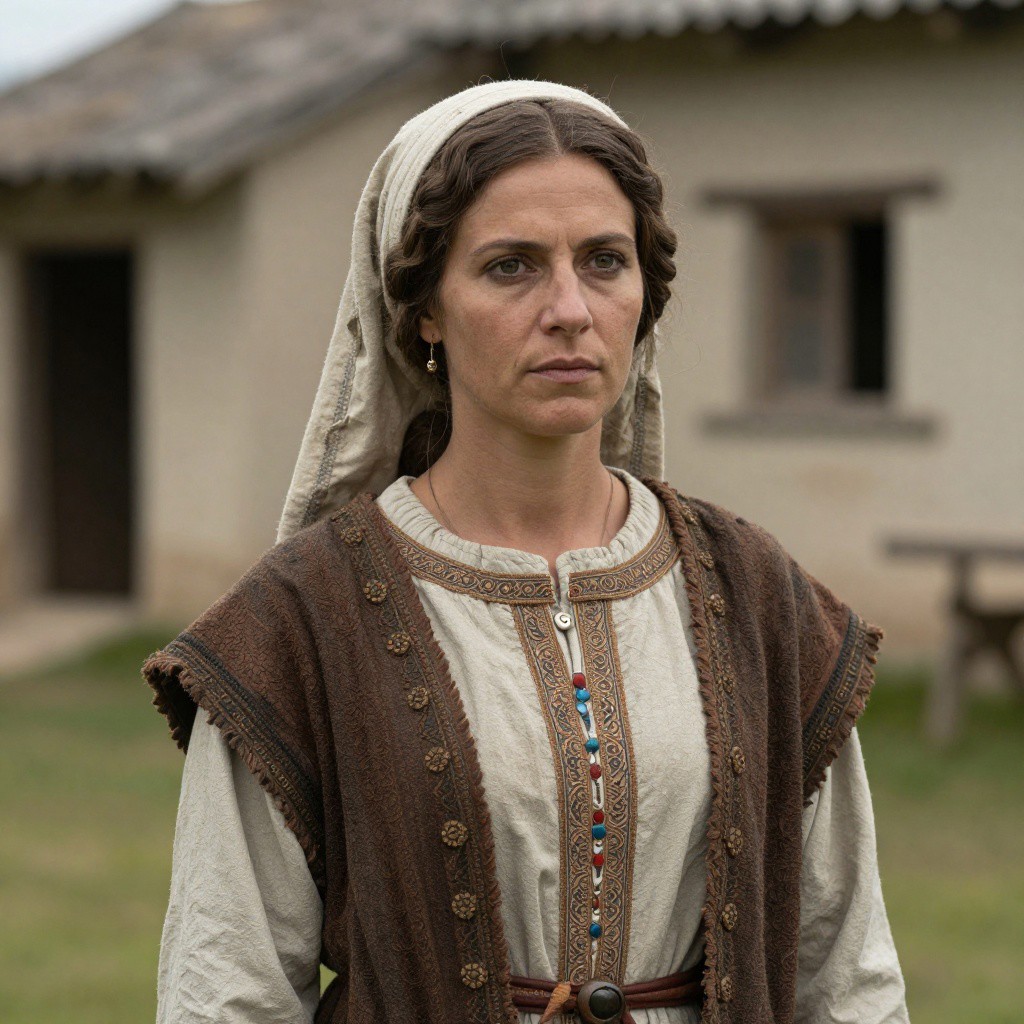
Los retratos son ilustraciones generadas con IA. Las etiquetas de muestra y los identificadores de acceso identifican los registros de referencia.

Retrato Muestra País Época Fecha Cultura mtDNA Coincidencia
Retrato ilustrativo de Avar individual, Mödling-An der Goldenen Stiege (Lower Austria, Mödling District), Austria (650-800 CE) generado con IA
Identificador de muestra: MGS013
Austria Austria Avar 650-800 CE Austria_Avar H5m Direct
Retrato ilustrativo de Avar individual, Mödling-An der Goldenen Stiege (Lower Austria, Mödling District), Austria (650-800 CE) generado con IA
Identificador de muestra: MGS014
Austria Austria Avar 650-800 CE Austria_Avar H5m Direct
Retrato ilustrativo de Avar individual, Mödling-An der Goldenen Stiege (Lower Austria, Mödling District), Austria (650-800 CE) generado con IA
Identificador de muestra: MGS135
Austria Austria Avar 650-800 CE Austria_Avar H5m Direct
Retrato ilustrativo de Avar individual, Mödling-An der Goldenen Stiege (Lower Austria, Mödling District), Austria (650-800 CE) generado con IA
Identificador de muestra: MGS380
Austria Austria Avar 650-800 CE Austria_Avar H5m Direct
MATERNAL LINAJE · ADN ANTIGUO

Mapa de pruebas de linajes antiguos

Sigue los clados superiores hasta esta rama y explora dónde se encontraron portadores antiguos.

Cargando observaciones antiguas...

Los marcadores son ubicaciones de hallazgos arqueológicos. Una línea discontinua representa una transición geográfica propuesta e incierta entre ramas consecutivas, apoyada en varias observaciones fechadas; no es una ruta de viaje exacta, un lugar de nacimiento ni una prueba de descendencia directa. Las muestras del clado parental pueden pertenecer a otras ramas descendientes. Se mantienen huecos cuando las pruebas son insuficientes. Las fechas de las muestras son distintas de las fechas de formación de los haplogrupos.

Perfil de referencia

Mapa de distribución de portadores

Distribución geográfica de muestras de ADN antiguo (4), portadores directos o de subclados de H5M

Portador directo
Filtro de periodo temporal
Todos los periodos
Mostrando todas las muestras
Perfil de referencia

Distribución temporal

Distribución de portadores por periodos arqueológicos

Perfil de referencia

Distribución geográfica

Recuentos por país registrado de las muestras. Reflejan la selección de referencia disponible, no frecuencias de población.

Perfil de referencia

Distribución por país y época

Compara los recuentos de muestras registradas por países y periodos arqueológicos. Selecciona una celda con datos para examinar una muestra.

Datos

Datos y procedencia

Información sobre las fuentes y la calidad de los datos

Última actualización 2026-04-20
Puntuación de confianza 50/100
Cobertura Low

Fuente de datos

La clasificación, las fechas estimadas y el contexto geográfico reflejan los datos de referencia registrados y pueden cambiar al revisarse las pruebas. La cobertura de muestras es desigual; las ubicaciones registradas y las asociaciones arqueológicas no establecen el origen personal ni la identidad cultural.

Un haplogrupo sigue una línea materna o paterna. La rama que se puede predecir depende de los marcadores presentes en el archivo de ADN. Cómo analizamos el ADN