Saltar al contenido principal
mtDNA · Materno linaje

B4B1A

mtDNA Haplogroup B4B1A

Un perfil de referencia de una rama de linaje. Compartir haplogrupos no demuestra una relación familiar ni una identidad cultural.

Perfil de referencia

Contexto de la rama

Contexto histórico de la rama de linaje mtDNA B4B1A

Origins and Evolution

mtDNA haplogroup B4B1A is nested within the B4B1 branch of the broader B4 family, a lineage that has deep roots in East and Southeast Asia. While the parent clade B4B1 is estimated to have arisen around the Late Pleistocene–early Holocene (~18 kya), B4B1A represents a downstream diversification that likely formed during the early to mid-Holocene (roughly 10–7 kya, here conservatively estimated ~9 kya). Its emergence is consistent with postglacial population expansions, coastal resource use, and the increasing importance of maritime mobility around the coasts and islands of ISEA (Island Southeast Asia).

Genetic patterns indicate that B4B1A was carried by populations that remained largely coastal or island-adapted, and later portions of its distribution were shaped by Neolithic coastal dispersals and the much later Austronesian expansions that began in the Taiwan/nearby mainland region in the mid-Holocene.

Subclades (if applicable)

B4B1A itself may include several minor downstream lineages detectable in high-resolution mitogenome studies, but it is not as globally distinctive as the well-known Polynesian B4a1a motif. Published mitogenome surveys and haplogroup trees show that B4B1A is an intermediate regional clade: some sampling projects have recovered private mutations and local sub-branches in the Philippines, eastern Indonesia, and Taiwan. Because sampling density is uneven across island Southeast Asia, the full internal structure of B4B1A is still incompletely resolved and likely contains multiple island- or archipelago-specific subclades.

Geographical Distribution

B4B1A is concentrated in coastal East Asia and across Island Southeast Asia, with lower but detectable frequencies in Near Oceania where Austronesian and indigenous interactions occurred. The highest relative frequencies are typically observed in maritime populations — indigenous Taiwanese groups, some Filipino and eastern Indonesian island populations, and certain coastal communities in mainland Southeast Asia and southern China. The clade is usually rare or absent in inland continental groups and in regions with little history of Austronesian maritime contact.

Historical and Cultural Significance

B4B1A's distribution and age make it a useful marker for tracing maritime Neolithic movements and the later Austronesian dispersal. Although it is not the signature Polynesian motif (B4a1a1), the presence of B4B1A in indigenous Taiwanese and island Southeast Asian populations suggests continuity or gene flow between pre-Austronesian coastal groups and later Austronesian-speaking migrants. In contact zones of Island Southeast Asia and Near Oceania, B4B1A can reflect maternal-line admixture between incoming Austronesian farmers and local foragers.

From an archaeological perspective, B4B1A aligns with coastal Neolithic economies that emphasize fishing, shellfish collection, and seafaring — cultural adaptations that later enabled long-distance Austronesian voyaging and the spread of Lapita-derived cultural assemblages into parts of Remote Oceania.

Conclusion

mtDNA haplogroup B4B1A is a regionally important maternal lineage within the B4 family, characteristic of coastal and island populations in East and Southeast Asia and influential in the maternal genetic makeup of Austronesian-associated communities. Continued high-resolution mitogenome sampling across Taiwan, the Philippines, eastern Indonesia, and Near Oceania will refine the phylogeny and clarify the clade's role in prehistoric maritime dispersals.

Puntos clave

  • Origins and Evolution
  • Subclades (if applicable)
  • Geographical Distribution
  • Historical and Cultural Significance
  • Conclusion
Perfil de referencia

Árbol y relaciones

Contexto filogenético y subclados

Trayectoria evolutiva

Sigue las ramas superiores registradas hasta B4B1A. Las fechas son estimaciones y pueden cambiar al revisarse los datos de referencia.

Pasos Haplogrupo Antigüedad estimada Época arqueológica Tiempo transcurrido Subclados inmediatos Portadores modernos analizados Referencias antiguas
1 B4B1A Actual ~9,000 years ago Neolithic 9,000 years 1 18 2
2 B4B1 ~18,000 years ago Mesolithic 18,000 years 2 22 0
3 B4B ~15,000 years ago Mesolithic 15,000 years 3 972 0
4 B4B'D'E'J - - - 3 997 0
5 B4 ~28,000 years ago Paleolithic 28,000 years 4 1,122 7
6 B4'5 ~40,000 years ago Paleolithic 40,000 years 2 1,432 0
7 RA - - - 3 1,452 0
8 R ~55,000 years ago Paleolithic 55,000 years 17 22,830 57
9 NA - - - 1 22,830 0
10 N ~60,000 years ago Paleolithic 60,000 years 16 26,150 13
11 L3 ~70,000 years ago Paleolithic 70,000 years 7 30,162 6
12 L3'4 - - - 2 30,212 0
13 L3'4'6 - - - 2 30,216 0
14 L2'3'4'6 - - - 2 31,333 0
15 L2'3'4'5'6'7 - - - 2 31,349 0
16 L1'2'3'4'5'6'7 - - - 2 31,852 0
17 L ~160,000 years ago Paleolithic 160,000 years 2 32,236 5

Ramas hermanas (1)

Otras ramas del mismo haplogrupo superior

Perfil de referencia

En el mundo

Distribución geográfica y presencia moderna

Origen registrado

East / Southeast Asia (coastal and island regions)

Distribución moderna

The populations where mtDNA haplogroup B4B1A is found include:

  1. Han Chinese and other East Asian groups (coastal China, Korea, Japan) at low to moderate frequencies
  2. Southeast Asian populations (Vietnamese, Thai, Malay peoples) especially coastal groups
  3. Indigenous Taiwanese (Austronesian-speaking groups)
  4. Austronesian-speaking Pacific Islanders (Micronesians and some peripheral Polynesian-adjacent islands) at low frequencies
  5. Island Southeast Asian communities (Philippines, eastern Indonesia, Borneo, Sulawesi)
  6. Coastal and Near Oceanic populations influenced by Lapita/Austronesian movements
  7. Insular Melanesian groups in contact zones at low to moderate frequencies
  8. Coastal fishing and islander communities across ISEA and the northwest Pacific
Contexto histórico

Una rama a través del tiempo

Formación estimada en una cronología histórica amplia. Los marcadores temporales aportan contexto y no implican relación con culturas concretas.

  1. ~10k años de antigüedad

    Revolución neolítica

    Inicio de la agricultura y formación de comunidades sedentarias

  2. ~9k años de antigüedad

    Haplogrupo B4B1A

    Formación estimada de esta rama de mtDNA; las fechas y ubicaciones son estimaciones de referencia.

    Esta rama
  3. ~5k años de antigüedad

    Edad del Bronce

    Metalurgia, escritura y primeras civilizaciones

  4. ~3k años de antigüedad

    Edad del Hierro

    Herramientas de hierro y ampliación de redes comerciales

  5. ~2.5k años de antigüedad

    Antigüedad clásica

    Desarrollo de las civilizaciones griega y romana

  6. Actualidad

    Actualidad

    Época moderna

Perfil de referencia

Contexto arqueológico

Asociaciones arqueológicas registradas para la rama mtDNA B4B1A

Asociaciones registradas

Estas etiquetas describen contextos arqueológicos registrados para las muestras de referencia enlazadas a B4B1A. Una asociación no demuestra que todos los portadores pertenecieran a una cultura ni siguieran una ruta migratoria concreta.

Austria_Avar Avar Culture Historical Malaysian Mongol Period Palau_Ucheliungscave_2750BP Pohnpei Culture Saudeleur Culture Taiwanese Iron
Las atribuciones culturales se basan en el contexto arqueológico de las muestras de ADN antiguo y pueden representar asociaciones regionales de periodos concretos.
Perfil de referencia

Catálogo de muestras

2 portadores de subclados del haplogrupo B4B1A (sin portadores directos en la selección de referencia actual)

2 mostradas · 2 muestras coincidentes

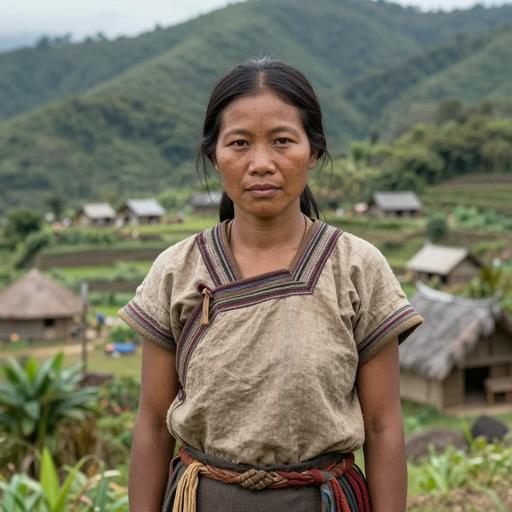
Los retratos son ilustraciones generadas con IA. Las etiquetas de muestra y los identificadores de acceso identifican los registros de referencia.

Retrato Muestra País Época Fecha Cultura mtDNA Coincidencia
Retrato ilustrativo de IA individual, Hanben. Blihun site, Taiwan (245-378 CE) generado con IA
Identificador de muestra: I3616
Taiwan Iron Age Taiwan 245-378 calCE (1745±20 BP, PSUAMS-7911) Taiwanese Iron B4b1a2 Subclado
Retrato ilustrativo de Historical individual, Northeast Borneo. Sabah. Kinabatagan, Malaysia (1,505-1,653 CE) generado con IA
Identificador de muestra: Ma555
Malaysia Malaysia Historical 1505-1653 calCE (299±23 BP, OxA-35072) Historical Malaysian B4b1a2 Subclado
MATERNAL LINAJE · ADN ANTIGUO

Mapa de pruebas de linajes antiguos

Sigue los clados superiores hasta esta rama y explora dónde se encontraron portadores antiguos.

Cargando observaciones antiguas...

Los marcadores son ubicaciones de hallazgos arqueológicos. Una línea discontinua representa una transición geográfica propuesta e incierta entre ramas consecutivas, apoyada en varias observaciones fechadas; no es una ruta de viaje exacta, un lugar de nacimiento ni una prueba de descendencia directa. Las muestras del clado parental pueden pertenecer a otras ramas descendientes. Se mantienen huecos cuando las pruebas son insuficientes. Las fechas de las muestras son distintas de las fechas de formación de los haplogrupos.

Perfil de referencia

Mapa de distribución de portadores

Distribución geográfica de muestras de ADN antiguo (2), portadores directos o de subclados de B4B1A

Portador de un subclado
Filtro de periodo temporal
Todos los periodos
Mostrando todas las muestras
Perfil de referencia

Distribución temporal

Distribución de portadores por periodos arqueológicos

Perfil de referencia

Distribución geográfica

Recuentos por país registrado de las muestras. Reflejan la selección de referencia disponible, no frecuencias de población.

Perfil de referencia

Distribución por país y época

Compara los recuentos de muestras registradas por países y periodos arqueológicos. Selecciona una celda con datos para examinar una muestra.

Datos

Datos y procedencia

Información sobre las fuentes y la calidad de los datos

Última actualización 2026-02-16
Puntuación de confianza 50/100
Cobertura Low

Fuente de datos

La clasificación, las fechas estimadas y el contexto geográfico reflejan los datos de referencia registrados y pueden cambiar al revisarse las pruebas. La cobertura de muestras es desigual; las ubicaciones registradas y las asociaciones arqueológicas no establecen el origen personal ni la identidad cultural.