Saltar al contenido principal
mtDNA · Materno linaje

K1A8

mtDNA Haplogroup K1A8

Un perfil de referencia de una rama de linaje. Compartir haplogrupos no demuestra una relación familiar ni una identidad cultural.

Perfil de referencia

Contexto de la rama

Contexto histórico de la rama de linaje mtDNA K1A8

Origins and Evolution

mtDNA haplogroup K1A8 is a downstream branch of haplogroup K1A, itself a derivative of mtDNA haplogroup K. K1A likely diversified in the Near East / Anatolia during the Late Glacial to Early Holocene and became an important maternal lineage among populations that participated in early Neolithic expansions. K1A8 probably arose several thousand years after the initial K1A diversification — plausibly in the Neolithic or early post-Neolithic period (estimated here around ~7 kya) — as part of the regional diversification of maternal lineages within farming communities.

Like other K1A subclades, K1A8 is defined by a combination of control-region and coding-region mutations within the broader K1A motif; its pattern of diversity and geographic distribution indicate a Near Eastern origin followed by dispersal into Europe with agricultural expansions and later local founder events.

Subclades (if applicable)

K1A8 sits beneath K1A in the mtDNA phylogeny and may itself carry minor internal diversification visible in high-resolution sequencing studies, but it is typically treated as a relatively small, well-defined branch. When high-coverage mitogenomes are available, K1A8 can be split into finer sub-branches in specific regional samples (for example, island or community-specific variants), reflecting local founder effects. Because sampling density and naming conventions vary between studies, some downstream variants of K1A8 appear as locality-specific lineages in Mediterranean or Jewish population datasets.

Geographical Distribution

K1A8 shows a distribution consistent with Near Eastern origin and Neolithic dispersal into the Mediterranean and parts of Europe. It is observed at highest relative frequencies in populations with strong historical connections to Anatolia and the Levant, and at moderate-to-low frequencies across Southern Europe (Iberia, Italy, Greece), Mediterranean islands (including Sardinia and some Aegean islands), and in Ashkenazi Jewish maternal pools where specific founder lineages of K subclades are well documented. Low-level presence has been reported in parts of Western and Northern Europe, the Caucasus, coastal North Africa (where Near Eastern gene flow is prevalent), and occasionally in Central Asia as a consequence of later historical contacts.

The geographic pattern — concentration in the eastern Mediterranean with thinning westward and scattered pockets in Europe and North Africa — matches expectations for a lineage that expanded with Neolithic farmers and underwent later founder effects and local drift.

Historical and Cultural Significance

K1A8 participates in several historically important demographic processes:

  • Neolithic spread of farming: As a K1A descendant, K1A8 likely rode the movement of early farmers from Anatolia into Europe, contributing maternal lineages to early Neolithic communities such as those related to the LBK horizon.
  • Founder effects and community structure: The presence of K1A8 in Ashkenazi Jewish samples and in island/isolated Mediterranean populations points to later founder events and genetic drift amplifying its frequency locally. In such contexts, K1A8 lineages can serve as markers of historical bottlenecks or endogamous community histories.
  • Cultural intersections: The distribution across Anatolia, the Levant, and Mediterranean Europe links K1A8 to a string of archaeological and historical cultures associated with agriculture, maritime exchange, and later historical movements across the Mediterranean basin.

Conclusion

mtDNA K1A8 is a Neolithic/post-Neolithic maternal lineage rooted in the Near East/Anatolia that spread into the Mediterranean and parts of Europe with farming populations and was later subject to localized founder effects (notably within Ashkenazi Jewish maternal lineages and isolated island communities). While not one of the most frequent European mtDNA clades overall, K1A8 provides useful insights into maternal ancestry, Neolithic demographic expansions, and community-specific histories when present in population or individual mitogenomes.

Puntos clave

  • Origins and Evolution
  • Subclades (if applicable)
  • Geographical Distribution
  • Historical and Cultural Significance
  • Conclusion
Perfil de referencia

Árbol y relaciones

Contexto filogenético y subclados

Trayectoria evolutiva

Sigue las ramas superiores registradas hasta K1A8. Las fechas son estimaciones y pueden cambiar al revisarse los datos de referencia.

Pasos Haplogrupo Antigüedad estimada Época arqueológica Tiempo transcurrido Subclados inmediatos Portadores modernos analizados Referencias antiguas
1 K1A8 Actual ~7,000 years ago Neolithic 7,000 years 2 0 0
2 K1A ~12,000 years ago Neolithic 12,000 years 20 770 358
3 K1 ~13,000 years ago Mesolithic 13,000 years 8 1,405 116
4 K ~16,000 years ago Mesolithic 16,000 years 4 1,769 55
5 U8B ~30,000 years ago Paleolithic 30,000 years 2 1,805 1
6 U8B'C - - - 2 1,834 0
7 U8 ~45,000 years ago Paleolithic 45,000 years 2 1,873 5
8 U2'3'4'7'8'9 - - - 5 3,500 0
9 U ~46,000 years ago Paleolithic 46,000 years 5 5,557 110
10 R ~55,000 years ago Paleolithic 55,000 years 17 22,830 57
11 NA - - - 1 22,830 0
12 N ~60,000 years ago Paleolithic 60,000 years 16 26,150 13
13 L3 ~70,000 years ago Paleolithic 70,000 years 7 30,162 6
14 L3'4 - - - 2 30,212 0
15 L3'4'6 - - - 2 30,216 0
16 L2'3'4'6 - - - 2 31,333 0
17 L2'3'4'5'6'7 - - - 2 31,349 0
18 L1'2'3'4'5'6'7 - - - 2 31,852 0
19 L ~160,000 years ago Paleolithic 160,000 years 2 32,236 5
Perfil de referencia

En el mundo

Distribución geográfica y presencia moderna

Origen registrado

Near East / Anatolia

Distribución moderna

The populations where mtDNA haplogroup K1A8 is found include:

  1. Ashkenazi Jewish communities
  2. Anatolian (modern Turkey) populations
  3. European Early Neolithic farmer-descended populations (e.g., Central European LBK-descendants)
  4. Southern European populations (Iberia, Italy, Greece, Mediterranean islands such as Sardinia)
  5. Western and Northern European populations (British Isles, Scandinavia) at moderate to low frequencies
  6. Caucasus populations (Armenians, Georgians)
  7. North African coastal groups with Near Eastern admixture
  8. Iranian and Levantine populations
  9. Island and isolated Mediterranean populations (e.g., Sardinians, some Aegean islands)
  10. Small but detectable frequencies in parts of Central Asia due to historical west–east contacts
Contexto histórico

Una rama a través del tiempo

Formación estimada en una cronología histórica amplia. Los marcadores temporales aportan contexto y no implican relación con culturas concretas.

  1. ~10k años de antigüedad

    Revolución neolítica

    Inicio de la agricultura y formación de comunidades sedentarias

  2. ~7k años de antigüedad

    Haplogrupo K1A8

    Formación estimada de esta rama de mtDNA; las fechas y ubicaciones son estimaciones de referencia.

    Esta rama
  3. ~5k años de antigüedad

    Edad del Bronce

    Metalurgia, escritura y primeras civilizaciones

  4. ~3k años de antigüedad

    Edad del Hierro

    Herramientas de hierro y ampliación de redes comerciales

  5. ~2.5k años de antigüedad

    Antigüedad clásica

    Desarrollo de las civilizaciones griega y romana

  6. Actualidad

    Actualidad

    Época moderna

Perfil de referencia

Contexto arqueológico

Asociaciones arqueológicas registradas para la rama mtDNA K1A8

Asociaciones registradas

Estas etiquetas describen contextos arqueológicos registrados para las muestras de referencia enlazadas a K1A8. Una asociación no demuestra que todos los portadores pertenecieran a una cultura ni siguieran una ruta migratoria concreta.

Alföld Linear Pottery Anatolian Neolithic Çayönü Culture Hajji Firuz Linear Pottery Linear Pottery Culture Nea Nikomedeia Culture PPNA
Las atribuciones culturales se basan en el contexto arqueológico de las muestras de ADN antiguo y pueden representar asociaciones regionales de periodos concretos.
Perfil de referencia

Catálogo de muestras

4 portadores de subclados del haplogrupo K1A8 (sin portadores directos en la selección de referencia actual)

4 mostradas · 4 muestras coincidentes

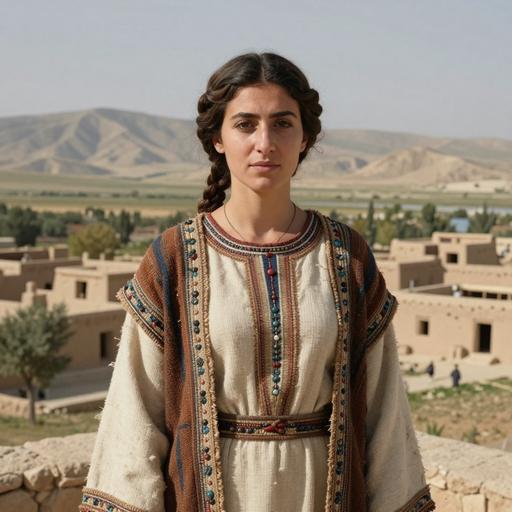
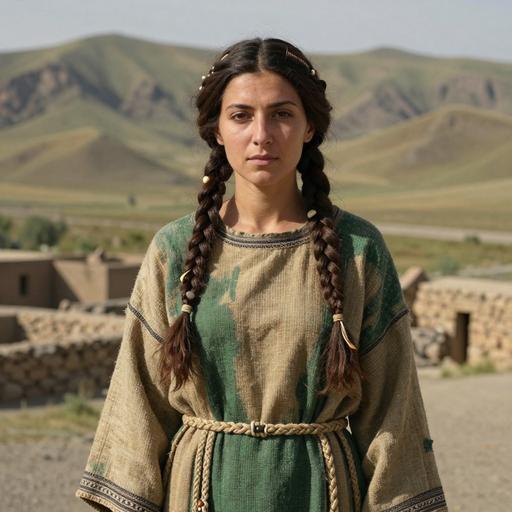
Los retratos son ilustraciones generadas con IA. Las etiquetas de muestra y los identificadores de acceso identifican los registros de referencia.

Retrato Muestra País Época Fecha Cultura mtDNA Coincidencia
Retrato ilustrativo de Avar individual, Mödling-An der Goldenen Stiege (Lower Austria, Mödling District), Austria (639-811 CE) generado con IA
Identificador de muestra: MGS200
Austria Austria Avar 650-800 CE Austria_Avar K1a8b Subclado
Retrato ilustrativo de Ancient Near Eastern Civilization individual, Malatya Province. Arslantepe, Turkey (3,347-3,092 BCE) generado con IA
Identificador de muestra: ART026
Turkey Late Chalcolithic Turkey 3347-3092 calBCE (4491±26 BP, MAMS-33549) Late Anatolian Chalcolithic K1a8b Subclado
Retrato ilustrativo de Ancient Near Eastern Civilization individual, Areni 1, Armenia (4,236-3,994 BCE) generado con IA
Identificador de muestra: I1632
Armenia Armenia C 4236 BCE - 3994 BCE Chalcolithic Armenian K1a8c Subclado
Retrato ilustrativo de Ancient Near Eastern Civilization individual, Areni 1, Armenia (4,311-4,049 BCE) generado con IA
Identificador de muestra: I1631
Armenia Armenia C 4311-4049 calBCE (5323±30 BP, OxA-19332) Chalcolithic Armenian K1a8c Subclado
MATERNAL LINAJE · ADN ANTIGUO

Mapa de pruebas de linajes antiguos

Sigue los clados superiores hasta esta rama y explora dónde se encontraron portadores antiguos.

Cargando observaciones antiguas...

Los marcadores son ubicaciones de hallazgos arqueológicos. Una línea discontinua representa una transición geográfica propuesta e incierta entre ramas consecutivas, apoyada en varias observaciones fechadas; no es una ruta de viaje exacta, un lugar de nacimiento ni una prueba de descendencia directa. Las muestras del clado parental pueden pertenecer a otras ramas descendientes. Se mantienen huecos cuando las pruebas son insuficientes. Las fechas de las muestras son distintas de las fechas de formación de los haplogrupos.

Perfil de referencia

Mapa de distribución de portadores

Distribución geográfica de muestras de ADN antiguo (4), portadores directos o de subclados de K1A8

Portador de un subclado
Filtro de periodo temporal
Todos los periodos
Mostrando todas las muestras
Perfil de referencia

Distribución temporal

Distribución de portadores por periodos arqueológicos

Perfil de referencia

Distribución geográfica

Recuentos por país registrado de las muestras. Reflejan la selección de referencia disponible, no frecuencias de población.

Perfil de referencia

Distribución por país y época

Compara los recuentos de muestras registradas por países y periodos arqueológicos. Selecciona una celda con datos para examinar una muestra.

Datos

Datos y procedencia

Información sobre las fuentes y la calidad de los datos

Última actualización 2026-02-16
Puntuación de confianza 50/100
Cobertura Low

Fuente de datos

La clasificación, las fechas estimadas y el contexto geográfico reflejan los datos de referencia registrados y pueden cambiar al revisarse las pruebas. La cobertura de muestras es desigual; las ubicaciones registradas y las asociaciones arqueológicas no establecen el origen personal ni la identidad cultural.