Saltar al contenido principal
mtDNA · Materno linaje

M1A1F

mtDNA Haplogroup M1A1F

Un perfil de referencia de una rama de linaje. Compartir haplogrupos no demuestra una relación familiar ni una identidad cultural.

Perfil de referencia

Contexto de la rama

Contexto histórico de la rama de linaje mtDNA M1A1F

Origins and Evolution

mtDNA haplogroup M1A1F is a derived branch of the M1A1 clade, itself a Holocene offshoot of the older Asian-derived M1 lineage that expanded into Northeast Africa. Given the established origin of M1A1 in the Horn/Nile corridor around the early Holocene (~10 kya) and the phylogenetic position of M1A1F as a subclade, M1A1F most plausibly arose in the Late Neolithic to Early Bronze Age period (on the order of a few thousand years ago). Its emergence is best interpreted as part of localized maternal diversification within Northeast Africa during a period of regional population growth and mobility associated with climatic amelioration and the spread of pastoralist lifeways.

Substantial uncertainty remains around the precise date for M1A1F because deep calibration of mtDNA mutation rates and sparse ancient DNA sampling in some parts of Africa produce wide confidence intervals; however, coalescence in the 3–6 kya range is compatible with its placement under M1A1 and observed modern distribution.

Subclades

At present, M1A1F appears to be a relatively specific terminal or near-terminal branch within M1A1 in published and curated mtDNA datasets; there are limited or few well-characterized downstream subclades attributed specifically to M1A1F in the public literature. As with many Holocene mitochondrial lineages in Africa, additional whole-mitogenome sequencing and broader geographic sampling could reveal further internal structure or sublineages.

Geographical Distribution

The distribution of M1A1F mirrors the core range of other M1A1 derivatives but is generally most concentrated in the Horn of Africa and the Nile corridor. Modern occurrences are observed at highest relative frequency among populations of Ethiopia, Eritrea, Somalia and adjacent Nile-valley groups (Egyptians, certain Sudanese communities). Lower-frequency occurrences extend westward into North African Berber-speaking groups and the Maghreb, southward into eastern African pastoralist groups, and northeastward into the Levant and Arabian Peninsula at trace levels; sporadic low-frequency detections also occur in southern European Mediterranean populations due to historical trans-Mediterranean contacts.

Ancient DNA evidence for M1A1F specifically is limited; however, M1 and M1A-type lineages have been recovered from archaeological contexts in North Africa and the Nile corridor, supporting a Holocene presence in these regions.

Historical and Cultural Significance

Because M1A1F is nested within a lineage associated with Holocene expansions in Northeast Africa, it is plausibly tied to demographic processes that include the spread and consolidation of Afroasiatic-speaking populations, the development of pastoral economies in eastern Africa, and later Nile corridor population interactions (Bronze/Iron Age states and historical-period movements). The haplogroup's presence in both Horn populations and North African groups at lower frequencies is consistent with long-term gene flow along the Nile and across the Red Sea and Mediterranean littorals.

M1A1F should not be taken as a marker of any single archaeological culture; rather, it represents maternal ancestry that participated in multiple cultural contexts over the last several thousand years, from pastoralist communities in eastern Africa to more complex Nile-valley societies and historical-era trans-Mediterranean networks.

Conclusion

M1A1F is a geographically focused mitochondrial subclade of M1A1 reflecting Holocene maternal diversification in Northeast Africa, particularly the Horn and Nile corridor. Its current apparent concentration in eastern Africa with low-level wider dispersal fits a model of regional expansion and mobility tied to pastoralist and later historical movements; fuller resolution of its history will require denser whole-mitogenome sampling and additional ancient DNA from the relevant regions and time depths.

Puntos clave

  • Origins and Evolution
  • Subclades
  • Geographical Distribution
  • Historical and Cultural Significance
  • Conclusion
Perfil de referencia

Árbol y relaciones

Contexto filogenético y subclados

Trayectoria evolutiva

Sigue las ramas superiores registradas hasta M1A1F. Las fechas son estimaciones y pueden cambiar al revisarse los datos de referencia.

Pasos Haplogrupo Antigüedad estimada Época arqueológica Tiempo transcurrido Subclados inmediatos Portadores modernos analizados Referencias antiguas
1 M1A1F Actual ~4,000 years ago Bronze Age 4,500 years 0 9 2
2 M1A1 ~10,000 years ago Neolithic 10,000 years 2 22 0
3 M1A ~15,000 years ago Mesolithic 15,000 years 1 25 1
4 M1 ~26,000 years ago Paleolithic 26,000 years 2 100 3
5 M1'20'51 - - - 3 105 0
6 M ~60,000 years ago Paleolithic 60,000 years 42 2,671 41
7 L3 ~70,000 years ago Paleolithic 70,000 years 7 30,162 6
8 L3'4 - - - 2 30,212 0
9 L3'4'6 - - - 2 30,216 0
10 L2'3'4'6 - - - 2 31,333 0
11 L2'3'4'5'6'7 - - - 2 31,349 0
12 L1'2'3'4'5'6'7 - - - 2 31,852 0
13 L ~160,000 years ago Paleolithic 160,000 years 2 32,236 5

Subclados (0)

Rama terminal: no hay subclados registrados

Ramas hermanas (1)

Otras ramas del mismo haplogrupo superior

Perfil de referencia

En el mundo

Distribución geográfica y presencia moderna

Origen registrado

Northeast Africa / Horn of Africa

Distribución moderna

The populations where mtDNA haplogroup M1A1F is found include:

  1. Horn of Africa populations (Ethiopians, Eritreans, Somalis, Oromo)
  2. Egyptians and Nile Valley populations (northern Sudanese, Nubian groups)
  3. Berber-speaking groups of North Africa (Morocco, Algeria, Tunisia, Libya) at lower frequency
  4. Levantine and Arabian Peninsula populations (low to trace frequencies)
  5. Mediterranean populations at low frequency (southern Italy, Sicily, parts of the Iberian Peninsula)
  6. Jewish communities with North African / Middle Eastern ancestry (Sephardi, Mizrahi) in some samples
  7. Eastern African pastoralist groups in the broader Horn corridor
  8. Scattered individuals in broader Near Eastern and historical-period European samples
  9. Limited occurrences or related lineages in North African archaeological remains attributed to Holocene contexts
  10. Sporadic detections in island populations of the Atlantic / Mediterranean arising from historical mobility
Contexto histórico

Una rama a través del tiempo

Formación estimada en una cronología histórica amplia. Los marcadores temporales aportan contexto y no implican relación con culturas concretas.

  1. ~10k años de antigüedad

    Revolución neolítica

    Inicio de la agricultura y formación de comunidades sedentarias

  2. ~5k años de antigüedad

    Edad del Bronce

    Metalurgia, escritura y primeras civilizaciones

  3. ~4.5k años de antigüedad

    Haplogrupo M1A1F

    Formación estimada de esta rama de mtDNA; las fechas y ubicaciones son estimaciones de referencia.

    Esta rama
  4. ~3k años de antigüedad

    Edad del Hierro

    Herramientas de hierro y ampliación de redes comerciales

  5. ~2.5k años de antigüedad

    Antigüedad clásica

    Desarrollo de las civilizaciones griega y romana

  6. Actualidad

    Actualidad

    Época moderna

Perfil de referencia

Contexto arqueológico

Asociaciones arqueológicas registradas para la rama mtDNA M1A1F

Asociaciones registradas

Estas etiquetas describen contextos arqueológicos registrados para las muestras de referencia enlazadas a M1A1F. Una asociación no demuestra que todos los portadores pertenecieran a una cultura ni siguieran una ruta migratoria concreta.

ANATOLIAN_BRONZE_AGE Austria_Avar Bell Beaker Elmenteitan Culture Indonesian Hunter-Gatherer Culture North African Neolithic Pastoral Neolithic Pre-Nuragic Culture Third Intermediate
Las atribuciones culturales se basan en el contexto arqueológico de las muestras de ADN antiguo y pueden representar asociaciones regionales de periodos concretos.
Perfil de referencia

Catálogo de muestras

2 portadores directos del haplogrupo M1A1F

2 mostradas · 2 muestras coincidentes

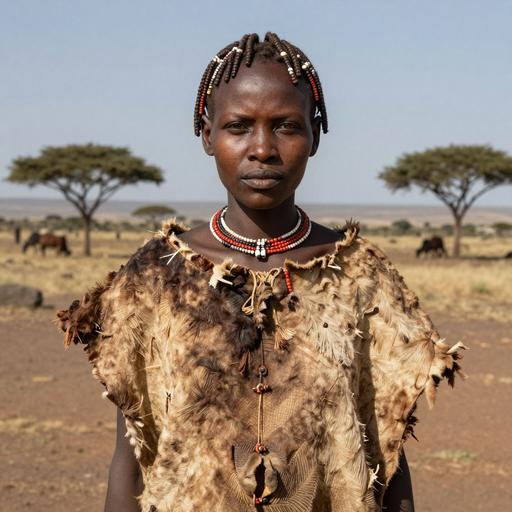
Los retratos son ilustraciones generadas con IA. Las etiquetas de muestra y los identificadores de acceso identifican los registros de referencia.

Retrato Muestra País Época Fecha Cultura mtDNA Coincidencia
Retrato ilustrativo de Nilotic individual, Laikipia. Kisima Farm. KFR-A5/Porcupine Cave, Kenya (898-800 BCE) generado con IA
Identificador de muestra: I8820
Kenya Kenya PastoralN 898 BCE - 800 BCE Pastoral Neolithic M1a1f Direct
Retrato ilustrativo de Africa East Pastoralist individual, Laikipia. Kisima Farm. KFR-A5/Porcupine Cave, Kenya (898-800 BCE) generado con IA
Identificador de muestra: I8820
Kenya Pastoralist Societies in East Africa 898 BCE - 800 BCE M1a1f Direct
MATERNAL LINAJE · ADN ANTIGUO

Mapa de pruebas de linajes antiguos

Sigue los clados superiores hasta esta rama y explora dónde se encontraron portadores antiguos.

Cargando observaciones antiguas...

Los marcadores son ubicaciones de hallazgos arqueológicos. Una línea discontinua representa una transición geográfica propuesta e incierta entre ramas consecutivas, apoyada en varias observaciones fechadas; no es una ruta de viaje exacta, un lugar de nacimiento ni una prueba de descendencia directa. Las muestras del clado parental pueden pertenecer a otras ramas descendientes. Se mantienen huecos cuando las pruebas son insuficientes. Las fechas de las muestras son distintas de las fechas de formación de los haplogrupos.

Perfil de referencia

Mapa de distribución de portadores

Distribución geográfica de muestras de ADN antiguo (2), portadores directos o de subclados de M1A1F

Portador directo
Filtro de periodo temporal
Todos los periodos
Mostrando todas las muestras
Perfil de referencia

Distribución temporal

Distribución de portadores por periodos arqueológicos

Perfil de referencia

Distribución geográfica

Recuentos por país registrado de las muestras. Reflejan la selección de referencia disponible, no frecuencias de población.

Perfil de referencia

Distribución por país y época

Compara los recuentos de muestras registradas por países y periodos arqueológicos. Selecciona una celda con datos para examinar una muestra.

Datos

Datos y procedencia

Información sobre las fuentes y la calidad de los datos

Última actualización 2026-02-16
Puntuación de confianza 50/100
Cobertura Low

Fuente de datos

La clasificación, las fechas estimadas y el contexto geográfico reflejan los datos de referencia registrados y pueden cambiar al revisarse las pruebas. La cobertura de muestras es desigual; las ubicaciones registradas y las asociaciones arqueológicas no establecen el origen personal ni la identidad cultural.