Contexto de la rama
Contexto histórico de la rama de linaje mtDNA X
Haplogroup X is a mitochondrial DNA (mtDNA) haplogroup that is maternally inherited and provides important insights into ancient human migration patterns. Unlike many other haplogroups, haplogroup X is relatively rare but has a wide and somewhat scattered distribution, appearing in populations in Europe, the Near East, North Africa, Central Asia, Siberia, and even among some Native American populations. Haplogroup X is a descendant of the major haplogroup N and diverged early, making it significant for understanding ancient human dispersals, particularly out of the Near East and across Eurasia.
Origin and Evolution
Haplogroup X is estimated to have originated approximately 20,000 to 30,000 years ago, likely in the Near East or West Asia. It emerged from haplogroup N, one of the main lineages that left Africa during the Out of Africa migration, around 60,000 to 70,000 years ago. Haplogroup X diverged early and spread widely during the Upper Paleolithic, contributing to the maternal ancestry of various populations across Eurasia and North America.
Unlike many haplogroups, which have regionally specific subclades, haplogroup X's geographic distribution is more scattered, suggesting that it played a role in some of the earliest human migrations out of the Near East.
Subclades of Haplogroup X
Haplogroup X has several important subclades, with X1 and X2 being the most prominent:
X1: Found primarily in North Africa, the Near East, and parts of East Africa, X1 is rarer and more geographically restricted compared to X2.
X2: This is the more widespread subclade, found in Europe, Central Asia, Siberia, and North America. X2 itself has several sub-branches, some of which are significant for understanding human migrations into the Americas.
Geographic Distribution and Significance
Europe
Haplogroup X2 is present at low frequencies across Europe, with concentrations in Western Europe and Eastern Europe. Its distribution suggests that it may have been part of early migrations into Europe during the Upper Paleolithic and later movements of people during the Neolithic and Bronze Age periods. However, haplogroup X is relatively rare compared to other European haplogroups like H or U.
Near East
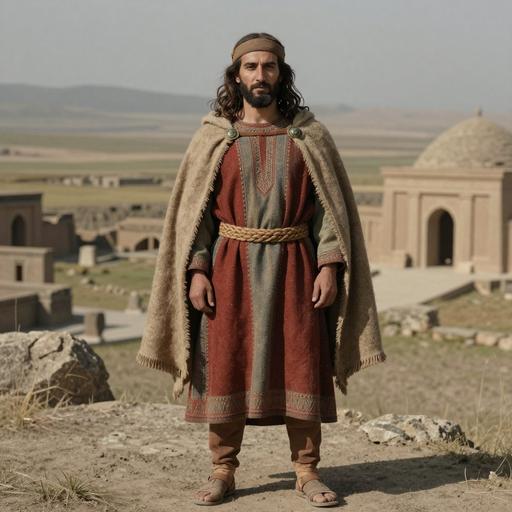
The Near East is considered one of the likely origins of haplogroup X. Both X1 and X2 are found in populations in countries such as Lebanon, Israel, Syria, and Turkey. The presence of haplogroup X in the Near East is important for understanding early human migrations into Europe and Asia from this key migratory hub.
North Africa
Haplogroup X1 is found in North Africa, particularly among Berber populations in Morocco, Algeria, and Tunisia. The presence of X1 in North Africa may reflect ancient migrations between the Near East and North Africa, facilitated by the Mediterranean as a historical crossroads for human movement.
Central Asia and Siberia
Haplogroup X2 is found at low frequencies in Central Asia and Siberia. Its presence in these regions may reflect ancient migratory routes through the Eurasian steppe, particularly as populations moved between the Near East, Europe, and Asia during the Upper Paleolithic and subsequent periods. The connection between X2 and ancient Siberian populations is also crucial for understanding the peopling of the Americas.
Native American Populations
One of the most fascinating aspects of haplogroup X is its presence among Native American populations, particularly in North America. Subclades of X2 have been identified in Native American groups such as the Ojibwa and Navajo. Haplogroup X is rare among Native American populations, where most mitochondrial lineages belong to haplogroups A, B, C, and D, which originated in East Asia.
The presence of haplogroup X in North America is significant because it is not found in East Asia, suggesting that it may represent an ancient migration to the Americas from a different source, possibly from Siberia via the Bering Land Bridge around 15,000 to 20,000 years ago. The discovery of haplogroup X in Native American populations has led to various hypotheses about the early peopling of the Americas.
Role in Human Migration
Haplogroup X plays an important role in tracing early human migrations, particularly between the Near East, Europe, Central Asia, and the Americas.
Paleolithic Migrations
The origin of haplogroup X is tied to Paleolithic migrations, which occurred tens of thousands of years ago. Its presence in Europe, the Near East, and Central Asia suggests that it was part of the early waves of modern human expansion into Eurasia. As one of the descendants of haplogroup N, haplogroup X may have been carried by some of the earliest populations moving into these regions.
Neolithic and Bronze Age Movements
Haplogroup X also played a role in later migrations, such as those during the Neolithic period, when early farming communities expanded out of the Near East into Europe. The spread of agriculture across Europe, known as the Neolithic Revolution, likely facilitated the dispersal of haplogroup X in European populations. It may have also spread further during the Bronze Age, as trade routes and migrations connected Europe, Central Asia, and the Near East.
Migration to the Americas
Haplogroup X2 is particularly important for understanding the migration of humans into the Americas. The presence of haplogroup X in Native American populations has prompted researchers to explore alternative migratory routes into the Americas, beyond the typical East Asian-derived haplogroups. The prevailing hypothesis is that a small population carrying haplogroup X2 may have migrated from Siberia into North America via the Bering Land Bridge during the late Pleistocene, contributing to the maternal ancestry of some Native American groups.
Ancient DNA and Archaeological Evidence
Ancient DNA studies have identified haplogroup X in human remains from prehistoric populations in Europe, the Near East, and the Americas. These findings help map the ancient distribution of haplogroup X and its role in human migration.
- In Europe, haplogroup X has been detected in Paleolithic and Neolithic remains, indicating its early presence in European populations.
- In the Near East, ancient DNA studies have found haplogroup X in remains from early farming communities, suggesting that it was part of the Neolithic migration into Europe.
- In North America, haplogroup X has been found in ancient Native American remains, supporting the hypothesis that it was part of the early migrations into the Americas from Siberia.
Modern Distribution and Frequency
Haplogroup X is relatively rare globally, but it has a widespread and somewhat patchy distribution:
- Europe: Haplogroup X occurs at low frequencies in Western and Eastern Europe, with higher concentrations in Iceland, Finland, and Scandinavia.
- Near East: X is more common in the Near East, particularly in Lebanon, Turkey, and Israel.
- North Africa: X1 is found among Berber populations in Morocco, Algeria, and Tunisia.
- Central Asia and Siberia: Haplogroup X is present at low frequencies in Kazakhstan, Uzbekistan, and Siberia.
- North America: Subclades of X2 are found in Native American populations, particularly among the Ojibwa and Navajo in North America.
Genetic and Evolutionary Significance
Haplogroup X is significant for understanding the deep history of human migrations, particularly in the Near East, Europe, and North America. Its presence in both the Old World and the New World provides clues about the early movements of humans across Eurasia and into the Americas. Its rare but wide distribution makes haplogroup X important for studying the complex history of human settlement and migration.
Conclusion
Haplogroup X is a mitochondrial DNA lineage with deep historical roots in the Near East and a scattered but significant presence in Europe, Central Asia, North Africa, and North America. Originating around 20,000 to 30,000 years ago, haplogroup X played a role in some of the earliest human migrations out of the Near East and across Eurasia. Its presence among Native American populations highlights its importance in the early peopling of the Americas, contributing to the maternal ancestry of some Indigenous groups.
Though relatively rare compared to other haplogroups, haplogroup X provides valuable insights into ancient human migrations and the complex history of human populations across the globe. Its role in connecting the Near East, Europe, and North America makes it a key focus of research in population genetics and human prehistory.
Puntos clave
- Origin and Evolution
- Subclades of Haplogroup X
- Geographic Distribution and Significance
- Role in Human Migration
- Ancient DNA and Archaeological Evidence