Preparando el informe

Cargando la información y las referencias disponibles

Consultando el registro arqueológico...

Recopilando registros antiguos

Saltar al contenido principal
Agarak: Echoes of Early Medieval Armenia
Cultura destacada

Agarak: Echoes of Early Medieval Armenia

A small genetic and archaeological window into life in the Armenian highlands (1100–1379 CE).

1100 CE - 1379 CE
Agarak, Armenia (Caucasus)
3 Muestras antiguas
Desplázate para empezar
Capítulo I

La historia

Comprender la cultura Agarak: Echoes of Early Medieval Armenia

Archaeological deposits at Agarak, Armenia (1100–1379 CE) yield three ancient individuals whose mitochondrial DNA (U, R6b, T) offer a tentative glimpse into Early Medieval Armenian maternal lineages. Limited samples mean conclusions are preliminary; archaeological context suggests continuity and regional connections.

Time Period

1100–1379 CE

Region

Agarak, Armenia (Caucasus)

Common Y-DNA

Undetermined (no robust Y data; n=3, limited)

Common mtDNA

U, R6b, T (each observed once; n=3)

Capítulo II

Cronología

Momentos clave de la historia de esta cultura

1100 CE

Agarak burials (archaeological context)

Burial contexts at Agarak yielding the three sampled individuals are dated to the Early Medieval period, anchoring genetic data between 1100–1379 CE.

Capítulo III

Origins & Emergence

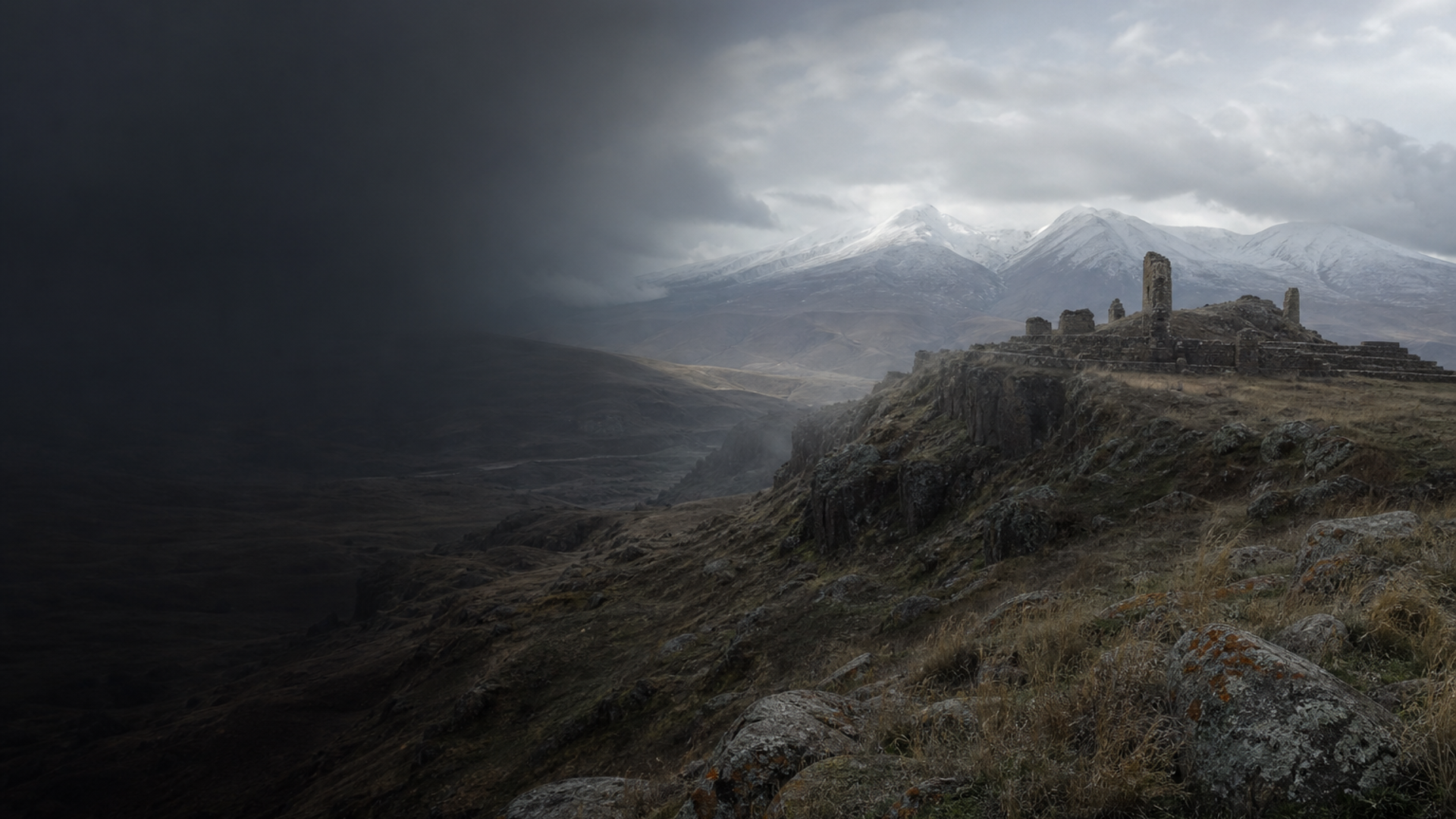
Beneath the high, wind-swept terraces around Agarak lie traces of communities that lived through a turbulent medieval landscape. Archaeological data indicates funerary activity and settlement layers dated between 1100 and 1379 CE, a period when the Armenian highlands were a crossroads of local polities and transregional pressures. The material record at Agarak — funerary contexts, scattered domestic debris and architecture typical of Early Medieval Armenia — paints a picture of resilient rural lifeways.

Limited evidence suggests these communities persisted through waves of political change rather than being entirely replaced. The three sampled individuals come from that same chronological window and therefore capture only a narrow slice of population history. With only three genomes, any reconstruction of demographic origins must be cautious: archaeological continuity at the site hints at local persistence, but broader patterns of mobility, trade and episodic migration across the Caucasus could also have introduced new lineages. The interplay of archaeological strata and radiocarbon-calibrated dates anchors these samples in a dynamic era when regional connections (by trade, marriage, or conflict) were plausible vectors of genetic exchange.

  • Agarak deposits dated 1100–1379 CE reflect Early Medieval occupation
  • Archaeology indicates local continuity within a dynamic regional context
  • Small sample size means origin hypotheses remain provisional
Capítulo IV

Daily Life & Society

Imagine a courtyard garden beside mudbrick walls, the smoke of hearths rising over terraced fields — such evocative scenes are reconstructed from the durable traces left in soil and pottery fragments. Archaeological indicators from Early Medieval Armenia suggest a mixed agrarian economy: cereal cultivation, pastoralism, and craft production connected villages to nearby market towns. Funerary practices at Agarak, as preserved in burials and associated grave goods, reflect social identities expressed through burial position, clothing accessories and occasionally imported objects, although the small excavation sample limits broad generalizations.

Seasonal rhythms and social networks likely structured life: kinship ties linked households, while long-distance contacts — merchants, pilgrims, or military movements — could intermittently reshape material culture. Environmental factors, such as mountain microclimates and water availability, influenced settlement patterns and mobility. Archaeology can reconstruct aspects of everyday practice, but when tied to genetics, even modest datasets provide a more intimate picture: maternal lineages recorded in mtDNA speak directly to family histories, migration events, and patterns of female mobility that are otherwise invisible in pottery sherds alone.

  • Rural agrarian lifeways with craft and market ties inferred from site finds
  • Burial practices at Agarak reflect household and possibly regional identities
Capítulo V

Genetic Profile

The genetic signal from Agarak is a fragile but evocative thread. Three individuals produced mitochondrial haplogroups U (n=1), R6b (n=1) and T (n=1). Haplogroup U is widespread across Eurasia in both ancient and modern populations and is consistent with deep maternal lineages present in the Caucasus and surrounding regions. Haplogroup T is likewise found in the Near East and the Caucasus and appears in many medieval and modern West Eurasian populations. R6b is relatively rare in published ancient West Eurasian datasets and has stronger associations in parts of South and Southwest Asia; its presence here may indicate long-range connections or under-sampled local diversity.

No robust Y-DNA signal is available from these three samples, so paternal lineages and patrilineal continuity cannot be assessed. Because the dataset is very small (n=3), any inference about population continuity, admixture, or migration must be regarded as preliminary. Archaeogenetic comparisons with larger medieval and modern Caucasus datasets could in future clarify whether these maternal lineages represent common local ancestries, sporadic immigrant lineages, or survival of older gene pools. For now, the data suggest a mosaic: persistent local maternal haplogroups alongside rarer lineages that hint at mobility across the broader Near East and South Caucasus.

  • mtDNA: U, R6b, T observed (each n=1); reflects maternal diversity
  • Y-DNA: undetermined in this small sample; patrilineal patterns unresolved
Capítulo VI

Legacy & Modern Connections

The mitochondrial lineages detected at Agarak offer tentative bridges to the present. Haplogroups U and T continue to be found among modern populations of the Caucasus and Anatolia, suggesting some degree of maternal continuity in the region through the medieval period into modernity. The rarer R6b lineage, observed once, cautions us that pockets of unexpected genetic diversity existed — perhaps reflecting individual travel, marriage ties, or under-sampled regional variation.

Because only three individuals were analyzed, these connections must be framed as hypotheses rather than firm genealogical threads. Future sampling across more graves at Agarak and comparative studies with contemporary Armenian and neighboring populations will be essential to assess whether these lineages represent local persistence, episodic influx, or both. Even in small numbers, ancient DNA humanizes the archaeological record: each haplotype is a voice from the past that, when joined by more data, will help compose a richer hymn to Armenia’s medieval peoples.

  • Some mtDNA lineages (U, T) align with haplogroups present in modern Caucasus populations
  • R6b’s rarity underscores the need for broader sampling to clarify regional connections
Capítulo VII

Catálogo de muestras

3 muestras de ADN antiguo asociadas con la cultura Agarak: Echoes of Early Medieval Armenia que aportan datos de referencia sobre las poblaciones de este periodo.

3 / 3 muestras
Retrato Muestra País Época Fecha Cultura Sexo ADN-Y ADNmt
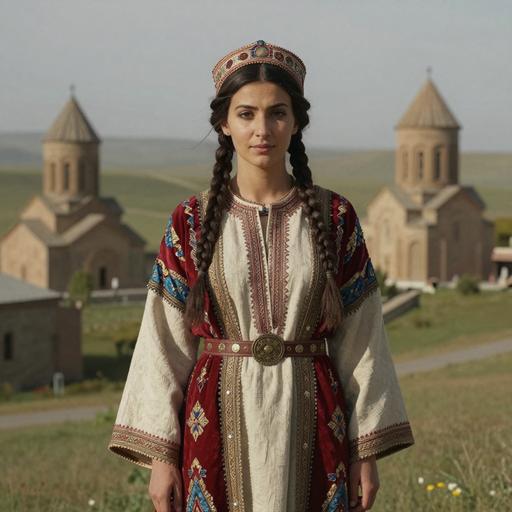
Retrato reconstruido de Agarak Town Stadium Medieval individual, Armenia
Agarak Town Stadium Medieval individual, Armenia
Armenia Armenia_EarlyMedieval 1100-1300 CE Byzantine Empire F - U3b1
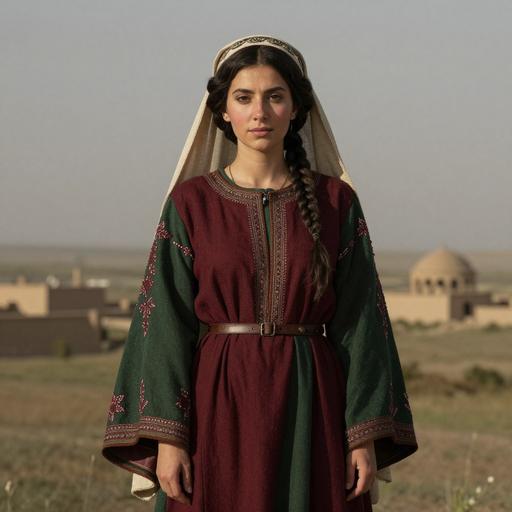
Retrato reconstruido de Agarak Town Stadium Medieval individual, Armenia
Agarak Town Stadium Medieval individual, Armenia
Armenia Armenia_EarlyMedieval 1100-1300 CE Byzantine Empire F - T
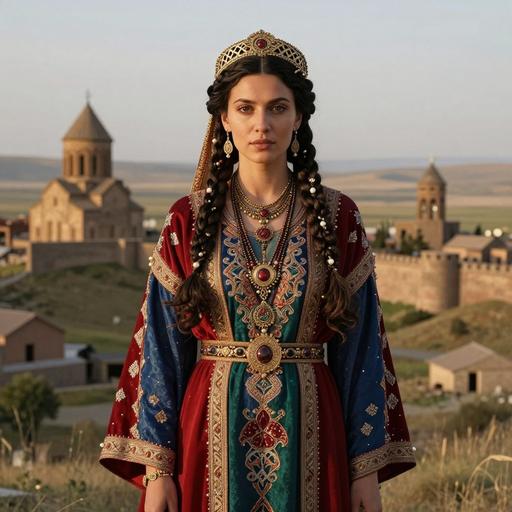
Retrato reconstruido de Agarak Town Stadium Medieval individual, Armenia
Agarak Town Stadium Medieval individual, Armenia
Armenia Armenia_EarlyMedieval 1271-1379 calCE (795±33 BP, OxA-31675) Byzantine Empire F - R6b
Con IA

Asistente de IA

Haz preguntas sobre la cultura Agarak: Echoes of Early Medieval Armenia

Asistente de IA por DNAGENICS

Desbloquear esta función
Pregunta sobre la cultura Agarak: Echoes of Early Medieval Armenia. El asistente con IA puede explicar hallazgos genéticos, contexto histórico, pruebas arqueológicas y conexiones modernas, con sus límites de interpretación.
Ejemplo de análisis con IA

La cultura Agarak: Echoes of Early Medieval Armenia representa un capítulo de la historia humana...

El análisis genético permite estudiar similitudes con poblaciones anteriores y posibles adaptaciones. Las muestras de ADN antiguo aportan información para investigar patrones migratorios y relaciones entre poblaciones, con límites que dependen del estudio y del contexto arqueológico.

Esta es una vista previa del análisis con IA. Accede al asistente completo para explorar información sobre:

  • Composición y similitud genética
  • Patrones migratorios y orígenes
  • Vida cotidiana y prácticas culturales
  • Contexto genético moderno

Explora más culturas antiguas

Descubre la historia de civilizaciones de distintas partes del mundo antiguo