Preparando el informe

Cargando la información y las referencias disponibles

Consultando el registro arqueológico...

Recopilando registros antiguos

Saltar al contenido principal
Amur River Foragers: Early Neolithic Voices
Cultura destacada

Amur River Foragers: Early Neolithic Voices

River-born communities at the dawn of the Neolithic in northeast China, seen through bones and genomes.

8175 CE - 6831 BCE
Amur River Basin, Heilongjiang, China
Desplázate para empezar
Capítulo I

La historia

Comprender la cultura Amur River Foragers: Early Neolithic Voices

Genomic and archaeological traces from four Early Neolithic individuals (8175–6831 BCE) in the Amur River Basin reveal a riverine forager tradition in northeast China. Limited samples point to varied maternal lineages and a single paternal P lineage; conclusions remain preliminary.

Time Period

8175–6831 BCE (Early Neolithic)

Region

Amur River Basin, Heilongjiang, China

Common Y-DNA

P (1 of 4)

Common mtDNA

D4m, R11, G, D (each 1 of 4)

Capítulo II

Cronología

Momentos clave de la historia de esta cultura

8000 BCE

Early Holocene occupation of the Amur basin

Archaeological evidence indicates seasonal riverine settlements exploiting fish and wetland plants; genetic samples from this period are few and preliminary.

Capítulo III

Origins & Emergence

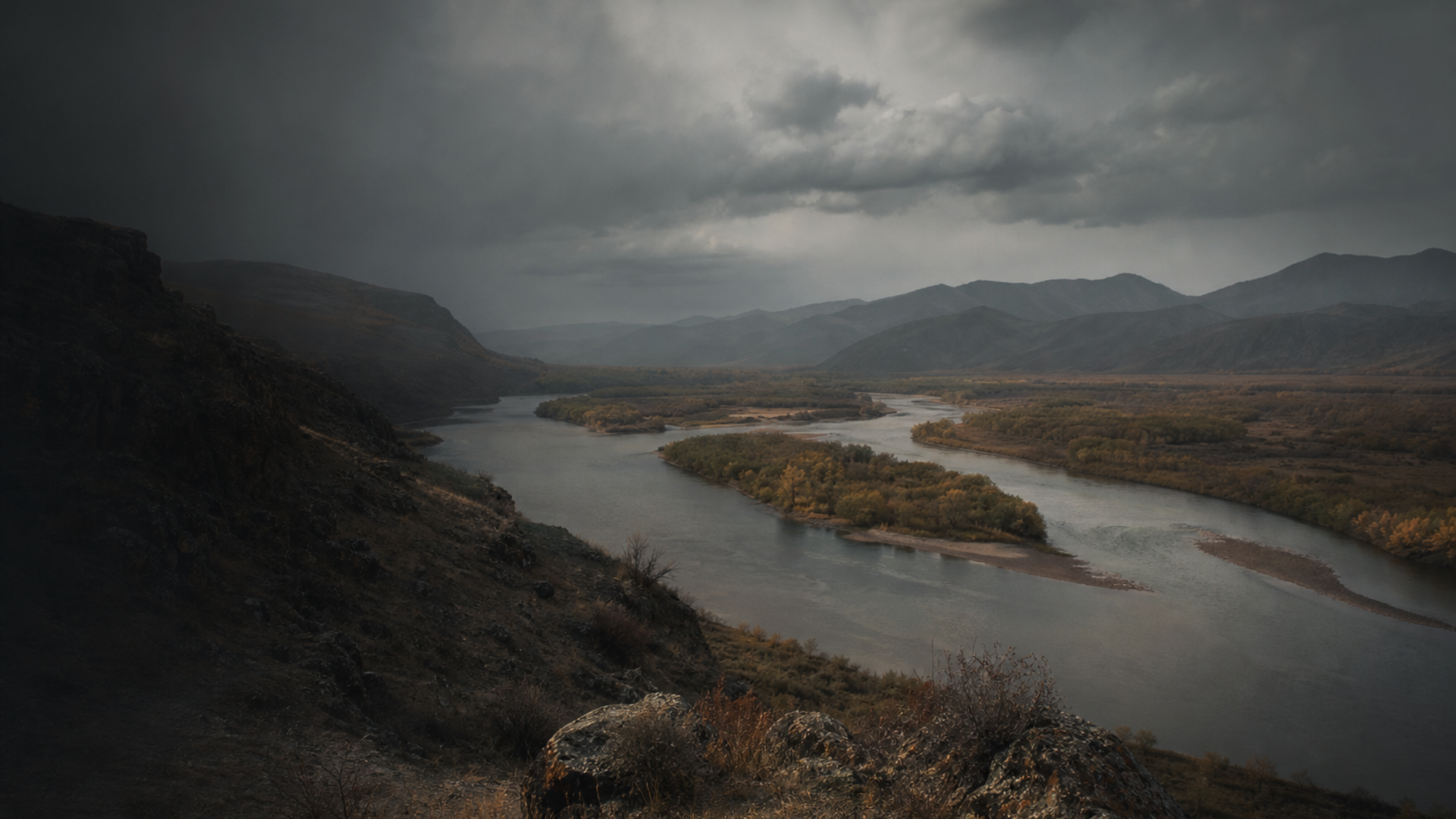
Carved into the cold, braided channels of the Amur River, Early Neolithic communities left faint but resonant traces. Radiocarbon dates for the four analyzed individuals cluster between 8175 and 6831 BCE, placing them in the Early Neolithic transition of northeast China during the early Holocene. Archaeological data indicates seasonal settlements along river terraces in the Amur Basin (modern Heilongjiang), where people exploited rich fisheries, wetland plants, and wild game as the landscapes warmed after the Last Glacial Maximum.

Material signatures in the region include lithic toolkits adapted for fishing and processing, occasional hearth features, and early low-fired ceramics in coeval contexts elsewhere in Northeast Asia — though direct co-occurrence with these four individuals is not consistently documented. Limited evidence suggests these communities practiced mobile, river-oriented lifeways rather than dense sedentary farming. Environmentally, rising riverine productivity created ecological niches that favored intensified hunting, fishing, and foraging strategies.

From a genetic perspective, the small sample set hints at demographic complexity. A single Y-chromosome lineage (P) and a diversity of maternal haplogroups (D4m, R11, G, D) suggest both paternal continuity and maternal heterogeneity. Archaeological indicators and the genetic snapshot together imply regional networks of related groups exploiting shared riverine resources, but the fragmentary nature of both material and genetic records means origins remain provisional and open to revision as more sites and genomes are sampled.

  • Dates: 8175–6831 BCE; Early Neolithic, Early Holocene
  • Setting: Amur River Basin, Heilongjiang province (northeast China)
  • Lifestyle: Riverine foraging with seasonal mobility; limited evidence for early agriculture
Capítulo IV

Daily Life & Society

Imagine a shoreline at dawn: smoke rising from simple hearths, nets hauled ashore, flakes of stone glinting as tools are resharpened. Archaeological contexts in the Amur Basin reveal a subsistence world organized around the river. Fishing—targeting salmon, sturgeon, and other migratory fish—likely dominated protein intake, supplemented by foraged plants, birds, and terrestrial mammals. Botanical remains preserved in nearby wetland deposits indicate the availability of wild grains, tubers, and edible roots that would have buffered seasonal shortages.

Technologies were elegantly pragmatic. Flint and quartz tools include blades and microblades for cutting and fish processing; organic tools, now rarely preserved, would have included woven nets, wooden spears, and storage baskets. Low-fired pottery appears across the broader region in the Early Neolithic and may have served for boiling, storage, and fermenting aquatic foods—though direct association with these four individuals is tentative. Socially, small bands tied by kin and marriage likely coordinated fishing and seasonal rounds, meeting at key river confluences and sheltered beaches.

Mortuary evidence in the Amur region is patchy. Few burials contemporaneous with the genetic samples have been reported, so interpretations of social stratification or ritual behavior are limited. Where skeletons exist, they can offer intimate snapshots of diet, mobility, and health, but current sample sizes remain too small to generalize about community structure. The archaeological portrait that emerges is one of adaptable people deeply attuned to the river’s seasonal rhythms and the resources it concentrated.

  • Economy centered on riverine fishing, supplemented by wild plants and game
  • Tools: microlithic blades, probable organic gear (nets, spears), and regional pottery traditions
Capítulo V

Genetic Profile

The genetic evidence for China_AmurRiver_EarlyN derives from four individuals dated 8175–6831 BCE. Uniparental markers show a single Y-chromosome haplogroup P (1 sample) and four distinct mitochondrial haplogroups: D4m, R11, G, and D (each recorded in one individual). These findings provide a tantalizing but preliminary window into the paternal and maternal landscape of early Holocene northeast Asia.

Haplogroup P, found here in one individual, is notable because it is a basal northern Eurasian lineage ancestral to later branches that spread widely across Eurasia. Its presence in the Amur Basin suggests continuity of ancient paternal lineages in northeastern Asia, but with a single male sample, any broader inference is tentative. Maternal diversity (D4m, R11, G, D) echoes patterns seen across modern and ancient Northeast Asian populations: these mtDNA clades are today and historically common across East Siberia, the Russian Far East, and northern China, indicating deep regional matrilineal roots.

Because the dataset is small (n=4), conclusions about population structure, admixture, or long-distance migration must be cautious. The absence of genome-wide summaries in the provided dataset limits interpretations of autosomal ancestry, affinity to neighboring Early Neolithic groups, or contributions to later populations. Nonetheless, the mix of uniparental markers supports a picture of localized, genetically diverse riverine groups that participated in broader northern Eurasian networks. Future sampling—especially genome-wide analyses and larger site coverage—will be essential to resolve whether these individuals represent a persistent regional population or a mosaic of interacting groups.

  • Small sample (n=4): conclusions are preliminary and require more data
  • Uniparental markers: Y P (1); mtDNA D4m, R11, G, D — suggesting regional maternal diversity
Capítulo VI

Legacy & Modern Connections

The ghostly currents of the Amur continue to shape peoples and languages across Northeast Asia. Archaeological and genetic traces from Early Neolithic river communities hint at cultural practices—river-focused economies, seasonal mobility, and technological adaptations—that persisted in modified forms among later hunter-gatherer and pastoral societies of the region. Modern populations of northeastern China, the Russian Far East, and neighboring regions carry genetic lineages related to these ancient foragers, but the direct lines of descent are complex and mediated by millennia of migrations and admixture.

Because only four samples are presently available, any direct claim linking these individuals to specific contemporary groups is tentative. What is clear is that the Amur River Basin served as a long-standing ecological and cultural corridor: it funneled resources, people, and ideas. The genetic markers observed — especially the diversity of maternal haplogroups and the presence of paternal lineage P — are pieces of a larger puzzle in which local survival strategies, climate shifts, and long-distance connections all played parts. As more genomes are recovered, the subtle ways Early Neolithic lifeways of the Amur influenced later demographic and cultural landscapes will come into sharper focus.

  • Regional influence: riverine adaptations contributed to long-term cultural continuity
  • Genetic continuity is plausible but unproven given the very small sample size
Con IA

Asistente de IA

Haz preguntas sobre la cultura Amur River Foragers: Early Neolithic Voices

Asistente de IA por DNAGENICS

Desbloquear esta función
Pregunta sobre la cultura Amur River Foragers: Early Neolithic Voices. El asistente con IA puede explicar hallazgos genéticos, contexto histórico, pruebas arqueológicas y conexiones modernas, con sus límites de interpretación.
Ejemplo de análisis con IA

La cultura Amur River Foragers: Early Neolithic Voices representa un capítulo de la historia humana...

El análisis genético permite estudiar similitudes con poblaciones anteriores y posibles adaptaciones. Las muestras de ADN antiguo aportan información para investigar patrones migratorios y relaciones entre poblaciones, con límites que dependen del estudio y del contexto arqueológico.

Esta es una vista previa del análisis con IA. Accede al asistente completo para explorar información sobre:

  • Composición y similitud genética
  • Patrones migratorios y orígenes
  • Vida cotidiana y prácticas culturales
  • Contexto genético moderno

Explora más culturas antiguas

Descubre la historia de civilizaciones de distintas partes del mundo antiguo