Preparando el informe

Cargando la información y las referencias disponibles

Consultando el registro arqueológico...

Recopilando registros antiguos

Saltar al contenido principal
Amur River Late Paleolithic Foragers
Cultura destacada

Amur River Late Paleolithic Foragers

Riverine hunter-gatherers of northeast China, 17,605–10,550 BCE

17605 CE - 10550 BCE
Amur River Basin, Northeast China (Heilongjiang region)
Desplázate para empezar
Capítulo I

La historia

Comprender la cultura Amur River Late Paleolithic Foragers

Archaeogenetic portrait of Late Paleolithic communities from the Amur River Basin (China). Four ancient genomes (17,605–10,550 BCE) show Y haplogroups dominated by C/C2 and maternal lineages G2 and D. Limited samples suggest deep Northeast Asian roots and links to later Siberian and East Asian populations.

Time Period

17605–10550 BCE (Late Paleolithic)

Region

Amur River Basin, Northeast China (Heilongjiang region)

Common Y-DNA

C (incl. C2)

Common mtDNA

G2, D

Capítulo II

Cronología

Momentos clave de la historia de esta cultura

17605 BCE

Earliest sampled individual

Oldest genome from the Amur dataset dated to ~17,605 BCE, marking Late Paleolithic occupation along the river basin.

12900 BCE

Late Glacial climatic shifts

Post–Last Glacial warming and the Younger Dryas greatly altered habitats and resource distribution in the Amur Basin.

10550 BCE

Most recent sampled individual

Latest genome in this set dated to ~10,550 BCE, near the Pleistocene–Holocene transition.

Capítulo III

Origins & Emergence

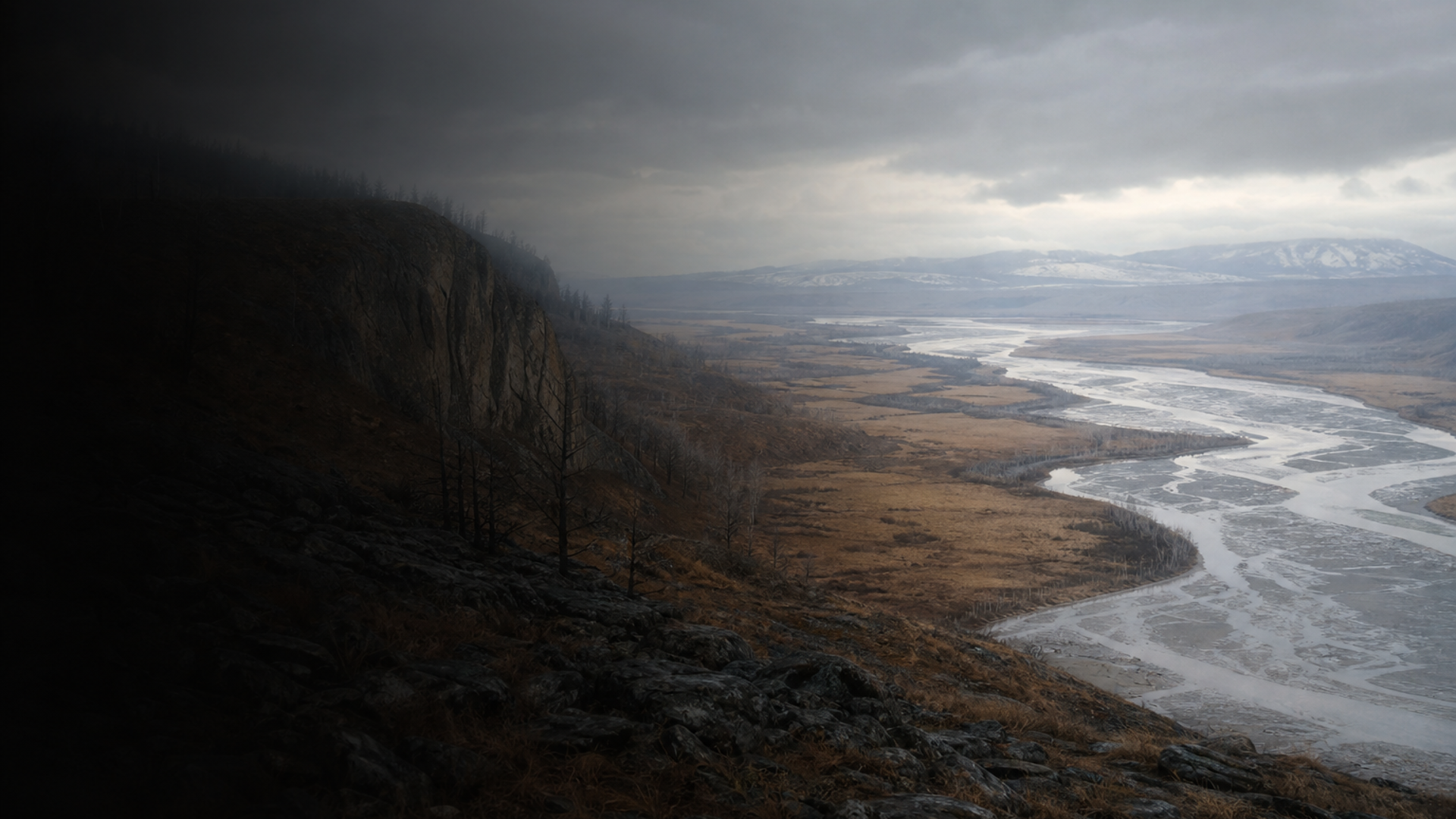
The Amur River Basin, a braided corridor of ice‑age channels and wetlands in what is now northeastern China, harbored human communities throughout the Last Glacial and into the Late Glacial warming. Archaeological data indicates repeated occupations of river terraces and lakeshores where stone tools, hearths and faunal remains concentrate. Radiocarbon-dated material associated with the genetic samples spans roughly 17,605–10,550 BCE, placing these individuals squarely in the Late Paleolithic period when ecosystems were shifting from glacial to more temperate regimes.

Limited evidence suggests these groups exploited a mosaic of resources: salmon and other fish in productive river reaches, seasonally migrating ungulates on nearby plains, and wild plants from wetland margins. Patterns of stone reduction and small-bodied tools point to mobile lifeways with seasonal camps rather than large, permanent villages. Environmental changes—especially the post–Last Glacial Maximum warming and the Younger Dryas cold reversal—would have reshaped resource availability and movement corridors, influencing population continuity and contact with neighboring Siberian and Northeast Asian foragers.

Because we currently have only four ancient genomes from this tradition, conclusions about population structure and origins remain preliminary. Nevertheless, the combined archaeological and genetic picture evokes resilient riverine foragers adapted to dynamic Late Paleolithic landscapes.

  • Occupied river terraces and lakeshores in the Amur Basin
  • Dates: 17,605–10,550 BCE (Late Paleolithic)
  • Adapted to mixed riverine and terrestrial resources
Capítulo IV

Daily Life & Society

Life along the Amur would have been sculpted by water: seasonal floods and fish runs, icebound winters, and spring pulses of productivity. Archaeological indicators — lithic scatters, hearth lenses, and faunal assemblages — imply small, mobile bands exploiting riverine fish, freshwater mollusks, riparian plants, and large mammals such as deer and elk. Bone and antler fragments in some Late Paleolithic contexts suggest composite tools and points optimized for fishing and hunting in heavily vegetated riparian zones.

Sites in this region tend to preserve ephemeral camp structures rather than dense occupation layers, consistent with logistical mobility: groups moving between winter shelters and spring/summer fishing camps. Social organization likely centered on kin-based bands with flexible alliances for exploiting seasonally abundant resources. Organic artifacts (wooden implements, textiles) seldom survive, so much of the material culture is inferred from stone toolkits and zooarchaeological patterns. Burial evidence for this specific dataset is scarce; therefore, rituals and mortuary practices remain poorly understood.

Archaeological data indicates a resilient economy tuned to pulses of abundance. The cinematic image is of small human groups moving along braided channels, following salmon runs, and keeping intimate knowledge of riverine micro-environments.

  • Seasonal camps focused on fishing and hunting
  • Small, mobile kin-based bands with river-centered economies
Capítulo V

Genetic Profile

Genetic data from four individuals recovered in the Amur River Basin (17605–10550 BCE) provide a rare window into Late Paleolithic Northeast Asia. Among these limited samples, Y-chromosome lineages include haplogroup C (two individuals) and C2 (one individual); mitochondrial haplogroups identified include G2 (one individual) and D (one individual). One genome in the set lacks a confident haplogroup assignment in the summary data. These lineages are consistent with broader patterns in prehistoric and modern northeastern Eurasia, where haplogroup C and maternal lineages like D and G are frequent.

Haplogroup C, especially sublineages like C2, is widespread in Siberia and parts of East Asia and is often interpreted as a deep regional lineage persisting through the Late Pleistocene. Maternal lineages G2 and D similarly reflect long-term continuity in northeast Asian mitochondrial pools. Archaeogenetic affinities suggested by these markers point toward shared ancestry with other ancient Siberian and East Asian groups, and they may represent ancestral components that later contribute to Tungusic, Mongolic, and other Northeast Asian populations.

Crucially, with only four genomes the genetic picture is provisional. Small sample size (<10) means population-level inferences — such as diversity, substructure, and migration episodes — are tentative. Future ancient DNA from additional Amur sites and neighboring regions will be essential to test hypotheses about gene flow, continuity, and demographic responses to climatic shifts.

  • Y-DNA dominated by C (including C2); mtDNA includes G2 and D
  • Sample count is low (4); conclusions are preliminary
Capítulo VI

Legacy & Modern Connections

The genetic and archaeological traces from Late Paleolithic Amur foragers suggest they contributed foundational ancestry to later northeastern Eurasian populations. Lineages like Y‑C and mtDNA D and G are still present in modern Siberian, Tungusic, and some East Asian groups, indicating threads of continuity across millennia. Cultural adaptations — riverine fishing, seasonal mobility, and knowledge of wetland resources — likely shaped subsistence strategies that persisted and evolved in descendant communities.

However, the narrative is cautious: with only four ancient genomes, we cannot map direct lines from these individuals to any single modern population. Instead, they represent ancestral diversity within a broader mosaic of Late Pleistocene and Holocene peoples who interacted across the Amur corridor. The cinematic image that emerges is of resilient human groups navigating climatic upheavals, leaving genetic echoes detectable today but requiring far more data to fully reconstruct their demographic legacy.

  • Contributes ancestral components found in modern Northeast Asian populations
  • Continuity is suggested but not proven due to limited sampling
Con IA

Asistente de IA

Haz preguntas sobre la cultura Amur River Late Paleolithic Foragers

Asistente de IA por DNAGENICS

Desbloquear esta función
Pregunta sobre la cultura Amur River Late Paleolithic Foragers. El asistente con IA puede explicar hallazgos genéticos, contexto histórico, pruebas arqueológicas y conexiones modernas, con sus límites de interpretación.
Ejemplo de análisis con IA

La cultura Amur River Late Paleolithic Foragers representa un capítulo de la historia humana...

El análisis genético permite estudiar similitudes con poblaciones anteriores y posibles adaptaciones. Las muestras de ADN antiguo aportan información para investigar patrones migratorios y relaciones entre poblaciones, con límites que dependen del estudio y del contexto arqueológico.

Esta es una vista previa del análisis con IA. Accede al asistente completo para explorar información sobre:

  • Composición y similitud genética
  • Patrones migratorios y orígenes
  • Vida cotidiana y prácticas culturales
  • Contexto genético moderno

Explora más culturas antiguas

Descubre la historia de civilizaciones de distintas partes del mundo antiguo