Preparando el informe

Cargando la información y las referencias disponibles

Consultando el registro arqueológico...

Recopilando registros antiguos

Saltar al contenido principal
Arman Bronze Age of Romania
Cultura destacada

Arman Bronze Age of Romania

A fragmentary Bronze Age horizon at CRL Arman linking archaeology and maternal lineages

2150 CE - 1850 BCE
Romania (CRL Arman)
Desplázate para empezar
Capítulo I

La historia

Comprender la cultura Arman Bronze Age of Romania

The Romania_BA_Arman assemblage (2150–1850 BCE) from CRL Arman offers a preliminary glimpse into Bronze Age lifeways in southeastern Europe. Nine samples provide maternal-line evidence that complements archaeological signals of local Bronze Age networks, though conclusions remain tentative.

Time Period

2150–1850 BCE

Region

Romania (CRL Arman)

Common Y-DNA

No consistent Y-DNA (limited data)

Common mtDNA

K (2), J1c (1), U (1), H+ (1), H1 (1)

Capítulo II

Cronología

Momentos clave de la historia de esta cultura

2150 BCE

Emergence of Arman horizon at CRL Arman

Archaeological horizons at CRL Arman coalesce with Bronze Age metalwork and varied burial practices, dated around 2150 BCE.

Capítulo III

Origins & Emergence

The Arman horizon in Romania emerges in the early-to-middle Bronze Age, roughly 2150–1850 BCE, and is anchored archaeologically at sites such as CRL Arman. Archaeological data indicates this was a period of shifting settlement patterns in the Lower Danube and Carpathian forelands, with material culture showing continuity with earlier Neolithic and Chalcolithic traditions alongside new Bronze Age metalwork and pottery styles.

Limited evidence suggests interactions with neighboring Bronze Age groups across the Carpathian Basin and along Danubian routes, visible in trade goods and metallurgical techniques. Burial practices at CRL Arman appear varied, and funerary assemblages—where preserved—point to social differentiation typical of Bronze Age societies in southeastern Europe.

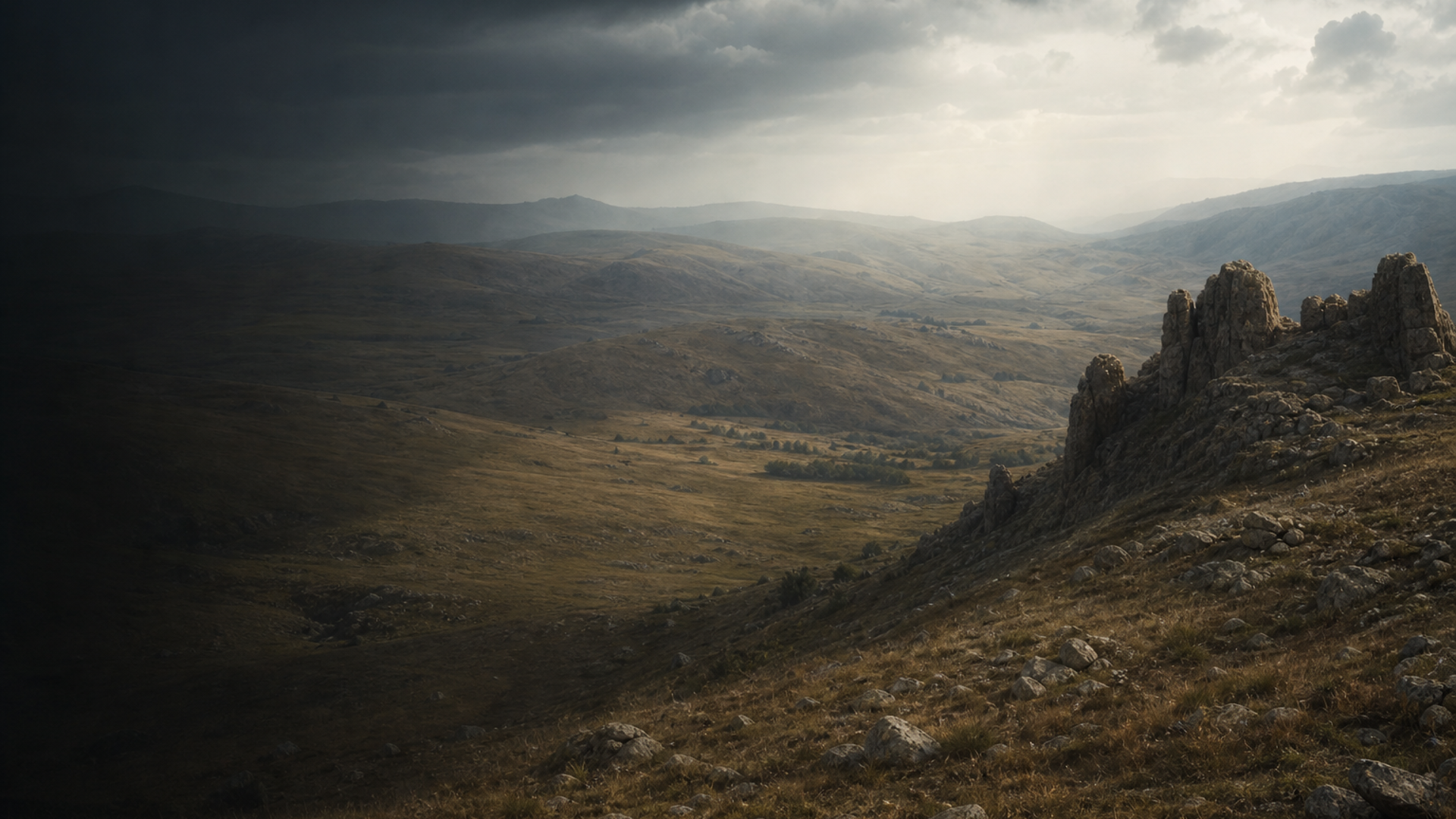
In cinematic terms: imagine river valleys threaded by seasonal movement, small communities experimenting with new bronze tools while older ceramic and domestic traditions persist. Archaeological interpretations must remain cautious: preservation is uneven and contexts are not always well-dated, so the picture of Arman’s emergence is partial and evolving.

  • Anchored at CRL Arman (Romania), 2150–1850 BCE
  • Material culture mixes local traditions with Bronze Age metalworking
  • Evidence points to regional networks along the Danube and Carpathian margins
Capítulo IV

Daily Life & Society

Archaeological remains from the Arman horizon hint at a mixed rural economy: small settlements, husbandry of cattle and sheep, and cultivation of cereals and pulses where soils allowed. Domestic assemblages—kilns, hearths, and pottery—suggest households balanced subsistence production with craft specializations, particularly in metalworking and tool repair.

Burial evidence from CRL Arman and nearby locales implies social differentiation: some graves contain personal ornaments and metal items while others are more modest. This variety evokes a society negotiating new social hierarchies as Bronze Age metallurgy spread. Mobility was likely important—exchange of raw metals and finished objects implies traders or specialist households moving along river corridors.

Archaeological interpretations must be cautious: preservation bias and limited excavation mean everyday practices are reconstructed from fragmentary remains. Still, the archaeological record paints a textured image of communities adapting technologies and networks in a dynamic Bronze Age landscape.

  • Mixed agriculture and animal husbandry with localized craft production
  • Burials at CRL Arman show social variability and access to metal goods
Capítulo V

Genetic Profile

Genetic sampling at CRL Arman comprises nine individuals (sample count = 9), a small dataset that must be treated as preliminary. Maternal lineages recovered include mtDNA K (2 individuals), J1c (1), U (1), H+ (1), and H1 (1). These mtDNA types are informative in broad strokes: haplogroup K and J1c are frequently associated with Neolithic farmer-derived maternal ancestry across Europe, while U and H clades have deeper Paleolithic and Mesolithic roots and long-standing presence in later prehistoric populations.

Notably, there is no consistent Y-DNA signal reported for this ensemble, so paternal lineage inferences are not possible from these samples. Because key Bronze Age demographic changes in Europe often involved shifts in paternal lineages (e.g., steppe-associated Y haplogroups), the absence of Y-DNA here limits conclusions about male-mediated migrations.

Population-genetic interpretation must emphasize uncertainty: with fewer than 10 individuals, observed mtDNA proportions can be shaped by chance, kinship within burial groups, and sampling bias. Nevertheless, the mix of maternal haplogroups suggests a community where Neolithic-derived farmer ancestry persisted alongside older European maternal lineages—consistent with a mosaic of local continuity and incoming influences inferred from regional archaeological patterns.

  • Nine samples: mtDNA includes K (2), J1c (1), U (1), H+ (1), H1 (1)
  • No consistent Y-DNA reported; small sample size makes conclusions tentative
Capítulo VI

Legacy & Modern Connections

The Arman Bronze Age imprint on later Romanian prehistory is subtle but present: material traditions and regional exchange routes contributed to the cultural tapestry that led into the Middle and Late Bronze Age. Genetically, maternal haplogroups seen at CRL Arman—especially mtDNA K and H lineages—persist in varying frequencies across modern Europe, demonstrating long-term continuity of some maternal lines.

However, linking these nine ancient individuals directly to modern populations would be speculative. Limited sample size and selective preservation mean we can suggest continuity of certain maternal lineages, but not direct descent at a population level. Still, when combined with broader regional datasets, the Arman samples add texture to a story of local resilience, mobility, and integration within Bronze Age networks.

  • Some maternal haplogroups at Arman persist in modern European gene pools
  • Small sample size prevents direct claims of continuous ancestry
Con IA

Asistente de IA

Haz preguntas sobre la cultura Arman Bronze Age of Romania

Asistente de IA por DNAGENICS

Desbloquear esta función
Pregunta sobre la cultura Arman Bronze Age of Romania. El asistente con IA puede explicar hallazgos genéticos, contexto histórico, pruebas arqueológicas y conexiones modernas, con sus límites de interpretación.
Ejemplo de análisis con IA

La cultura Arman Bronze Age of Romania representa un capítulo de la historia humana...

El análisis genético permite estudiar similitudes con poblaciones anteriores y posibles adaptaciones. Las muestras de ADN antiguo aportan información para investigar patrones migratorios y relaciones entre poblaciones, con límites que dependen del estudio y del contexto arqueológico.

Esta es una vista previa del análisis con IA. Accede al asistente completo para explorar información sobre:

  • Composición y similitud genética
  • Patrones migratorios y orígenes
  • Vida cotidiana y prácticas culturales
  • Contexto genético moderno

Explora más culturas antiguas

Descubre la historia de civilizaciones de distintas partes del mundo antiguo