Preparando el informe

Cargando la información y las referencias disponibles

Consultando el registro arqueológico...

Recopilando registros antiguos

Saltar al contenido principal
Barç Voices: Early Modern Albania
Cultura destacada

Barç Voices: Early Modern Albania

Two mitochondrial glimpses from Barç (1450–1800 CE) linking archaeology and DNA

1450 CE - 1800 CE
Barç, Korça Basin, Southeast Albania
Desplázate para empezar
Capítulo I

La historia

Comprender la cultura Barç Voices: Early Modern Albania

Archaeological remains from Barç in the Korça Basin (1450–1800 CE) paired with two mitochondrial genomes reveal tentative maternal links (mtDNA X, U). Limited sample size makes conclusions preliminary, but combined material culture and DNA hint at continuity within Balkan populations during the Ottoman-era Early Modern period.

Time Period

1450–1800 CE

Region

Barç, Korça Basin, Southeast Albania

Common Y-DNA

Not reported (no Y data in 2 samples)

Common mtDNA

X (1), U (1)

Capítulo II

Cronología

Momentos clave de la historia de esta cultura

1450 CE

Earliest dated sample from Barç

One of the recovered individuals from the Barç cemetery dates to the mid-15th century, within the Early Modern Ottoman-era context.

Capítulo III

Origins & Emergence

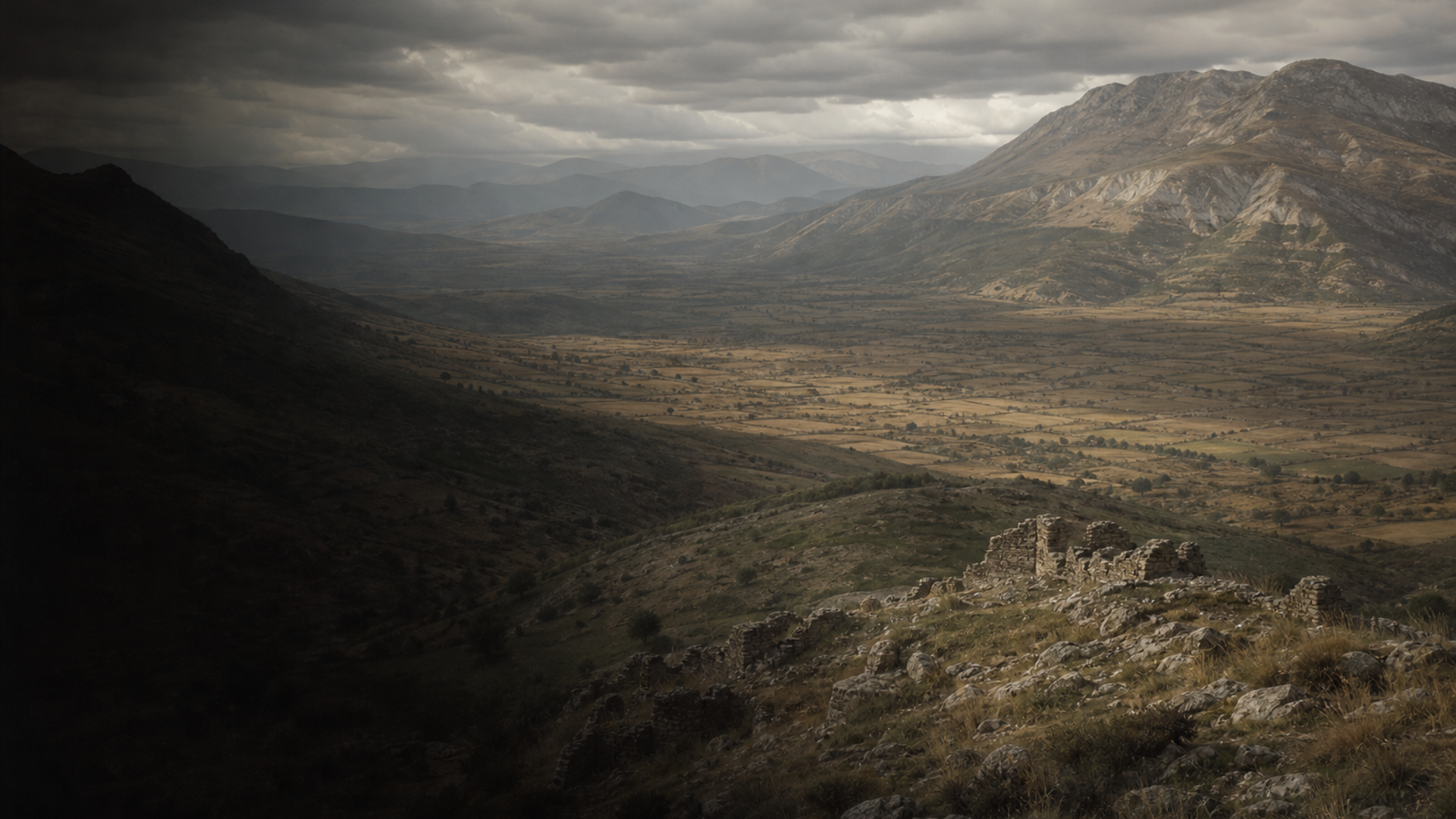
The bones and material traces recovered at Barç sit within a landscape that has witnessed millennia of human movement across the southern Albanian highlands. Archaeological data indicates occupation and funerary activity in the Korça Basin during the Early Modern era, a time when Ottoman administration, regional trade, and lingering medieval communities overlapped. The dated range for the Barç samples (1450–1800 CE) places them amid shifting political and demographic currents: local rural settlements, seasonal transhumance, and integration into wider Balkan networks.

Limited evidence suggests continuity of local settlement patterns rather than large-scale population replacement at this site. Ceramic fragments, household items, and burial contexts at Barç reflect rural lifeways with elements consistent with other Late Medieval and Early Modern Albanian sites. The two genetic samples provide a slender thread into ancestry: each represents a maternal lineage (mtDNA X and U) that have deep, complex histories across Eurasia and Europe. Given the very small sample count, any reconstruction of origins must remain provisional — these remains illuminate personal histories rather than broad demographic processes.

The archaeological record at Barç combined with even minimal genetic data invites a cinematic portrait: villagers moving through terraces and valleys, carrying maternal lineages connected to both ancient and more recent Balkan populations. Future excavations and additional genomic sampling are necessary to test whether these glimpses reflect local continuity, migration, or admixture.

  • Barç samples dated to 1450–1800 CE, Korça Basin, Southeast Albania
  • Material culture indicates rural Early Modern settlement with Ottoman-era influences
  • Very small genetic sample (n=2) — interpretations remain preliminary
Capítulo IV

Daily Life & Society

Archaeological contexts from Barç evoke a landscape of steep fields, stone terraces, and compact settlements where daily life was shaped by agriculture, pastoralism, and regional trade routes. Excavated features and artifact assemblages typical of southeastern Albanian rural sites — household ceramics, simple metalwork, and domestic architecture — point to subsistence economies oriented around cereal cultivation, livestock, and local craft.

Social life would have been anchored in kin networks and seasonal rhythms. Ethnographic analogies and historical records from the broader Korça Basin suggest a blend of village-level autonomy and integration into Ottoman administrative structures: tax registers, itinerant merchants, and movement along mountain passes connected Barç to markets and neighboring communities. Funerary practices observed in the cemetery contexts, while limited in number, indicate burial traditions that align with regional patterns of the period.

The two genetic samples are human-sized reminders of individual lives: each mitochondrial genome belonged to a person who experienced the textures of everyday Early Modern Albania — the smell of hearth smoke, the echo of footsteps on cobbles, the movement of flocks. Archaeology supplies the material setting; DNA provides personal biological identity. Combined, they allow us to imagine the interplay of daily routines, family ties, and broader historical forces.

  • Material culture suggests agrarian and pastoral livelihoods
  • Community life tied to kin networks and Ottoman-era economic links
Capítulo V

Genetic Profile

Genetic data from Barç are extremely limited: two individuals yielded mitochondrial haplogroups X and U (one each). mtDNA haplogroup U comprises multiple subclades common across Europe and the Near East since prehistory and is often associated with long-term maternal continuity in many parts of the Balkans. Haplogroup X is rarer in Europe but has a wide Eurasian distribution and appears intermittently in ancient and modern populations. These mtDNA results speak only to maternal lines and cannot, on their own, characterize the whole population.

No Y-chromosome haplogroup was reported for these two samples, so paternal-line insights are absent. Without autosomal genome-wide data or larger sample numbers, we cannot robustly assess ancestry proportions, admixture events, or kinship patterns. Archaeological context and regionally comparative genetic datasets suggest that Early Modern Albanian communities likely carried a mosaic of ancestries shaped by earlier Neolithic, Bronze Age, Roman, medieval, and Ottoman-era gene flows — but this remains hypothetical for Barç specifically.

Because sample count is below 10, conclusions must be framed as provisional. The mtDNA findings are valuable as individual-level data points: they indicate that maternal lineages present at Barç during 1450–1800 CE included both widely-distributed European lineages (U) and less common Eurasian lineages (X). Future sampling, especially autosomal sequencing and additional Y-DNA data, would allow testing for continuity with medieval and modern Albanian populations, detection of recent admixture, and reconstruction of family relationships within the cemetery.

  • mtDNA: X (1) and U (1); each represents a single maternal lineage
  • No Y-DNA reported; autosomal data absent — interpretations are preliminary
Capítulo VI

Legacy & Modern Connections

The tiny genetic sample from Barç should be read as a whisper from the past rather than a chorus. Archaeological continuity in the Korça Basin and comparative genetic studies across the Balkans suggest that many modern inhabitants of Albania retain genetic signals from long-term regional populations, layered with later movements. The mtDNA lineages seen at Barç (U and X) also occur in contemporary and ancient Balkan datasets, but presence alone does not prove direct descent or demographic dominance.

These remains remind us that individual biographies, preserved in bones and genomes, connect to larger stories: trade and migration across the Ottoman Balkans, persistence of rural life, and the palimpsest of maternal lineages passed through generations. To move from evocative possibility to scientific certainty will require more samples, broader genomic data, and careful integration with historical and archaeological records. For now, Barç contributes two secure data points to an evolving map of Balkan genetic and cultural history.

  • mtDNA lineages at Barç correspond to lineages found in wider Balkan datasets
  • Additional sampling needed to test continuity between Early Modern and modern Albanian populations
Con IA

Asistente de IA

Haz preguntas sobre la cultura Barç Voices: Early Modern Albania

Asistente de IA por DNAGENICS

Desbloquear esta función
Pregunta sobre la cultura Barç Voices: Early Modern Albania. El asistente con IA puede explicar hallazgos genéticos, contexto histórico, pruebas arqueológicas y conexiones modernas, con sus límites de interpretación.
Ejemplo de análisis con IA

La cultura Barç Voices: Early Modern Albania representa un capítulo de la historia humana...

El análisis genético permite estudiar similitudes con poblaciones anteriores y posibles adaptaciones. Las muestras de ADN antiguo aportan información para investigar patrones migratorios y relaciones entre poblaciones, con límites que dependen del estudio y del contexto arqueológico.

Esta es una vista previa del análisis con IA. Accede al asistente completo para explorar información sobre:

  • Composición y similitud genética
  • Patrones migratorios y orígenes
  • Vida cotidiana y prácticas culturales
  • Contexto genético moderno

Explora más culturas antiguas

Descubre la historia de civilizaciones de distintas partes del mundo antiguo