Preparando el informe

Cargando la información y las referencias disponibles

Consultando el registro arqueológico...

Recopilando registros antiguos

Saltar al contenido principal
Bas-Rhin Iron Age Echoes
Cultura destacada

Bas-Rhin Iron Age Echoes

Three genomic glimpses from Grand Est connect riverside life, La Tène influence, and deep European ancestries.

550 CE - 50 BCE
Grand Est (Bas-Rhin, Marne), France
Desplázate para empezar
Capítulo I

La historia

Comprender la cultura Bas-Rhin Iron Age Echoes

Archaeological and ancient DNA evidence from three Iron Age individuals (550–50 BCE) in France's Grand Est (Bas-Rhin, Marne) reveal mixed Y and mtDNA lineages. Limited samples make conclusions preliminary but suggest continuity of local Neolithic and steppe-derived ancestries in an Iron Age Rhine landscape.

Time Period

550–50 BCE

Region

Grand Est (Bas-Rhin, Marne), France

Common Y-DNA

G (1), R (1), I (1)

Common mtDNA

Ia4 (1), J (1), T (1)

Capítulo II

Cronología

Momentos clave de la historia de esta cultura

550 BCE

Early Iron Age occupation in Bas-Rhin

Archaeological horizons in Grand Est show Hallstatt-to-La Tène transitions and growing riverine trade networks.

Capítulo III

Origins & Emergence

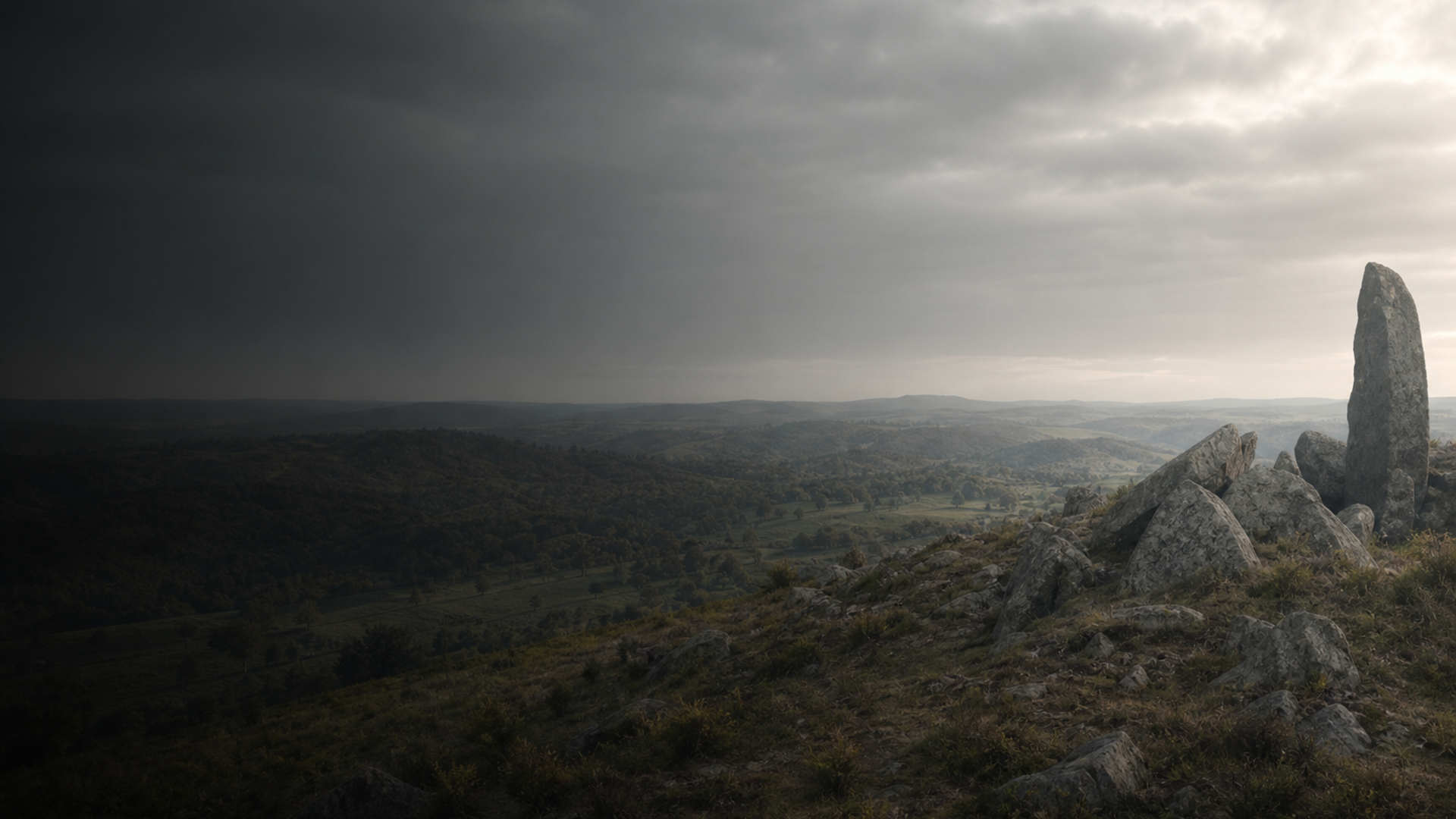
The Bas-Rhin Iron Age communities occupied a riverine landscape where the Rhine and its tributaries braided trade, ritual movement, and seasonal cycles. Archaeological data indicates settlement and funerary practices in the Grand Est region between roughly 550 and 50 BCE, a period that overlaps the broad La Tène horizon across much of temperate Europe. Sites represented in this dataset—Untergasse (Erstein, Bas-Rhin), Goxwiller (Bas-Rhin), and Isles sur Suippe “Les Sohettes” (Marne)—sit on alluvial plains and low terraces favored by Iron Age farmers and craftspeople.

Material culture from contemporary excavations in the Bas-Rhin area shows a tapestry of local Late Hallstatt traditions and emerging La Tène influences in metalwork, pottery, and burial rites. This suggests a cultural mosaic rather than a single uniform group. Limited evidence from three genomes can capture threads of ancestry but cannot, by itself, define the full population history. Archaeological indicators point to incremental continuity from earlier Neolithic and Bronze Age communities combined with new social networks and mobility during the Iron Age.

Key actors in this landscape were rural households, specialized artisans, and river traders. Their emergence is best described as the confluence of long-term local development and wider Iron Age transformations brought by increased connectivity across central and western Europe.

  • Occupation along Rhine tributaries 550–50 BCE
  • Material culture showing Hallstatt to La Tène transitions
  • Sites: Untergasse, Goxwiller, Isles sur Suippe “Les Sohettes”
Capítulo IV

Daily Life & Society

Life in the Bas-Rhin Iron Age would have been tactile and seasonal: ploughed fields, oxen-drawn carts, wooden palisades, and the crackle of hearths. Archaeobotanical and zooarchaeological work in the wider Grand Est suggests mixed farming—cereals, pulses, and domesticated animals—supplemented by river fishing and wooded pastures. Villages and farmsteads clustered on fertile terraces close to water, while small cemeteries record variations in burial rite that hint at differentiation by age, sex, or status.

Craft specialization appears in metalworking debris and slag scatters found near settlements in the region, indicating local smithing and exchange of iron and bronze objects. Decorative motifs with La Tène affinities suggest participation in broader stylistic networks—objects moved not only by trade but also through social ties and mobility. Trade along rivers would have linked Bas-Rhin communities to markets and ideas from the Rhine corridor and beyond.

Gender roles and social hierarchies can only be sketched from material remains: certain graves contain richer grave goods, others simple interments. Paleodemographic data remain scarce, and the three genetic samples are too few to map household or kinship structures reliably, but the combined archaeological record evokes a dynamic, interconnected countryside where local traditions met transregional exchange.

  • Mixed farming, river resources, and woodland management
  • Local metalworking and participation in La Tène stylistic networks
Capítulo V

Genetic Profile

Three individuals sampled from Untergasse, Isles sur Suippe “Les Sohettes,” and Goxwiller (550–50 BCE) provide a narrow but valuable genetic window into Bas-Rhin Iron Age populations. Y-chromosome lineages recorded are G (1), R (1), and I (1); mitochondrial lineages are Ia4 (1), J (1), and T (1). These lineages mirror a mixed ancestral tapestry: G and certain J/T maternal lineages are often associated with long-standing Neolithic farmer ancestry in Europe, while R and I Y-lineages can reflect later Bronze Age and local Mesolithic/Neolithic derived components that persisted into the Iron Age.

Archaeological data indicates regional continuity from earlier periods; the genetics are consistent with that picture, showing both deep local roots and the signatures expected in a mobile Iron Age world. However, the sample count is very low (n=3). Limited evidence suggests patterns consistent with broader Iron Age Western Europe—intermediate ancestry between Neolithic farmers and steppe-derived lineages—but any population-level inference must remain tentative.

Future sampling across more burials and sites in Bas-Rhin and neighboring departments will be necessary to resolve kinship, sex-biased migration, and the extent of genetic continuity versus influx. For now, these genomes act as evocative fragments that complement the archaeological story.

  • Y: G (1), R (1), I (1); mt: Ia4 (1), J (1), T (1)
  • Sample count small (n=3): conclusions are preliminary
Capítulo VI

Legacy & Modern Connections

The Bas-Rhin Iron Age communities contributed threads to the genetic and cultural tapestry of northeastern France. Archaeological continuity in settlement and material traditions suggests that elements of local ancestry persisted through Roman times into the medieval period. Genetic signals found in these Iron Age individuals—combining farmer-associated maternal lineages and mixed Y-lineages—are broadly compatible with patterns observed in modern populations of western Europe, though direct continuity cannot be assumed from three samples alone.

Culturally, the La Tène aesthetic and riverine trade networks helped shape regional identities that later interacted with Roman administration and migration waves. For modern descendants, these genomes are poignant reminders of long-standing inhabitation and the layered interactions—local and foreign—that formed the region's deep past. Continued genomic and archaeological study will sharpen how these ancient riverside lives connect to present-day genetic landscapes.

  • Suggests long-term local ancestry with later cultural influences
  • Highlights need for more samples to trace continuity to modern populations
Con IA

Asistente de IA

Haz preguntas sobre la cultura Bas-Rhin Iron Age Echoes

Asistente de IA por DNAGENICS

Desbloquear esta función
Pregunta sobre la cultura Bas-Rhin Iron Age Echoes. El asistente con IA puede explicar hallazgos genéticos, contexto histórico, pruebas arqueológicas y conexiones modernas, con sus límites de interpretación.
Ejemplo de análisis con IA

La cultura Bas-Rhin Iron Age Echoes representa un capítulo de la historia humana...

El análisis genético permite estudiar similitudes con poblaciones anteriores y posibles adaptaciones. Las muestras de ADN antiguo aportan información para investigar patrones migratorios y relaciones entre poblaciones, con límites que dependen del estudio y del contexto arqueológico.

Esta es una vista previa del análisis con IA. Accede al asistente completo para explorar información sobre:

  • Composición y similitud genética
  • Patrones migratorios y orígenes
  • Vida cotidiana y prácticas culturales
  • Contexto genético moderno

Explora más culturas antiguas

Descubre la historia de civilizaciones de distintas partes del mundo antiguo