Preparando el informe

Cargando la información y las referencias disponibles

Consultando el registro arqueológico...

Recopilando registros antiguos

Saltar al contenido principal
Cabeçuda Sambaqui (c.3200 BP)
Cultura destacada

Cabeçuda Sambaqui (c.3200 BP)

South-coast shell-mound builders of Brazil with early Native American DNA signals

1685 CE - 10583200 BCE
Cabeçuda, South Coast, Brazil
Desplázate para empezar
Capítulo I

La historia

Comprender la cultura Cabeçuda Sambaqui (c.3200 BP)

Archaeological and genetic data from Cabeçuda (South Coast, Brazil) illuminate coastal sambaqui builders dated c.1685–1058 BCE. Two ancient genomes (Y Q; mtDNA D1, D4) hint at deep Native American lineages, but small sample size makes conclusions preliminary.

Time Period

c.1685–1058 BCE (≈3200 BP)

Region

Cabeçuda, South Coast, Brazil

Common Y-DNA

Q (2)

Common mtDNA

D1, D4

Capítulo II

Cronología

Momentos clave de la historia de esta cultura

1685 BCE

Radiocarbon-dated human remains at Cabeçuda

Human remains from the Cabeçuda sambaqui yield radiocarbon dates near 1685–1058 BCE, anchoring the site's occupation to c.3200 BP.

Capítulo III

Origins & Emergence

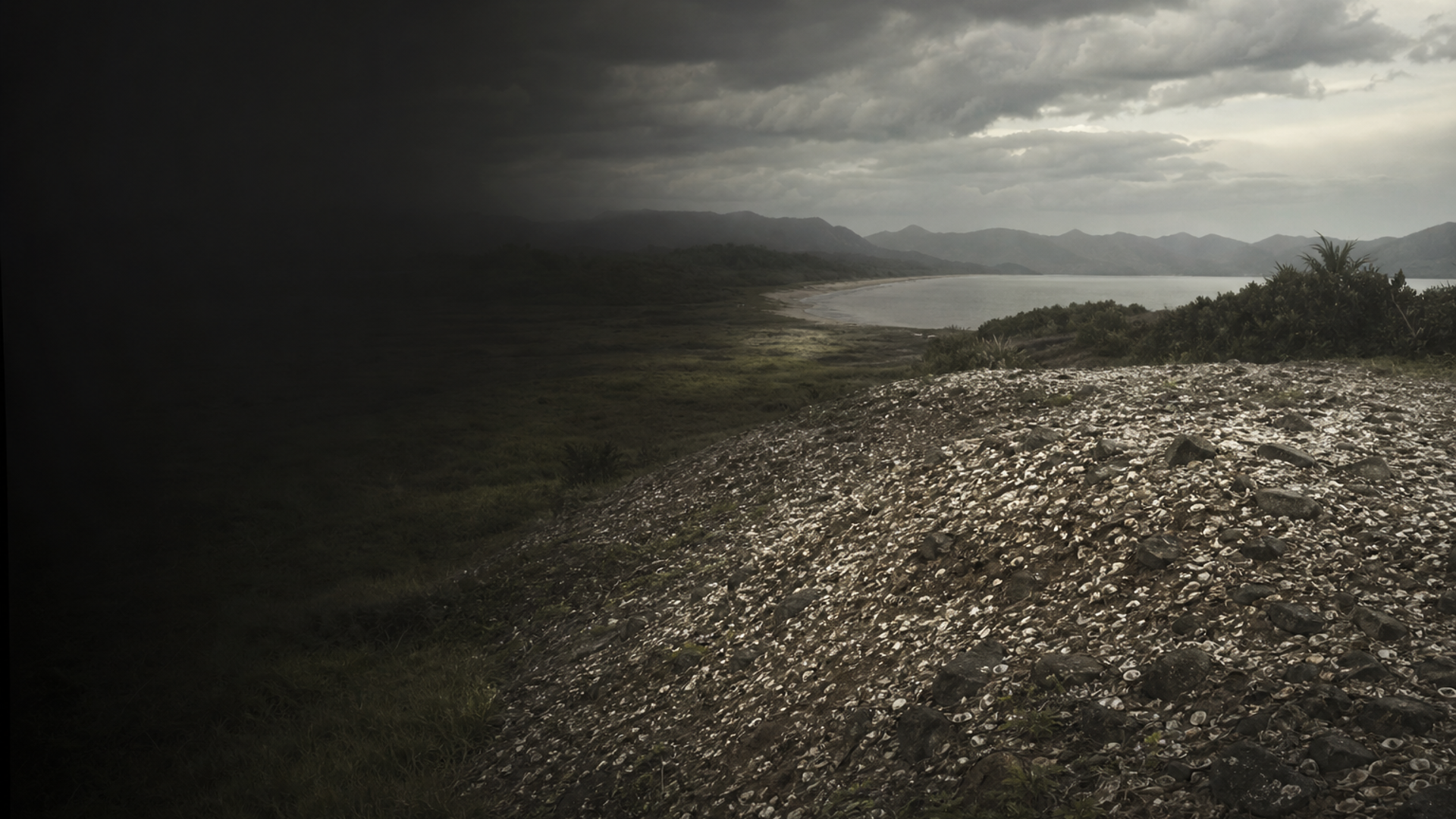
Rising from the empty shimmer of ancient tides, the sambaquis of the South Coast are monumental traces of sustained coastal life. At Cabeçuda, archaeological deposits of layered shell, bone and hearths mark repeated occupation during the later Holocene. Radiocarbon determinations for the human remains associated with the identifier Brazil_Cabecuda_Sambaqui_3200BP place these individuals between c.1685 and 1058 BCE — a window commonly described as roughly 3200 years before present.

Archaeological data indicates these communities were part of the broader Sambaqui tradition — shell-mound builders who engineered large middens that served as kitchen, cemetery and landscape marker. The emergence of sambaquis is a long, regionally varied process; at Cabeçuda the material culture suggests durable coastal adaptation rather than a sudden migration. Limited evidence suggests local innovation in mound building and long-term use of nearshore resources, though the exact relationships between coastal sambaqui groups and contemporaneous inland populations remain under investigation.

Because only two ancient genomes are available from Cabeçuda, interpretations about population origins should be treated cautiously. These genomes provide tantalizing glimpses of biological ancestry but cannot, on their own, resolve the full story of migration, exchange, or cultural adoption along Brazil’s southern shores.

  • Sambaquis: layered shell middens serving multiple social functions
  • Dates: human remains dated c.1685–1058 BCE (~3200 BP)
  • Evidence points to long-term coastal adaptation; population origins remain uncertain
Capítulo IV

Daily Life & Society

Life at Cabeçuda would have been shaped by the rhythm of tides and seasons. Archaeological assemblages from sambaquis typically include abundant shellfish refuse, fish bone, marine mammal fragments, and stone tools — a palette that implies a diet rich in coastal proteins and a technical repertoire tuned for shoreline foraging and small-scale craft production. Hearth features and lensing within middens indicate repeated occupation and episodic intensification, perhaps tied to seasonal resource peaks.

Burial evidence from sambaqui contexts often reveals human interments within or alongside the mound deposits. These mortuary placements transform refuse heaps into sacred topography, weaving memory into the very architecture of the coast. Material traces such as personal ornaments, ochre staining, and variation in burial positioning hint at social differentiation, ritual practice, and long-term claims to place.

Archaeological data indicates that sambaquis functioned as communal hubs: food processing, craftworking, and mortuary activity coalesced into persistent landscape features. However, at Cabeçuda the archaeological record is incompletely sampled; many behavioral inferences remain provisional pending broader excavation and multi-proxy analyses (faunal, isotopic, microbotanical).

  • Diet dominated by marine resources (shellfish, fish); shell middens are abundant
  • Mounds served both domestic and mortuary roles, indicating complex social landscapes
Capítulo V

Genetic Profile

The genetic snapshot from Cabeçuda rests on two ancient individuals — a very small sample that demands cautious interpretation. Both males carry Y-chromosome haplogroup Q, a lineage widely observed among Native American populations and often interpreted as part of the paternal legacy of early peopling of the Americas. Mitochondrial DNA in the two samples falls into D1 and D4, maternal lineages that are also known among Indigenous populations of South America and form part of the broader set of founding Native American haplogroups.

Taken together, these uniparental markers align with expectations for Holocene coastal populations in eastern South America: continuity with ancient Native American genetic backgrounds rather than evidence of recent exogenous input. However, with only two genomes, it is impossible to quantify genetic diversity, sex-biased migration, or kinship structure at Cabeçuda. For example, two Q Y-chromosomes could reflect a local patrilineal continuity or simply sampling bias.

Beyond haplogroups, ancient DNA preservation within shell matrices can be favorable due to buffering of pH and cooling microenvironments, which may explain recoveries here. Future sequencing of additional individuals and comparisons with inland and later coastal genomes will be required to test models of continuity, admixture, and demographic change along Brazil’s southern littoral.

  • Both male samples belong to Y haplogroup Q, common among Native American groups
  • mtDNA lineages D1 and D4 present; findings are preliminary due to n=2
Capítulo VI

Legacy & Modern Connections

The sambaqui builders left enduring landmarks on the coastline: mounded middens that punctuate beaches and estuaries, repositories of food, memory and human remains. These places are part of the deep heritage of Brazil’s coastal peoples and are relevant to contemporary Indigenous communities and coastal stewardship. Genetic links seen in the Cabeçuda samples — affinities to widespread Native American haplogroups — reinforce the long-term biological presence of Indigenous lineages in the region, even if the precise cultural continuities require further evidence.

Archaeology and ancient DNA together can illuminate aspects of identity, migration and landscape use, but ethical collaboration with descendant communities and careful contextualization are essential. As more data accumulates, the story of Cabeçuda may shift from a tantalizing fragment into a richer narrative that connects past lifeways to present-day communities and conservation of archaeological landscapes.

  • Sambaquis are visible cultural landmarks linking past and present coastal communities
  • Genetic affinities suggest long-term Indigenous presence, but more samples are needed
Con IA

Asistente de IA

Haz preguntas sobre la cultura Cabeçuda Sambaqui (c.3200 BP)

Asistente de IA por DNAGENICS

Desbloquear esta función
Pregunta sobre la cultura Cabeçuda Sambaqui (c.3200 BP). El asistente con IA puede explicar hallazgos genéticos, contexto histórico, pruebas arqueológicas y conexiones modernas, con sus límites de interpretación.

Ejemplo de análisis con IA

La cultura Cabeçuda Sambaqui (c.3200 BP) representa un capítulo de la historia humana...

El análisis genético permite estudiar similitudes con poblaciones anteriores y posibles adaptaciones. Las muestras de ADN antiguo aportan información para investigar patrones migratorios y relaciones entre poblaciones, con límites que dependen del estudio y del contexto arqueológico.

Esta es una vista previa del análisis con IA. Accede al asistente completo para explorar información sobre:

  • Composición y similitud genética
  • Patrones migratorios y orígenes
  • Vida cotidiana y prácticas culturales
  • Contexto genético moderno

Explora más culturas antiguas

Descubre la historia de civilizaciones de distintas partes del mundo antiguo